









Let me cut straight to it: Modern Warfare 4 is not just MW3 with a fresh coat of paint. Infinity Ward is rebuilding the fundamentals — gunplay, movement, maps, and an entirely reimagined extraction mode — around a boots-on-the-ground philosophy, and a lot of these changes directly walk back what MW3 leaned into.
MW4 drops October 23, 2026 on PS5, Xbox Series X|S, PC, and Nintendo Switch 2. That last one matters, by the way. It's the first Call of Duty to hit a Nintendo platform in over a decade, and the game won't be coming to PS4 or Xbox One at all. MW3, for comparison, launched on last-gen hardware back in 2023.
But platform lists are the boring part. Here's what actually changes when you pull the trigger. The content includes editorial speculation; specific information awaits official information.
Related CDKEY and Gift Cards
The Gunplay Feels Completely Different
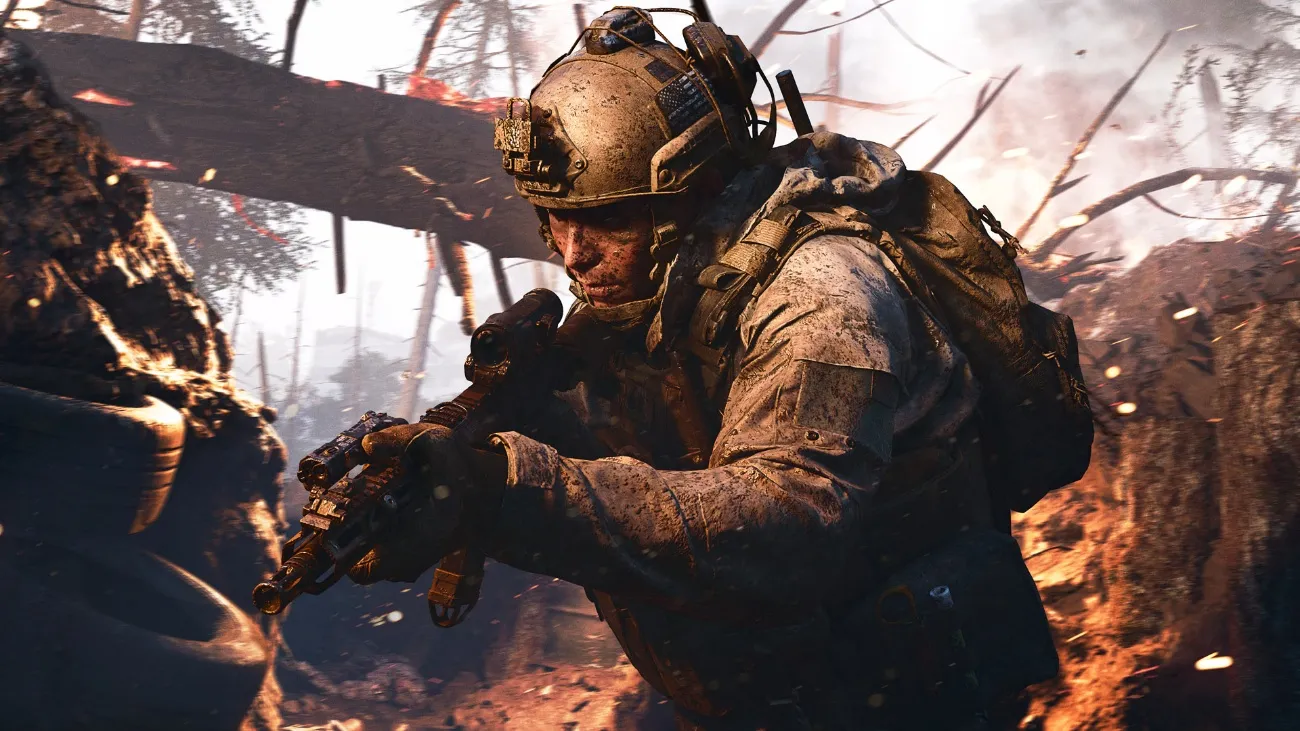
This is the biggest shift, and Infinity Ward isn't being subtle about it. They've built something called Ballistic Authority — a weapon-first technical framework that ties together aiming precision, recoil behavior, weapon sway, operator stance, camera work, audio, and target visibility into one cohesive system.
The headline change? Bloom is gone. Completely removed. In MW3 and basically every CoD before it, hipfire shots had a random spread — two identical shots from the same position could land in totally different spots. MW4 eliminates that entirely. Your bullets go exactly where your weapon is pointed. It's skill-based accuracy now, not a dice roll.
Recoil and weapon handling have also been rebuilt from the ground up. Every input you make translates more directly into what your weapon actually does. Depth of field and visual effects got tuned so enemies pop against backgrounds without sacrificing the game's realistic look.
Now here's where it gets interesting for anyone who's been following the TTK debate. A well-known CoD stats analyst broke down early gameplay and found that MW4's average time-to-kill is actually slightly faster than MW3, Black Ops 6, and Black Ops 7 across all three weapon categories. But it's still slower than MW2 (2022) and MW (2019), which were notoriously punishing. Assault rifles typically take four shots to kill at max damage range. Two of the SMGs need five shots. The FiNN LMG manages three. So if you were worried MW4 would feel like a twitch-shooter where whoever sees who first automatically wins, that's not the case.
Movement Is Grounded, Not Slippery
MW3 had slide-cancelling. Black Ops 6 and 7 had omnidirectional movement. MW4 goes the other direction entirely.
Infinity Ward is explicitly pushing a "boots on the ground" identity here. You're not getting the sprint-slide-dive chaos from the Black Ops era. Instead, MW4 adds ledge hanging and shimmying, mantle-to-slide transitions, and something called Mantle Momentum that keeps your speed going when you vault over obstacles. The movement feels fluid but controlled — less "how fast can I break the camera" and more "how do I get from point A to point B without getting myself killed."
Some folks who got hands-on time described it as noticeably more relaxed than MW3, though still fast-paced overall.
The Maps Are Brand New — No Nostalgia Bait
MW3's selling point was 16 remastered maps from 2009's Modern Warfare 2. If you played the original back in the day, you already knew every sightline and camp spot before you even loaded in.
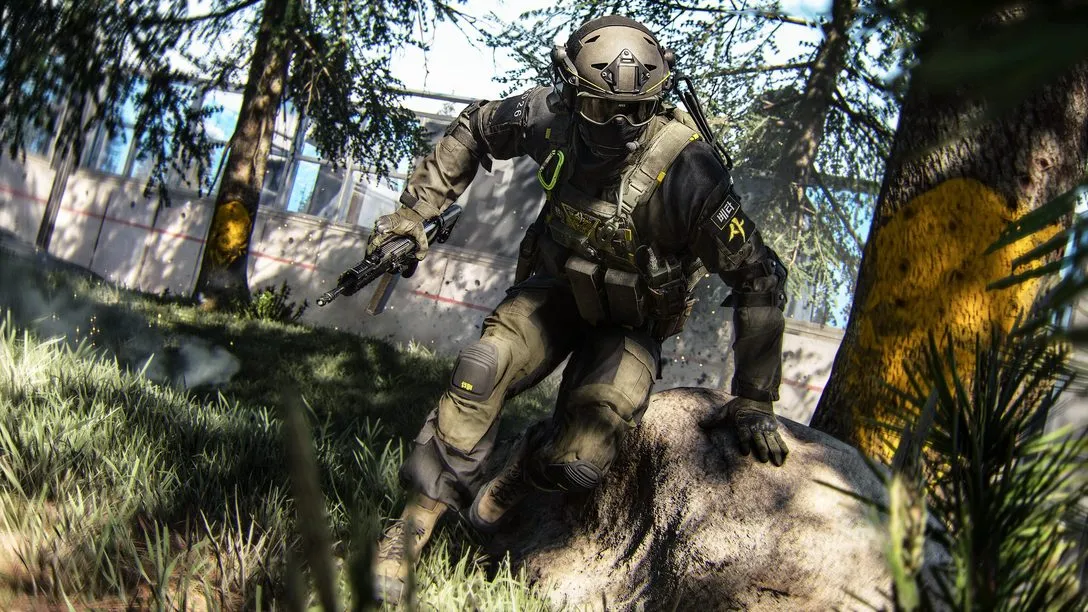
MW4 goes a completely different route. At launch, you're getting 12 brand-new 6v6 core maps set in visually and tactically distinct locations around the world. No recycled layouts. No "remember this spot?" moments. You're learning everything fresh.
Then there's Kill Block, which is genuinely unlike anything the series has done before. It's a modular live-fire training facility at the fictional West Bridge Advanced Military Training Center. The map is assembled from three sections — two outer End Slabs and one Central Slab — that physically reconfigure between matches. The whole thing is built from eight massive concrete towers housing rails and motors that move these Slabs into new positions after every single game.
At launch, there are more than 500 possible configurations. Some Slabs draw inspiration from classic maps like Crash, Highrise, and Shoot House, but the key word is inspiration, not recreation. You can't rely on muscle memory here. Every match forces you to re-read the terrain, rethink your routes, and adapt your approach. Kill Block supports 3v3 Gunfight and a brand-new Gunfight 10v10 mode at launch, with more core modes planned down the line.


Weapons Get an Extra Layer of Customization
The Gunsmith system returns, but MW4 layers something called Apex Attachments on top. These are exclusive unlocks you earn by fully leveling a supported weapon. The crucial detail? Apex Attachments don't consume a standard Gunsmith slot. They sit on top of whatever build you've already put together.
Infinity Ward confirmed 28 Apex Attachments for the full game, and some of them are genuinely game-changing. We're talking alternate firing modes, specialized ammunition types, underbarrel shotguns, throwing knives, and even an attachment for the ISO Nightshade SMG that functions like a wallhack. You can further specialize your favorite weapon without having to strip down the loadout you already love.
DMZ Is Back
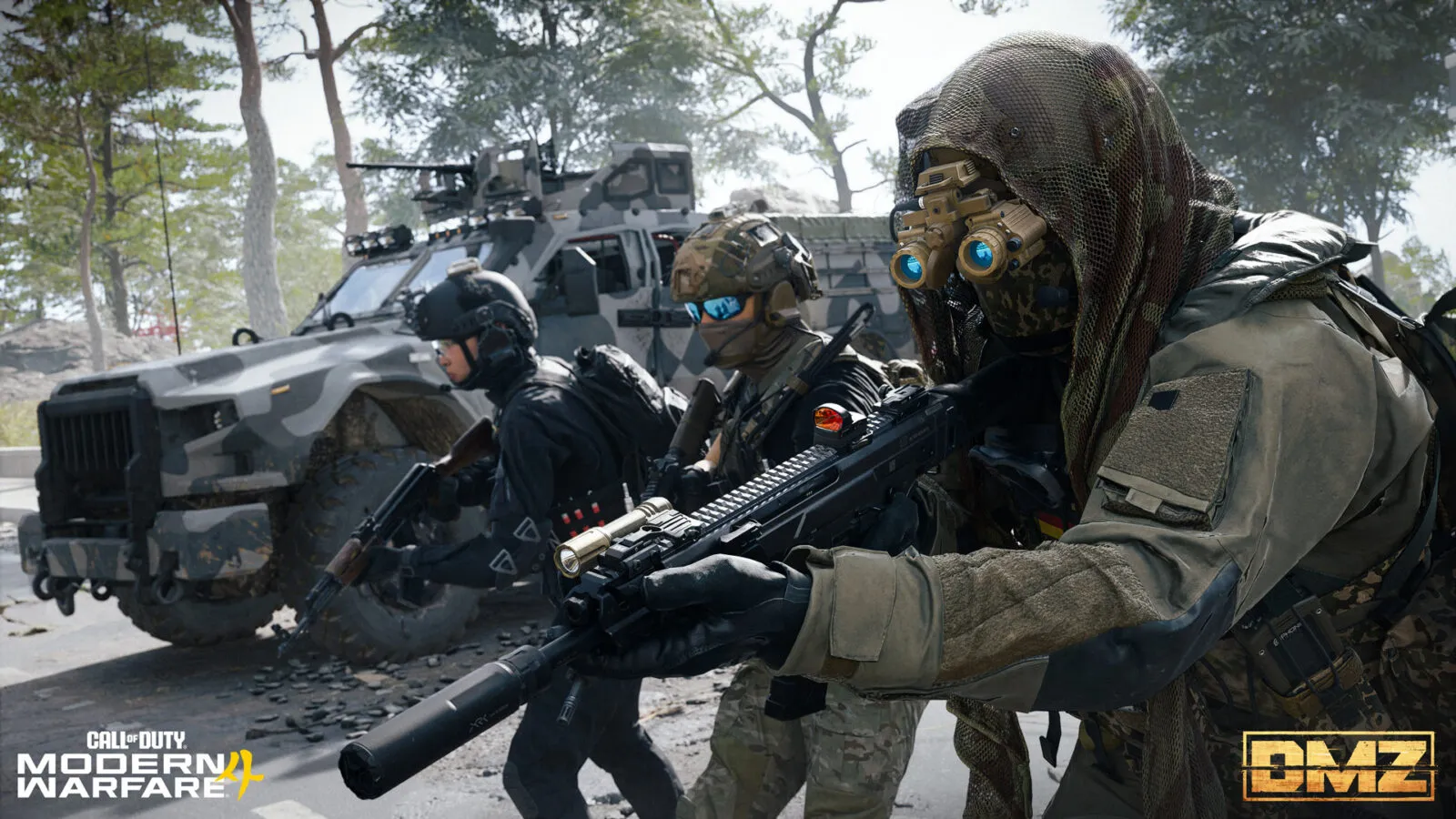
This is the part that has the extraction shooter community buzzing, and for good reason. DMZ originally launched alongside MW2 in 2022 as a free-to-play beta mode tied to the Warzone ecosystem. It attracted a dedicated fanbase — plenty of people said it was the only reason they logged into CoD — but Infinity Ward pulled support in late 2023, and MW3 shipped with Zombies instead.
MW4 treats DMZ as a full-fledged pillar alongside Campaign and Multiplayer. It's not a free add-on anymore. It's part of the paid game, and that structural change matters because it frees the mode from the seasonal content cycle that strangled the original.
The setting is the Hajin Exclusion Zone, a massive open combat environment on the Korean peninsula set after MW4's campaign. You deploy as a shadow CIA asset tasked with securing abandoned military tech before it falls into the wrong hands. Rogue Operators and enemy combatants are everywhere, and every squad has to figure out when to cooperate, when to fight, and when to vanish before things escalate.
Dynamic weather changes how you approach every run. Sudden downpours kill visibility. Fog banks turn familiar routes into navigational nightmares. The map itself is scarred by radiation and mass evacuation, with points of interest ranging from an irradiated reactor to a heavily defended military base to the remains of Hajin City.
Story Missions Give DMZ a Narrative Spine
The MW4 DMZ Story Missions are one of the clearest differences from MW3's Zombies offering. Instead of keeping the narrative in the background, they carry the campaign's aftermath into your deployments, with linked objectives that give you a reason to return beyond filling your stash.
The flow works like this: run Orders, unlock Story Missions, play through them to advance the plot. The missions are divided into sectors, each with its own chain of sequential objectives. There's a real throughline connecting everything, not just disconnected contracts.
An official Story Missions trailer dropped on October 8 and showed gameplay from the mission select screen. Four operations were named. Two got full briefings.
Operation Critical Extraction sends you to Mirae General Hospital at Medium threat level. Intel confirms a High Value Target is recovering there, and your job is to locate him, clear resistance, and get him out alive. The HUD walkthrough shows objectives like "Approach the Hospital," then "Find General Kang," and finally "Move Gen. Kang to Safety." The reward is a Defibrillator and 25,000 DMZ Cash.
Operation Silent Ledger takes place at Heavenly Luck Casino in Cheongun Village. Same Medium threat level, completely different objective structure. You're not extracting a person. You're breaking into a vault. The briefing objectives are "Enter the Casino," "Breach the Vault," and "Secure the Plates." Rewards shown are a Gold Bar, a Polaris Dapor vehicle, and 25,000 DMZ Cash.
Two other operations appeared on the mission select screen — Operation Iron Citadel and Operation Grid Assault — but the trailer didn't show their briefings or locations. What we know is their unlock rewards: Iron Citadel unlocks the LTV infill, Grid Assault unlocks the Helicopter infill.
The FOB and Progression System
Your Forward Operating Base serves as the hub for everything between deployments. You manage Operators, store loot, select DMZ Orders, test weapons at the firing range, and collect Survival Kits. A 3D Printer turns resources into gear. DMZ cash buys attachments at the Gunsmith. The Vendor shop stocks weapons and items. Successfully extracting expands what the FOB can do.
DMZ has its own dedicated progression track from level 1 to 70, completely separate from multiplayer. You're earning DMZ XP and DMZ Cash through looting, completing Dynamic Operations, hunting Lieutenants and Commanders, and successfully extracting.
Dynamic Operations are the mid-tier content. You don't select them beforehand. You find a phone inside Hajin, activate an operation on the spot, and complete it for XP and cash. Chain multiple Dynamic Ops in a single deployment and your supply drop rewards get progressively rarer. Free Roam is exactly what it sounds like — no objectives, no pressure, just you and the map and whatever trouble you decide to get into.
The Notoriety and Bounty System
This is where DMZ gets spicy. Killing other players raises your notoriety, which makes you more visible and easier to track. As your notoriety climbs, you become a high-value target that other hunters will actively pursue. It's a risk-reward system that forces you to think carefully about whether that kill is actually worth it.
Every deployment becomes a calculus. Do you push deeper for better loot and risk getting marked? Do you extract early with what you have, or gamble on one more contract? The tension between reward and survival is baked into every decision.

So Which One Should You Play?
If you loved MW3's classic map remasters and the 150 HP multiplayer sandbox, that game still exists and still has its own community. MWZ offers a completely different experience from what MW4's DMZ is going for — it's pure PvE co-op survival against zombies, not a PvPvE extraction sandbox with player-driven risk.
But if you want a fundamentally different Call of Duty experience — grounded movement, skill-based gunplay with no RNG, a map that changes every single match, and an extraction mode with an actual narrative and persistent progression — MW4 is the bigger swing. Infinity Ward is treating this as a ground-up rebuild, not an iteration.
If those changes are enough to bring you over from MW3, the next question is what you'll pay for the upgrade. Compare LDShop's MW4 Xbox Key and MW4 Steam Key offers before settling on your edition.
The honest caveat: everything described here comes from official announcements and hands-on impressions from preview events. Final weapon balance, DMZ economy tuning, and how the 500+ Kill Block layouts actually play over hundreds of matches — those things need real time with the finished product.
Conclusion
Modern Warfare 4 is Infinity Ward drawing a line in the sand. Bloom removed. Movement grounded. Maps that force adaptation instead of nostalgia. An extraction mode rebuilt from the ground up with story missions, persistent progression, dynamic weather, and a notoriety system that turns every player interaction into a gamble. MW3 was a stopgap — competent, familiar, but ultimately a bridge between bigger ideas. MW4 is those bigger ideas actually realized. The 12 new maps, 500+ Kill Block configurations, 28 Apex Attachments, and the Hajin Exclusion Zone with its story missions and 70-level DMZ progression track represent a genuinely different direction for the franchise. Whether it all comes together will depend on execution and post-launch balance, but the blueprint is ambitious in a way MW3 never tried to be.
FAQ
Is MW4's movement faster or slower than MW3?
Slower and more grounded — Infinity Ward traded slide-cancelling for ledge hanging, mantle-to-slide, and controlled momentum.
Do I need to play the MW4 campaign before jumping into DMZ?
It's not required, but the DMZ narrative is set directly after the campaign's events on the Korean peninsula, so playing through it first gives you better context.
What is Apex Attachments?
Exclusive weapon upgrades unlocked by fully leveling a gun that don't take up a standard Gunsmith slot.


 TOP UP WITH DISCOUNT NOW
Eva Experienced Game Editor
I'm a video game guide editor. I love all kinds of video games, especially turn-based games. Right now, I'm playing a lot of Honkai: Star Rail, and I really enjoy planning strategies for each battle. I'm also passionate about open-world games like Genshin Impact, where exploring every corner of the map and discovering new stories is a wonderful experience. Plus, I'm a big fan of simulation and collection games, like Stardew Valley: farming, raising animals, and decorating my farm is very relaxing for me. As a guide editor, my goal is to help other players enjoy the game more by sharing useful tips and uncovering hidden secrets.
