


Aniimo doesn't hold your hand. Within your first hour in Idyll, you'll be catching creatures, Twining into them, managing Energy Points, navigating a nine-element counter system, and wondering why your team keeps wiping against a Break bar you didn't know existed.
This guide is different from the others out there. This one walks you through the systems in the order you'll actually encounter them, explains why each one works the way it does, and tells you what changed between the closed beta and launch. Several core systems were rebuilt after testing, which means a lot of older advice is now actively wrong.
Here's what you actually need.
Before Anything Else: Server and Account

Your server choice matters more than your platform. Aniimo runs three regional servers: Aniimo-America, Aniimo-Europe, and Aniimo-Apac. Progress is shared across PC, console, and mobile — but only within the same server. Switching from PC to PlayStation 5 doesn't reset you; switching from Aniimo-Europe to Aniimo-America does.
If you plan to play with friends, agree on a serverbeforeanyone creates a character. There is no server transfer.
Console players have one extra step that trips up a surprising number of people. If you already have an Aniimo Pass, you'll see a link prompt the very first time you log in on PS5 or Xbox. Do not skip it. Skipping creates a new Aniimo Pass tied to that console account instead of connecting to your existing one. PS5 players should be especially careful, because the Aniimo server is assigned based on the registered region of your PSN account.
The System That Changes Everything: Twining
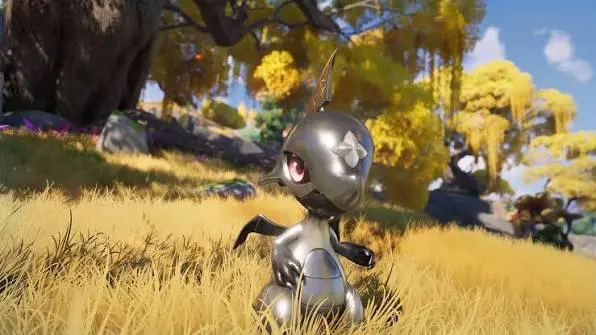
Twining is Aniimo's signature mechanic, and understanding it early changes how you approach the entire game. When you Twine, your Pathfinder essentially becomes one of your collected Aniimo and uses that creature's abilities directly — not just in combat, but for puzzles, traversal, and environmental challenges.
This is why catching a new Aniimo is never wasted, even if it doesn't immediately replace your strongest fighter. A creature with gliding, diving, or burrowing abilities opens up parts of Idyll that were previously inaccessible. If you hit a puzzle or pathway that doesn't make sense yet, the answer is usually that you haven't caught the right Aniimo for the job.
The beginner trap here: evaluating every new catch purely by its combat stats. A Support-role Aniimo that looks weak in a fight might be the only way to reach a hidden area.
6480+648 Glimmer for Just $ 80.62
Limited-time offer: $ 80.62 | $ 99.99
No more price checking. LDShop always offers the best price.
Elemental Typing: Read It From Both Sides
Aniimo has nine elements:
Fire, Grass, Lightning, Water, Ice, Earth, Wind, Light, and Dark
The damage multipliers are strict. An advantageous matchup deals 1.6× damage. A disadvantageous one deals only 0.625×. Everything else is neutral at 1×.
Here's what almost every beginner gets wrong: they read the type chart only from the attacking side.
In Aniimo, being strong against an element does not mean you resist it. Take Water. Water is strong against Fire and Earth — and it also resists both of those. That part makes sense. Now look at Lightning: strong against Water, but it does not resist Water.
Dark is the clearest example. Dark deals extra damage to Grass, Light, and Lightning. But it takes extra damage from Light and Wind. So if you're running a Dark Aniimo into a Light opponent, you're dealing 1.6× and taking 1.6×. That's not a favorable matchup — it's a coin flip that punishes you for attacking.
How to read the chart properly: horizontal rows for attacking, vertical columns for defending. Before you commit to a fight, ask two questions:Am I dealing more damage here, or taking more?If the answer is "taking more," switch.
Your Aniimo's Type Is Not Its Damage Type
This is the single most consequential misunderstanding in early Aniimo. A creature's elemental typing tells you its defensive profile— what it resists and what it's weak to. It does not tell you what damage type its skills deal.
Emberpup is a Fire-type Aniimo. It also has an Earth skill. If you use that Earth skill, you calculate damage from the Earth row of the type chart, not the Fire row. By mid-to-late game, some Aniimo carry up to three elemental skills in their movesets.
The fix: when evaluating offense, ignore the creature's type entirely and check the element of each skill you're using. When evaluating defense, check the creature's type.
Evolution Isn't a Straight Line
Most Aniimo follow a three-stage path: Lumen → Gamma → Nova. But "most" is doing real work in that sentence.
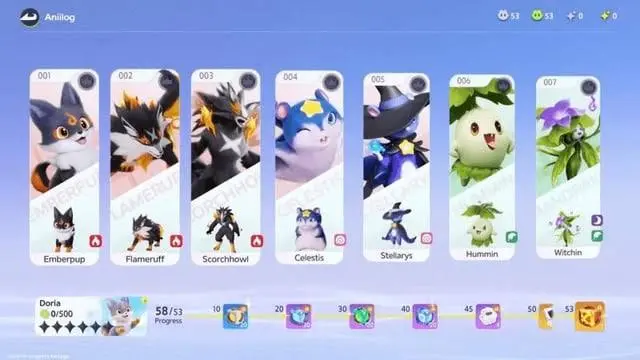
Some Aniimo skip Gamma entirely and go from Lumen straight to Nova. Iris is one example — she has only Lumen and Nova stages, no Gamma at all. Others, like Emberpup, evolve into Flameruff at Gamma and then branch into two Nova options: Scorchhowl or Inferlupa.
There's also a distinct category called dual-type Aniimo, and beginners often assume these only appear at Nova stage. That's wrong. Dual-types can appear at Gamma or Nova. Currently 13 dual-type Aniimo are confirmed.
Why dual-types matter: every incoming attack against a dual-type gets multiplied by both of its elemental effectiveness values. This cuts both ways. Mee, a Water/Grass dual-type, resists more elements and has broader coverage — but is also weak to more elements. A dual-type isn't automatically "better." It's more specialized, and whether that's an advantage depends entirely on what you're fighting.
Catching Is About Conditions, Not Just Throws
You catch Aniimo with Aniipods, but which creatures appear depends on environment, weather, special phenomena, and time of day. If a creature refuses to show up, running laps around the same area won't help. You may need to return under different conditions.
The catch rate formula is published in-game, and it's worth understanding the multipliers that matter most for beginners:
- Back attacks(outside combat, standard Aniipod only) give a×1.5bonus
- Lowering HP in combat scales up to ×2 at 0% HP — but throwing at full health actually penalizes you at ×0.8
- Level matters more than you'd think. Up to 10 levels above you carries no penalty. At 11 levels higher it drops to ×0.8, and at 15+ levels higher it collapses to ×0.1
That last point is crucial. If a creature feels impossible to catch, check the level gap before you blame bad luck.
Aniipod tiers: standard is ×1, Pro is ×1.5, and Hyper/Trace/Mega all share ×2. Ultra and Sparkling Cube guarantee success. The Tumbler is ×2 normally but ×6 on Wild Surge targets— save them for Surges.
Combat Roles Are Labels, Not Locks
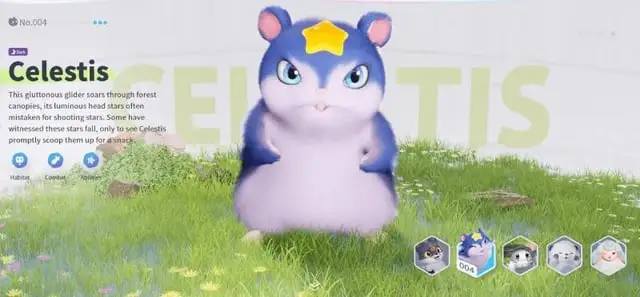
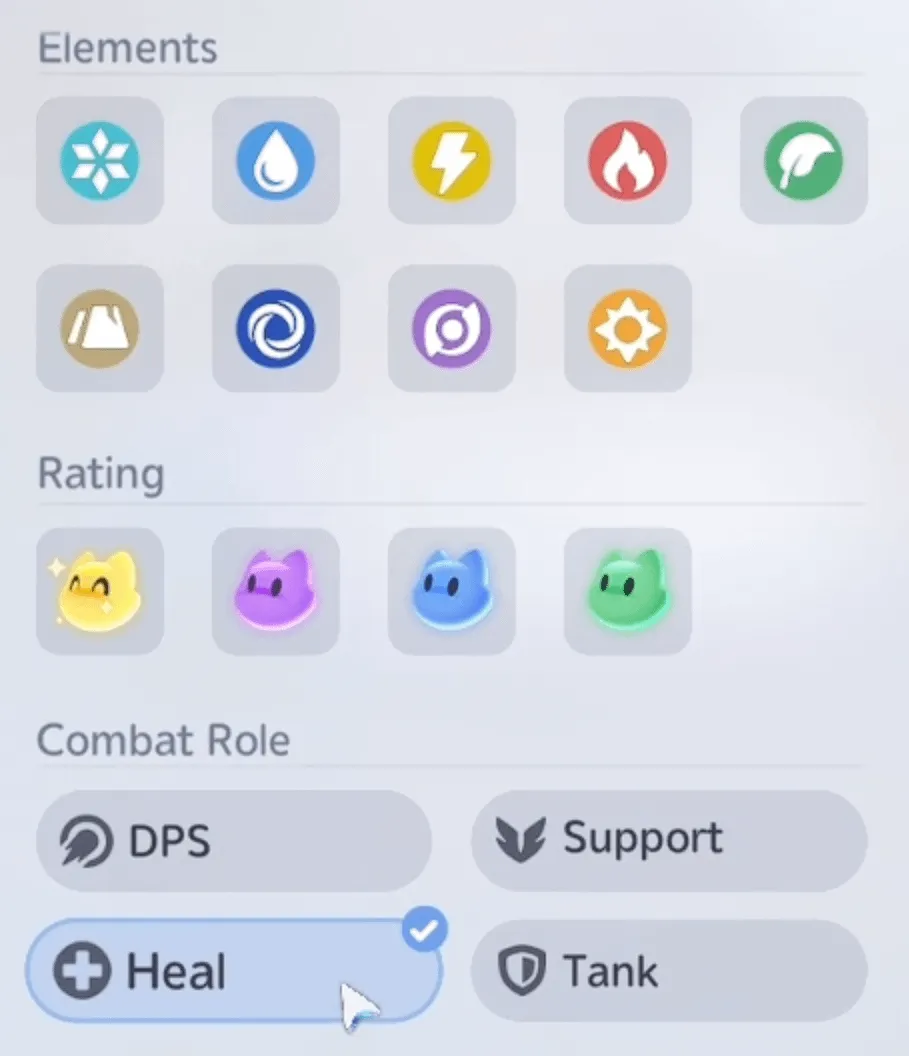
Aniimo teams consist of four creatures drawn from five roles: DPS, Break, Support, Heal, and Regen. Here's what each actually does:
- DPS— your primary damage dealer
- Break— pressures the Break meter (the white bar under the HP bar), creating an opening for burst damage
- Support— applies buffs and debuffs, boosting crit, attack, or elemental damage
- Heal— restores HP
- Regen— restores EP (Energy Points), the resource every skill consumes
The role icon is a label, not a restriction. A Heal unit can still deal meaningful damage. A Support unit can hit hard. The mistake beginners make is filtering creatures out by role icon alone — dismissing a Regen unit because they weren't looking for Regen, when that Regen unit might also carry a buff their DPS desperately needs.
The support trap: you add a Support unit because you want attack buffs. But if that Support boosts Lightning basic attacks and your DPS is a Grass unit, it does nothing. Always read the full skill effect and match element, attack pattern, range, and duration to your actual team.
How to Actually Build a Team
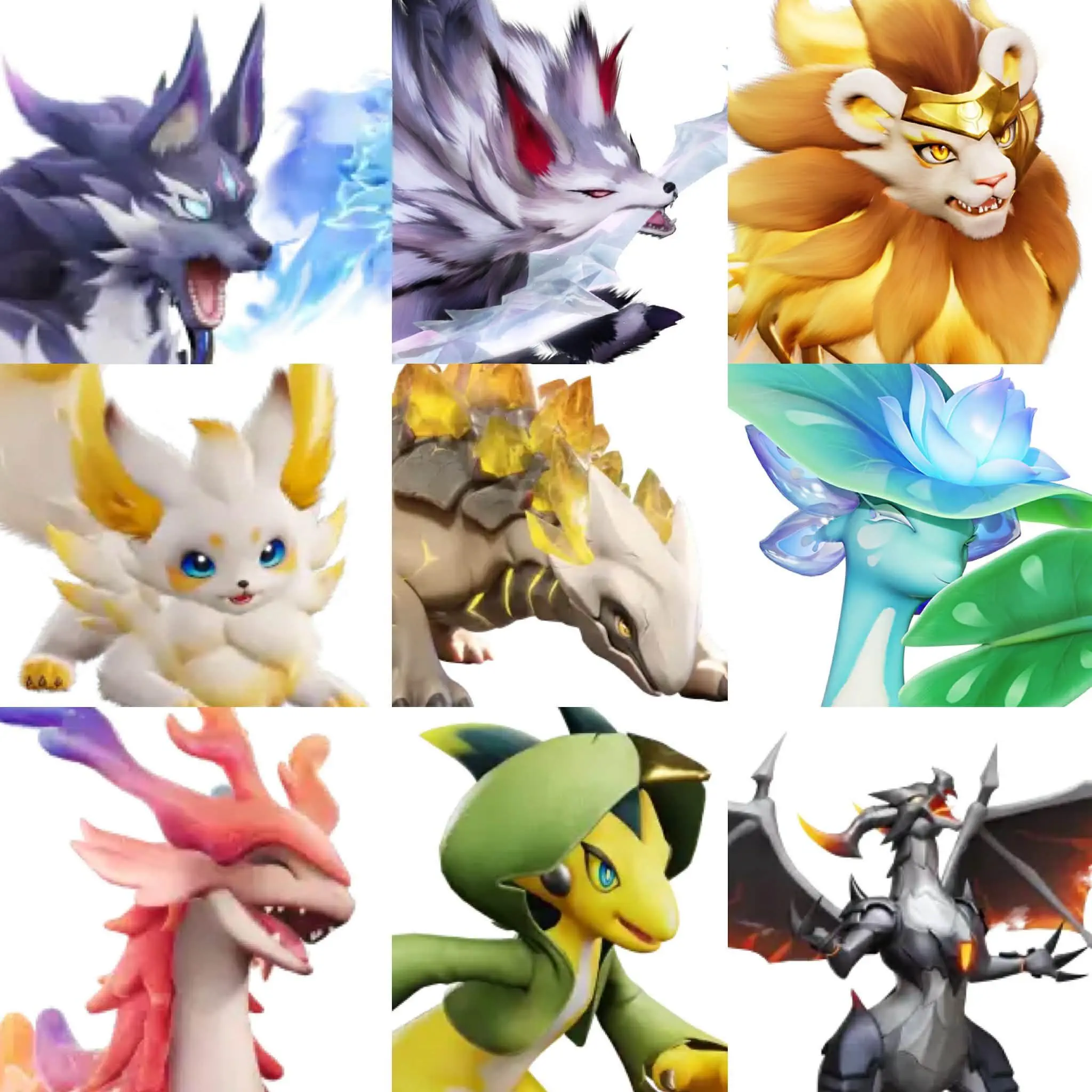
The endgame formula is almost always one DPS— not two, not three. That DPS is your carry, and you build the other three slots around it. What those three slots are depends entirely on your DPS choice. Some endgame teams run two Regens. There's no universal answer.
But here's the part most guides skip: don't build your final team on day one. Catch what you like. Experiment. Let your team grow around the problems you actually encounter.
- Dying too fast? You need more Heal or Support.
- Fights taking forever? You need more damage.
- Can't get past enemy defense? That's where a Break unit earns its slot.
A solid starter structure is one DPS, one Break, one Regen for EP, and either Support or Heal depending on whether you're struggling to survive. Multi-element coverage beats single-element stacking in most cases, because the goal is creating a good setup for your DPS — not matching colors.
The combat loop to aim for: use your Break unit to time the Break. Around that window, apply buffs and Regen skills so you have enough EP when the target breaks. Once it's broken and your setup is in place, switch to your DPS and unload.Avoid extra swaps during the break window — every switch burns the opening you just created.
Potential Score: Invest in Elite, Ignore Everything Below
Every Aniimo has six stats: HP, ATK, P.DEF, REGEN, M.DEF, and BREAK. Two potential types feed into these stats:
Innate Potential (IP) is rolled the moment you catch the creature. It's random, locked, and ranges from 0 to 10. You cannot change it.
Acquired Potential (AP) is what you build through training. You spend materials to raise it.
Both share a pool that caps at 20 per stat. If your Aniimo starts with 7 IP, you can only add 13 more through AP.
When you inspect an Aniimo, the game flags two stats with a thumbs-up icon. Those are the stats with the highest IP — your priority training targets.
Rarity and IP are linked. Four grades exist: Common, Good, Elite, Perfect. Higher rarity means higher starting IP. Elite and Perfect Aniimo start much closer to the 20-point cap, which means far fewer materials to max out.
Here's the practical takeaway: don't aim for Perfect.It's rare and unnecessary. Elite Aniimo can comfortably clear the game. But do not invest in Common or Good— the resource cost to max them is significantly higher, often measured in weeks of farming difference. Elite is the floor for anything you plan to keep long-term.
The launch version softens this considerably: Capability Awakening can be reset at any time for Aniimo below level 60, with all materials refunded. So you can experiment without permanent consequences.
Don't Sleep on the RV and Homeland

The RV isn't cosmetic. It's a progression system. Every Pathfinder has a personal RV that can be parked at campsites, and it serves as the gateway to your Homeland — where you grow crops, build structures, assign Aniimo to jobs, and run RV dispatches that can produce Aniimo eggs carrying the Prismana trait.
RV progression directly determines how many Aniimo you can assign as workers. RV Level 2 unlocks automated production with 8 worker slots; higher levels expand further. Homeland staff are pulled from your active roster, so keep a separate field squad before assigning workers.
For players who care about creature collection and long-term progression — not just housing aesthetics — the Homeland is a genuine resource engine.
Final Thoughts
The through-line in all of this is that Aniimo rewards understanding how systems connect rather than memorizing isolated tips. Twining feeds into exploration, which feeds into catching, which feeds into team building, which feeds into combat. The elemental chart isn't just a damage table — it's a defensive planning tool. Potential scores aren't just numbers — they determine whether an investment pays off in days or weeks.
Your best first move is simply to build options. Explore. Catch different Aniimo. Learn Twining. Let your team develop around the problems you actually face~ If you want more resources as you build Scorchhowl and expand your roster, you can use Aniimo top up on LDShop.






 TOP UP WITH DISCOUNT NOW
Rich Experienced Game Editor
Rich is a passionate gamer and strategy explorer who loves uncovering hidden mechanics, experimenting with team comps, and sharing tips that actually help players succeed. She has a talent for breaking down complex systems into easy-to-understand guides, making even the trickiest battles feel manageable. When she's not diving into virtual worlds, you might find her debating game lore, hunting for easter eggs, or enjoying a snack while plotting her next in-game strategy. Rich's goal? Helping fellow gamers have more fun while leveling up their skills.
