


Call of Dragons builds its seasonal updates, branded “Spirit Night,” and the name is not just a cosmetic label. Beneath the Halloween atmosphere sits one of the most consequential quality-of-life changes the War Pet system has received: a set of tools that finally gives players real control over pets they have already captured, raised, and sometimes quietly regretted.
This guide breaks down what Spirit Night actually changes, what the new events and city themes are for, and — most importantly — how the War Pet overhaul should reshape the way you spend pet resources before the next competitive season begins.

What Spirit Night Adds at a Glance
The official 1.0.54 patch notes list four headline items:
- New Events:Wandering Souls and Magic Market.
- Exclusive City Themes:Serpent Altar and Unceasing Furnace.
- War Pet Training Overhaul:Pet Fruits, Attribute Points Reset, Skill Transfer, and War Pet Recommendations.
- Season of Strife 3 Improvements.
The events and themes carry the Halloween mood. The War Pet changes carry the long-term value. Treat the first two as atmosphere and the last two as the real patch.

Wandering Souls and Magic Market: What to Expect from the Events
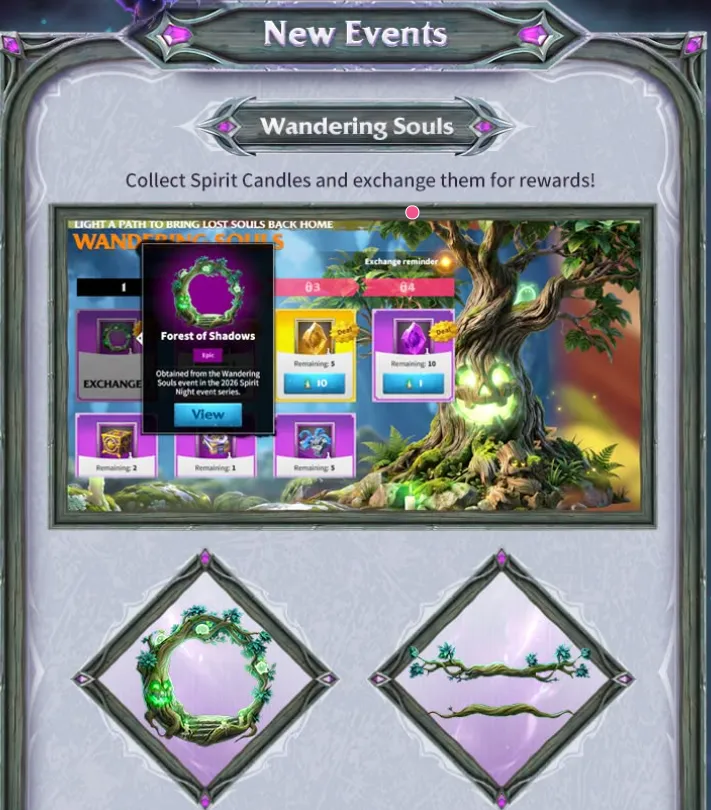
Farlight has not published exhaustive public rulebooks for either event, so the safest way to approach them is through the pattern established by previous Call of Dragons seasonal events. Event structures in this game tend to rewardparticipation consistencymore than one-off spending binges.
Wandering Soulsfits the Spirit Night theme most directly — a roaming, encounter-based event that asks you to engage with the world map rather than sit in menus. In practical terms, this usually means checking in across the event window, sending marches to event objectives, and not letting your action points sit capped while the event is live. If the event follows the Behemoth-style encounter logic used elsewhere in the game, the bottleneck will not be your march power but yourwillingness to actually move your marchesinstead of queuing everything and logging off.
Magic Market is the economy-side event. The name suggests a limited-time exchange where event currency or accumulated materials can be converted into targeted rewards. The mistake players make with market-style events is hoarding until the final hours and then discovering that the best tiers require more event currency than a single late-session grind can produce. Check the exchange tiers early, identify the one reward you actually need — skill cards, Regeneration Potions, or pet-related materials — and work backward from that target.
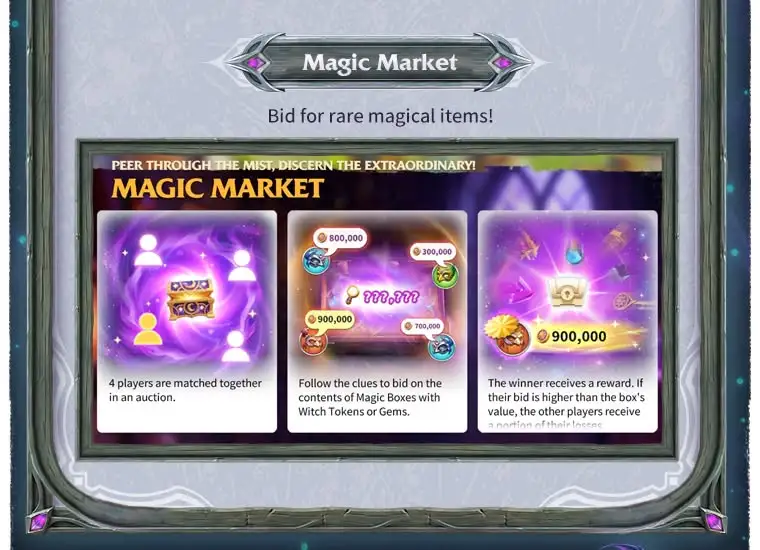
Neither event is likely to redefine the meta on its own. Their value is in feeding the War Pet economy with the materials the overhaul now makes useful.
Serpent Altar and Unceasing Furnace: The City Themes
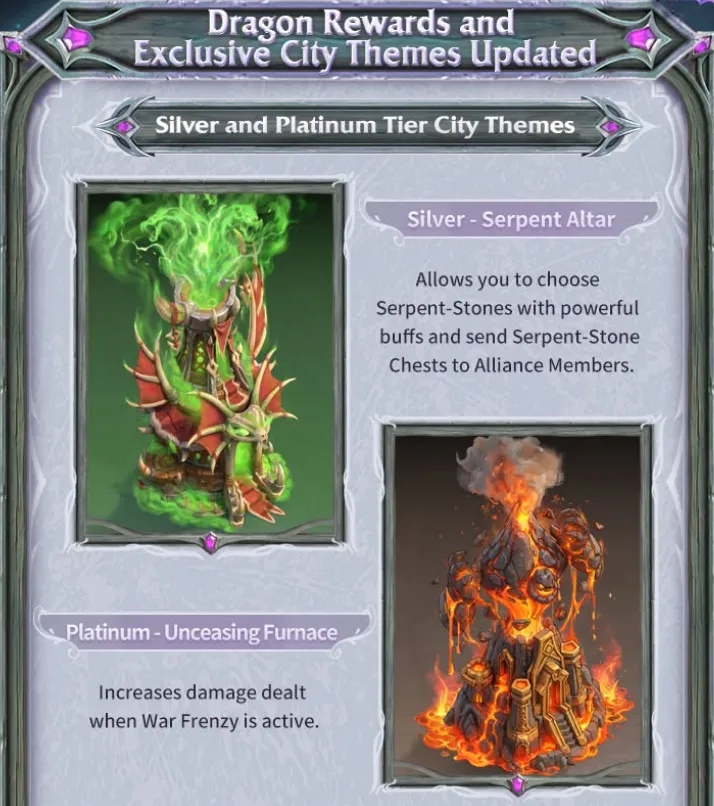
The two exclusive city themes are straightforward prestige cosmetics.Serpent Altarleans into the occult, altar-and-serpent imagery that fits the Spirit Night branding;Unceasing Furnacegoes in the opposite direction, all heat and industry. Call of Dragons city themes have never carried stat bonuses, and nothing in the 1.0.54 notes suggests these do either. Choose based on how you want your city to read on the world map, not on performance. If you are the kind of player who coordinates city appearances with alliancemates during a season, Serpent Altar is the more distinctive of the two for Halloween timing.
The Real Headline: The War Pet Training Overhaul
This is where Spirit Night earns its patch number. The War Pet system has always had a quiet frustration baked into it: pets are captured with randomized skills and attributes, and improving them has historically meantre-rolling the entire petand accepting whatever comes out. A decent pet with the wrong stat spread for your march type was often a dead end. The 1.0.54 changes attack that dead end from three directions.
Attribute Points Reset: Fixing the Wrong Roll Without Losing the Pet
Regeneration— the existing reroll mechanic — shuffles a pet’s attributes and can even change its rarity, but the results are random, and you cannot choose which specific outcome you get. What the “Attribute Points Reset” language in 1.0.54 implies is a more surgical version of that idea: the ability to redirect a pet’s attribute investment rather than gamble on a full reroll.
For players who have invested in a pet only to realize itsStrengthspread is wrong for an Infantry march, or that itsIntelligenceis too low for a Mage pet, this is the difference between salvaging months of investment and starting over. The practical rule is simple: before you release or reroll a high-rarity pet, check whether an attribute reset can solve the problem first. Do not throw away a Legendary-rarity pet because the numbers are pointed the wrong way.
Skill Transfer: Building the Pet You Actually Need
War Pets can equip up to eight skills, split between a unique Rage Skill and universal Passive Skills that provide attack, crit, healing, or defense buffs. Historically, those skills arrived randomly on capture, and changing them meant consuming skill cards through the Skill Shop or accepting whatever the pet rolled.
Skill Transferchanges the logic. Instead of treating each pet as a closed package of random skills, the system allows skills to move between pets. This matters most when you capture a pet with an excellent unique Rage Skill but a poor overall skill slot layout, or when a support pet rolls a Passive Skill that belongs on a different march type entirely. The correct workflow becomes:identify the skill first, then decide which pet hosts it, rather than building a pet around whatever skills happened to appear.
Skill synergy is the whole game with War Pets — a mismatched skill set on a high-rarity pet is still a mismatched skill set. Skill Transfer is the first system that lets you correct that mismatch without discarding the pet itself.
Pet Fruits: Turning Dead Pets into Progress
Pet Fruitsappear to function as a recycling currency tied to releasing or retiring pets. The pattern is already visible elsewhere in the game’s economy: when pets obtained through the Pet Auction are released, the Merchants’ Guild sends Pet Fruits in return. Spirit Night appears to formalize and expand that loop.
The strategic implication is thatduplicate or low-quality captures are no longer pure inventory clutter. In a system where Sanctuary and Enclosure space is limited — the Sanctuary holds only seven active pets, with overflow going to the Enclosure — having a productive outlet for unwanted pets is not a minor convenience. It is the difference between continuing to capture pets during events and stopping because your storage is full of creatures you will never use.
War Pet Recommendations: Cutting Through the Build Noise
TheWar Pet Recommendationsfeature is the smallest change on paper and the one most likely to help the widest range of players. Call of Dragons pet building has generated an enormous volume of community guidance — which pet pairs with which march type, which attribute matters for which role, which skills belong together — and much of it is scattered, outdated, or contradictory. An in-game recommendation layer does not replace theorycrafting at the top end, but it gives newer and mid-game players a sane default. Use it as a starting point, not a final answer: it will tell you what generally works, not what works with your specific hero pairings and artifact setup.
Spirit Night and Season of Strife 3: Why the Timing Matters
The “Season of Strife 3 Improvements” line in the patch notes is easy to skim past, but it is the context that makes the War Pet overhaul urgent rather than merely nice. Under the modern season structure, Hero levels, Hero skills and stars, Artifact levels, and permanent Technology all carry forward between seasons. What resets is the seasonal layer: Policies, seasonal map progress, and season-specific objectives.
That means your War Pet investment is one of the few forms of power that is neither fully permanent nor fully seasonal. It sits in the middle — expensive to build, slow to correct, and directly relevant to how your marches perform in the next Season of Strife battlefield. A player who enters the next season with a pet whose attributes and skills actually match their march type is bringing a real, carried-over advantage. A player who ignored the overhaul and is still running a randomly rolled pet with mismatched stats is bringing a liability they have simply stopped noticing.
If you are approaching a season transition, the order of operations should be: reset the attributes that are wrong, transfer the skills that are misplaced, recycle the pets you will never field into Pet Fruits, and then invest new materials into the corrected build — not the other way around.
Final Thoughts
Spirit Night is a Halloween update that is smarter than its costume. Wandering Souls and Magic Market give you reasons to log in and move around the map; Serpent Altar and Unceasing Furnace give your city a seasonal face. But the War Pet Training Overhaul is the part of 1.0.54 that will still matter months from now, when the pumpkins are gone and Season of Strife 3 is deciding who controls the next battlefield.
The players who get the most out of this patch will not be the ones who chase every event reward. They will be the ones who use Attribute Points Reset to rescue good pets from bad rolls, use Skill Transfer to build pets around skills instead of hoping for the reverse, and use Pet Fruits to keep their Sanctuary from becoming a museum of creatures they never deploy. Halloween lasts a few weeks. A well-built War Pet lasts for seasons.






 TOP UP WITH DISCOUNT NOW

LDShop Team Experienced Game Editors
The LDShop Editorial Team covers game updates, character builds, team compositions, and practical gameplay guides. We follow official announcements, test game mechanics, and gather insights from gaming communities to provide accurate, useful, and easy-to-follow content. Our goal is to help players make informed decisions, save resources, and get more out of their favorite games.
