


In Clash Royale, Arenas do more than just change the background. They define your place on Trophy Road, show how far you’ve progressed, and set the pace for the climb ahead. Here is everything you need to know about every current Arena, how Trophy Road progression works, and what you can do to climb faster as you move up the ladder.
What Arenas Mean in Clash Royale
Arenas are the milestones that shape your progress on Trophy Road. Early on, they decide what cards, rewards, and features start opening up to you. Later, they become a quick way to measure where you are in the game. The first stretch is mostly about learning the basics and building a functional deck. The middle stretch is where deck quality and card levels start to matter much more. At the higher end, especially above 10,000 trophies, Arenas are less about discovering new cards and more about consistency, reward progression, and pushing toward the top of Trophy Road. Heroes also now come into play earlier, with the first Hero Slot unlocking at Arena 5.
Full Clash Royale Arena order (current 2026 Trophy Road)
|
Arena |
Name |
Trophy Range |
|
Training Camp
|
Tutorial |
Starting Area |
|
Arena 1
|
Goblin Stadium |
0–300 |
|
Arena 2
|
Bone Pit |
300–600 |
|
Arena 3
|
Barbarian Bowl |
600–1,000 |
|
Arena 4
|
Spell Valley |
1,000–1,300 |
|
Arena 5
|
Builder’s Workshop |
1,300–1,600 |
|
Arena 6
|
P.E.K.K.A’s Playhouse |
1,600–2,000 |
|
Arena 7
|
Royal Arena |
2,000–2,300 |
|
Arena 8
|
Frozen Peak |
2,300–2,600 |
|
Arena 9
|
Jungle Arena |
2,600–3,000 |
|
Arena 10
|
Hog Mountain |
3,000–3,400 |
|
Arena 11
|
Electro Valley |
3,400–3,800 |
|
Arena 12
|
Spooky Town |
3,800–4,200 |
|
Arena 13
|
Rascal’s Hideout |
4,200–4,600 |
|
Arena 14
|
Serenity Peak |
4,600–5,000 |
|
Arena 15
|
Miner’s Mine |
5,000–5,500 |
|
Arena 16
|
Executioner’s Kitchen |
5,500–6,000 |
|
Arena 17
|
Royal Crypt |
6,000–6,500 |
|
Arena 18
|
Silent Sanctuary |
6,500–7,000 |
|
Arena 19
|
Dragon Spa |
7,000–7,500 |
|
Arena 20
|
Boot Camp |
7,500–8,000 |
|
Arena 21
|
Clash Fest |
8,000–8,500 |
|
Arena 22
|
PANCAKES! |
8,500–9,000 |
|
Arena 23
|
Valkalla |
9,000–9,500 |
|
Arena 24
|
Legendary Arena |
9,500–10,000 |
|
Arena 25
|
Lumberlove Cabin |
10,000–10,500 |
|
Arena 26
|
Royal Road |
10,500–11,000 |
|
Arena 27
|
Musketeer Street |
11,000–11,500 |
|
Arena 28
|
Summit of Heroes |
11,500–12,000 |
|
Arena 29
|
Magic Academy |
12,000–12,500 |
|
Arena 30
|
Ultimate Clash Pit |
12,500–13,000 |
|
Arena 31
|
Little Prince’s Tavern |
13,000–13,500 |
|
Arena 32
|
Spirit Square |
13,500–14,000 |
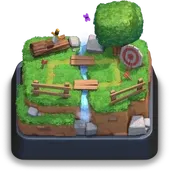
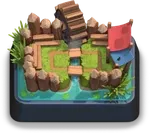
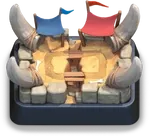
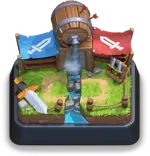
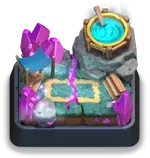
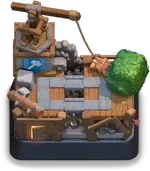
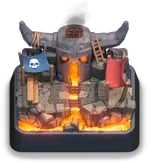
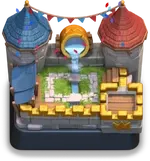


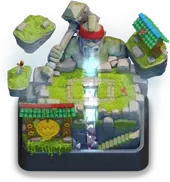
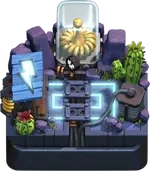

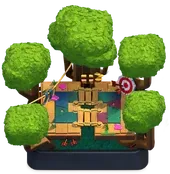
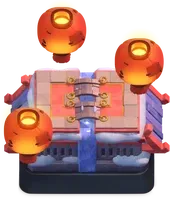
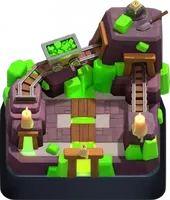
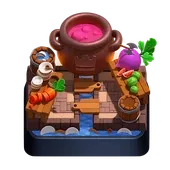
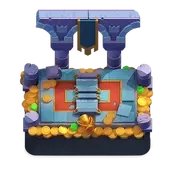
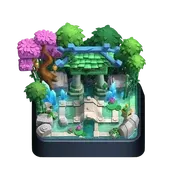
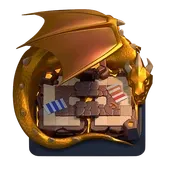
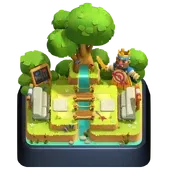

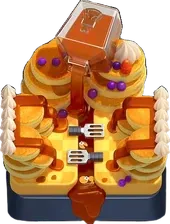


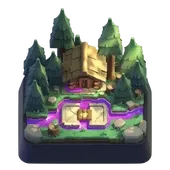
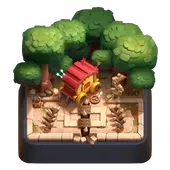
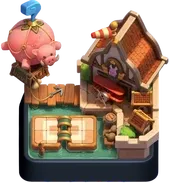

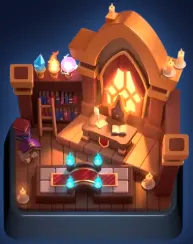
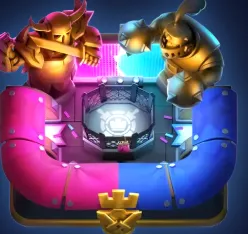
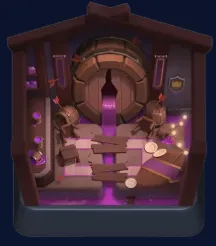
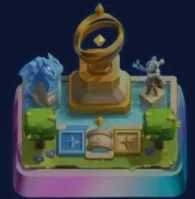
Training Camp is the tutorial area, and the main Trophy Road begins at Goblin Stadium. As of the current 2026 Trophy Road, the ladder extends all the way to Spirit Square at 14,000 trophies.
What changes as you move through the arenas
That’s the full Arena path on the current Trophy Road, but the experience changes quite a bit as you move through it.
In the early arenas, the game is mostly teaching you the basics: how to spend elixir, how to defend efficiently, and how your deck is supposed to win. In the middle arenas, mistakes get punished more often, so card levels and deck structure start to matter a lot more. Between 5,000 and 10,000 trophies, climbing is less about new unlocks and more about cleaner play, better defense, and stronger synergy between your cards. Above 10,000, you’re still on the same permanent Trophy Road, but the competition gets tighter and consistency becomes the biggest difference-maker.
Best tips for climbing arenas faster
If you want the simplest climbing advice, it’s this: build one real ladder deck first.
Don’t treat every cool card you unlock like it has to go straight into your main list. If your win condition is Hog Rider, level the cards that actually support Hog Rider. If you play Giant, build properly around Giant. If you’re using a bait deck, invest in the bait shell instead of scattering resources everywhere. A focused account climbs much faster than a messy one.
Another big habit to fix is overdefending. A lot of losses come from spending six or seven elixir to stop something that only needed three or four. It feels safe in the moment, but it usually leaves you wide open on the counterpush. Cheap, efficient defense wins a lot of ladder games.
It also helps to understand what each stage of Trophy Road is really testing. Early arenas test your fundamentals. Mid arenas test whether your deck makes sense. Higher arenas test whether you can manage elixir, rotation, and punish windows without getting impatient. If you keep losing in the same range, it usually isn’t because you suddenly need a totally different Arena strategy. More often, that range is exposing a habit you haven’t cleaned up yet.
And finally, don’t get too hung up on the Arena name itself. The theme is fun, but the bigger deal is the progression breakpoint attached to it. The real value is in the rewards, the unlocks, and the way each stretch of Trophy Road pushes your gameplay a little harder.
Common mistakes players make in Trophy Road
The most common mistakes are chasing every new unlock, spreading your resources too thin, and tilt-playing after a few losses.
Just because you unlocked a new card doesn’t mean it belongs in your ladder deck right away. The same goes for upgrades. A flashy pile of half-leveled cards usually performs worse than a simple, well-leveled deck you actually know how to pilot.
Tilt is another big one. Clash Royale punishes impatience hard. Once players start trying to force wins after a bad streak, they usually make worse trades, spend elixir too fast, and hand over trophies they didn’t need to lose. If the games start feeling rushed, that’s usually the point where stepping back helps more than queueing again immediately.
Final thoughts
Clash Royale’s Arena system is still one of the clearest progression paths in the game. As you move up Trophy Road, the opponents get tougher, the margin for error gets smaller, and every Arena asks a little more from your deck-building and decision-making. If you stay focused on one solid ladder deck, manage your upgrades carefully, and keep your play clean, climbing through the Arenas becomes a lot more manageable.
And if you’re getting ready for the next push and need a smoother way to top up your account, LDShop is a convenient option to keep in mind. A quick recharge can make it easier to pick up the resources you need and stay on track as you climb.






 TOP UP WITH DISCOUNT NOW
Savannah Reed Experienced Game Editor
Savannah Reed is a senior game editor at LDShop.gg, specializing in in-depth coverage of RPG and strategy games. With a strong focus on titles like Wuthering Waves, Honkai: Star Rail and Whiteout Survival, she combines industry insight with firsthand player experience to deliver clear, informative, and actionable content. Her work is dedicated to helping gamers make smarter decisions—whether it’s understanding new updates or optimizing their in-game strategy.
