


Ragnarok brings back familiar seasonal systems with a revised map, new territory arrangements, and plenty of upgrades to keep your alliance busy. The Norse name may suggest a completely different world, but the season still carries over the pyramids, temple ruins, and desert setting associated with Origin Lands.
This Dark War Survival Season 7 Ragnarok Guide walks through the season numbering, map changes, buildings, temple progression, Museum, Ra’s Collection, and the activities shown during the season. More importantly, it explains where the key resources come from and which upgrades compete for your Obsidian.
Is Ragnarok Season 6 or Season 7?
Both season numbers are used. Ragnarok is technically Season 7, but the removal of the original Season 2 means that some newer states display it as Season 6. The numbering difference does not indicate two separate Ragnarok seasons.
Ragnarok is a limited rework of Origin Lands (Season 5). It keeps much of the earlier season’s map and mechanics, with adjustments to territory competition and seasonal activities. Although the theme is Norse-inspired, the map retains its pyramids, temple ruins, and desert environment.
Ragnarok Timetable
During the first two weeks, Enemy Buster begins 15 minutes after the Temple fights. From Week 3 onward, Enemy Buster returns to its normal opening schedule. Check the event timer in your state so your alliance can plan around the actual start time.
Ragnarok Map, Home Sections, and Territory Battles
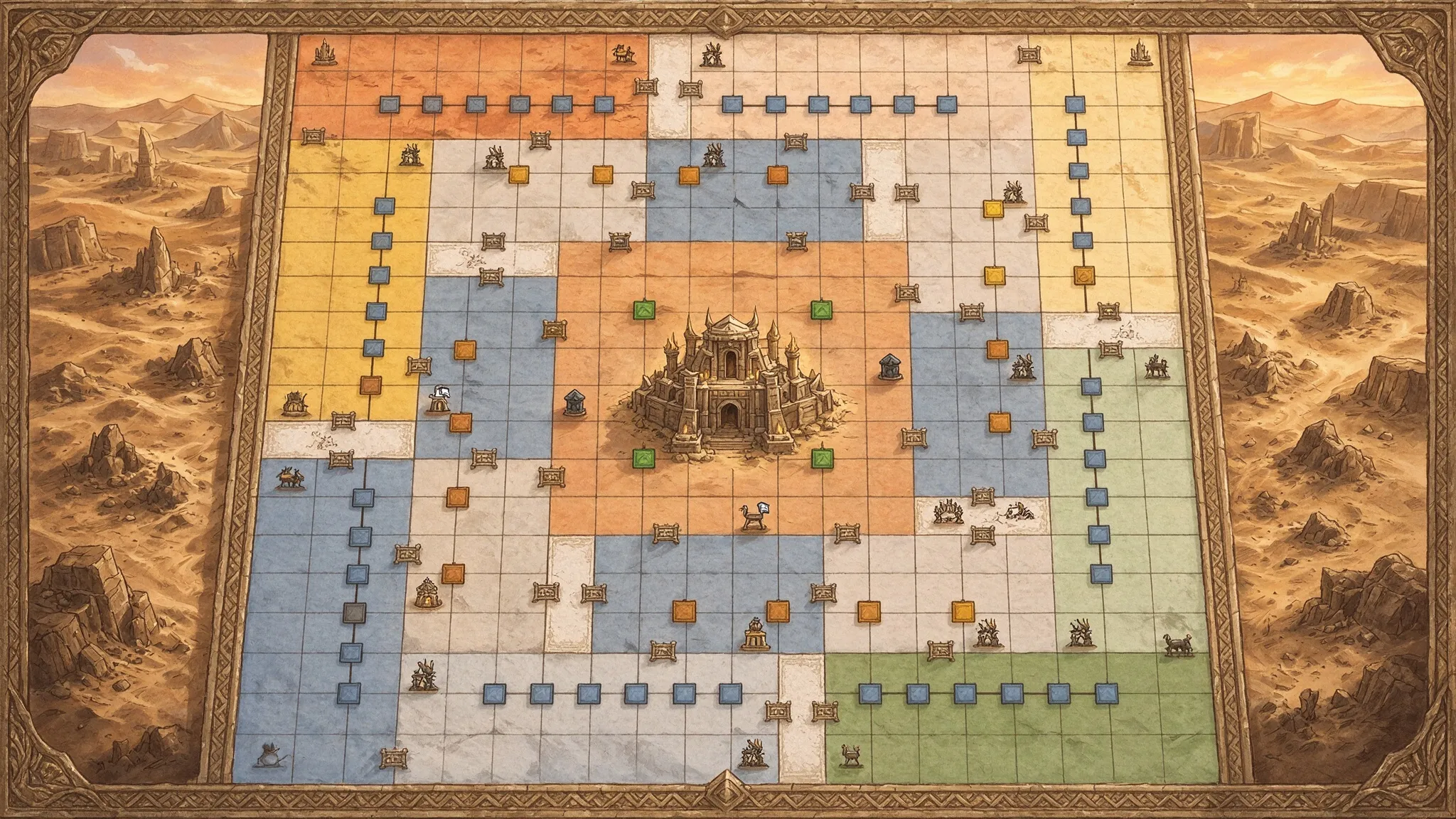
The Ragnarok map is a modified version of the Origin Lands layout. It is divided into eight Home Sections, and each section can contain one or more alliances. Alliances are matched against neighboring sections for Temple Wars. These encounters can expand into larger battles involving additional alliances later in the season.
The old tile-walking system has been removed. You no longer need to create a connected trail of tiles to move across the map. Portals also no longer transport trucks. Their seasonal building upgrades instead provide March Speed.
Your hive must be placed in your own Home Section, marked by the house icon. Shields can only be activated inside that area.
Faction Outposts and Faction Confrontation
The Faction Outpost and Faction Confrontation screens show alliance positions, cities, and territory. Different Home Sections can be occupied by different alliances, and the map indicates which areas are controlled or available. Some areas appear red before they open and later become accessible.
Territory Dispute is part of the territory competition, but its rules and ranking details are not specified here. Check the in-game event panel for the active rules and opening time.
Battle for Territory
Battle for Territory has a countdown of roughly three hours and offers chest rewards. Its event rules and ranking details are not specified here, so confirm the current details in-game before planning participation.
Avoid unnecessary fighting inside your own alliance’s wider neighborhood. Internal conflicts can weaken alliance performance and affect the rewards available at the end of the season. Cooperation with neighboring alliances can be important when territory battles expand.
Ragnarok Seasonal Buildings
Holy Altars
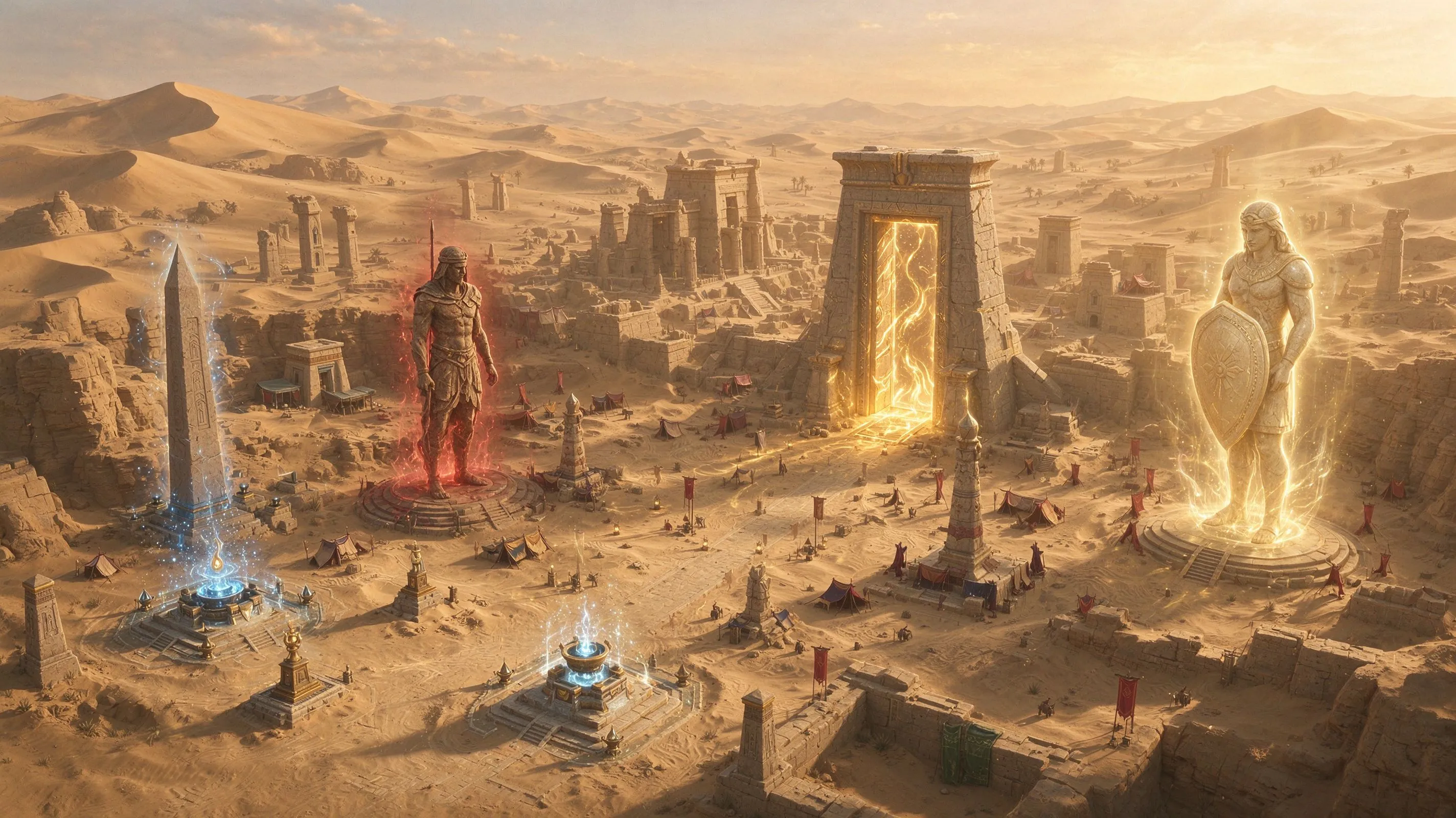
Holy Altars produce Holy Water, and upgrading them increases their production. There are four standard Holy Altars. A fifth is available through the Weekly Pass, and the extra building remains after the pass expires.
The Weekly Pass Altar is capped at Level 11 until Altar 2 also reaches Level 11. The recommended progression is to raise an Altar to Level 15 to open the next one, repeat this until all four standard Altars are available, and then upgrade the lowest-level Altar. Production increases are the same at each level, while Obsidian costs rise with each upgrade.
Free-to-play and low-spending players should avoid maxing every Holy Altar too early. Obsidian is also needed for the Obelisk, so spending too much on Altar upgrades can slow resistance progression. The four standard Altars can still be developed without the Weekly Pass; other building progression can also come from the Season Pass, events, and Roaming Thief kills.
Obelisk
The Obelisk increases Virus Resistance as it is upgraded. At maximum level, it also raises tile capacity to 50. It is a key seasonal building, so keep its Obsidian requirements in mind when deciding how quickly to upgrade the Holy Altars.
Portal
The Portal no longer transports trucks across the map. Upgrading it provides March Speed instead, with this benefit becoming more relevant in the middle or later part of the season. The Portal unlocks at Obelisk Level 30. It is not the first building to prioritize while Holy Water and Obsidian are still needed elsewhere.
Statue of Carnage
At Level 50, the Statue of Carnage increases Season Troop Damage by 50% and adds 1,000 destruction value. When the season ends, these bonuses decrease to 30% Season Troop Damage and 600 destruction value.
Statue of Guardian
The Statue of Guardian increases hospital capacity by up to 4,000 troops. This is a useful capacity increase to consider when preparing for the longer and larger battles that take place during the season.
Temple Tasks and the Eight Temples
There are eight temples across the map. Two are associated with Ruin Artefacts, while the remaining six are faction temples. Each temple has its own tasks. Upgrade task grades to GOLD or S Class rather than settling automatically for the lowest initial grade. Ancient Relic progression opens faction boosts, so focus on the faction used by your main lineup.
|
Temple Group |
Temple |
Listed Effects / Role |
|
Ruin Artefact |
Temple of Sobek |
Scale Shield: reduces damage taken by 5% and 10%; provides +15% Affinity twice. |
|
Ruin Artefact |
Temple of Aset |
Amulet of Life: Hospital Capacity +500 and +1,000; Healing Speed +50% and +100%; provides +15% Affinity twice. |
|
Fighter |
Temple of Set |
Faction Temple |
|
Fighter |
Temple of Shu |
Faction Temple |
|
Shooter |
Temple of Nut |
Faction Temple |
|
Shooter |
Temple of Tefnut |
Faction Temple |
|
Rider |
Temple of Nepthys |
Faction Temple |
|
Rider |
Temple of Leyland Corestone |
Faction Temple |
Temple of Set and Temple of Isis are also listed under an A-grade category. Keep this category separate from the eight-temple list above; the names should not be silently substituted for one another.
Ancient Relic and Warlord Awakening
Ancient Relic
Ancient Relic progression is advanced through daily tasks connected to the eight temples. Upgrade tasks to GOLD or S Class and prioritize the faction that matches your main troops: Fighter, Shooter, or Rider.
At maximum progression, Ancient Relic provides +200% ATK and DEF, +20% March Speed, and +500 Curse Resistance.
Warlord Awakening
Warlord Awakening is tied to Ancient Relics and Runes and unlocks at Level 70. Its daily stages require defeating or heavily wounding 20,000, 50,000, or 150,000 enemy camp units.
|
Daily Enemy Camp Units |
Listed Effect |
|
20,000 |
1,500% ATK damage |
|
50,000 |
3,000% ATK damage |
|
150,000 |
3,000% damage to random targets within a 7×7 area |
The target count for the final stage is not stated consistently, so no exact number of targets is given here.
Obsidian Sources and Ra’s Collection
Wandering Guards and Other Obsidian Sources
Wandering Guards provide Obsidian, a rare seasonal resource. Joining rallies hosted by stronger players is one way to take part in these encounters. Sands Catastrophe on Sundays allows three Wandering Guards.
Corrupted Boomers can also be rallied for Obsidian. Other listed sources include:
Weekly Pass and Season Pass rewards.
Ra’s Collection.
Hunt Mummies, including ranking and first-down rewards.
Dark Syndicate Trucks of A or S class.
Shadow Calls of A or S class.
Rallies that provide first-down rewards.
Ra’s Collection
Collect Amber through tasks, Roamer encounters, Colossus Clash, and Lord of Monsters. Amber can be spent in Ra’s shop, where Obsidian and Holy Water are available and the shop refreshes weekly.
The collection also includes a unique artefact. After obtaining it, use it in the Museum.
Trade Posts, Divine Envoy, and Other Activities
Trade Posts
Trade Posts return in Ragnarok. Early-season fights are limited to local opponents. During the timed event, access expands to the whole map. These battles can take a long time for relatively modest rewards, but the shop can offer speedups and seasonal materials that are useful to an alliance. Governor items are more attractive than the items available to regular players.
Divine Envoy
Divine Envoy is the daily Tetris-style puzzle. It is a recurring source of Obsidian and chests. Perfect Clears matter because they are required for the better chests.
Save the Messenger
Save the Messenger is a seasonal puzzle activity. The next set of stages opens the following day.
Calamity
Calamity takes place on Saturdays. Check the in-game schedule for the current opening time and participation details.
Season Points and Activity Rewards
Combat can earn seasonal points, with a battle action awarding 30 points. Combat also consumes stamina. Season Achievements include Eternal Solar Disk. A reward tier includes Wasteland Pioneer, Underworld Crown, 10,000 Diamonds, 300 Apocalypse Coins, and 30 hours each of Construction, Research, and Soldier speedups. Check the relevant activity screen to confirm the exact conditions and reward tier.
Museum and Season Pass
The Museum continues to provide seasonal collection bonuses, including Troop Damage Increase, Counter-Attack Damage Increase, and random equipment fragments. Harp of Abundance can also provide an orange chip.
The Season Pass is useful for early- and mid-season progression. It includes Obsidian, Holy Water, fragments, Museum inscriptions, Rune-related rewards, weekly rewards, and a construction queue reward. Its Trade Chamber benefit is an additional 5% discount on goods. The Slaughter and Guardian stat level limits each increase by 20.
End-of-Season Growth Medals
The following milestones contribute to the end-of-season Growth Medal total.
|
Milestone |
Level |
Season Medals |
|
Each Holy Altar (I-IV and Weekly Pass Altar) |
20 / 23 / 26 / 28 / 30 |
200 / 200 / 300 / 300 / 500 |
|
All five Altars |
— |
7,500 total |
|
Obelisk |
20 / 25 / 30 |
200 / 300 / 500 |
|
Obelisk total |
— |
1,000 |
|
Ancient Relic |
40, 45, 50 |
1,000 each |
|
Ancient Relic |
55, 60, 65 |
1,500 each |
|
Ancient Relic |
70, 75, 80 |
2,000 each |
|
Ancient Relic |
85, 88, 91 |
3,000 each |
|
Ancient Relic |
94, 97, 100 |
4,500 each |
|
Ancient Relic total |
— |
36,000 |
|
Artefact Collection |
5 / 8 / 11 |
500 each |
|
Artefact Collection |
14 / 17 / 20 |
1,000 each |
|
Artefact Collection |
23 / 26 / 29 |
1,500 each |
|
Artefact Collection |
32 |
2,500 |
|
Artefact Collection total |
— |
11,500 |
|
Grand total |
49 milestones |
56,000 |
Ragnarok Progression Tips
Keep Obelisk progression moving. Virus Resistance is central to the season, and the Obelisk also raises tile capacity to 50 at maximum level.
Do not spend all your Obsidian on Holy Altars at the start. Open the standard Altars through the Level 15 progression, then upgrade the lowest one while keeping Obelisk costs in view.
Prioritize GOLD or S Class Temple Tasks and focus Ancient Relic boosts on your main faction.
Join rallies against Wandering Guards and Corrupted Boomers when possible to obtain Obsidian.
Use Divine Envoy for its daily rewards and aim for Perfect Clears to qualify for better chests.
Coordinate with neighboring alliances where possible. Unnecessary internal fighting can reduce the alliance’s overall effectiveness and end-of-season rewards.
Final Thoughts
Ragnarok keeps much of the Origin Lands structure while changing the map into eight Home Sections and adjusting how alliances compete. Its progression revolves around Holy Water, Obsidian, the Obelisk, temple tasks, Ancient Relic, and the activities that supply seasonal resources.
Keep your building upgrades balanced, focus on the faction that supports your main troops, and do not overlook daily activities such as Divine Envoy. If you need additional resources for your account, visit LDShop for Dark War Survival top up options and prepare for the next round of alliance battles.






 TOP UP WITH DISCOUNT NOW

LDShop Team Experienced Game Editors
The LDShop Editorial Team covers game updates, character builds, team compositions, and practical gameplay guides. We follow official announcements, test game mechanics, and gather insights from gaming communities to provide accurate, useful, and easy-to-follow content. Our goal is to help players make informed decisions, save resources, and get more out of their favorite games.
