


Coins are one of the most important resources for steady progression in Fate War. As your settlement expands, the cost of construction, upgrades, research, and long-term development continues to rise. Relying only on occasional rewards can quickly lead to shortages, delayed projects, and slower overall growth. Building a reliable Coin economy is therefore essential for keeping your settlement productive and prepared for future challenges. Scroll down to know more!
What Are Coins Used for in Fate War?
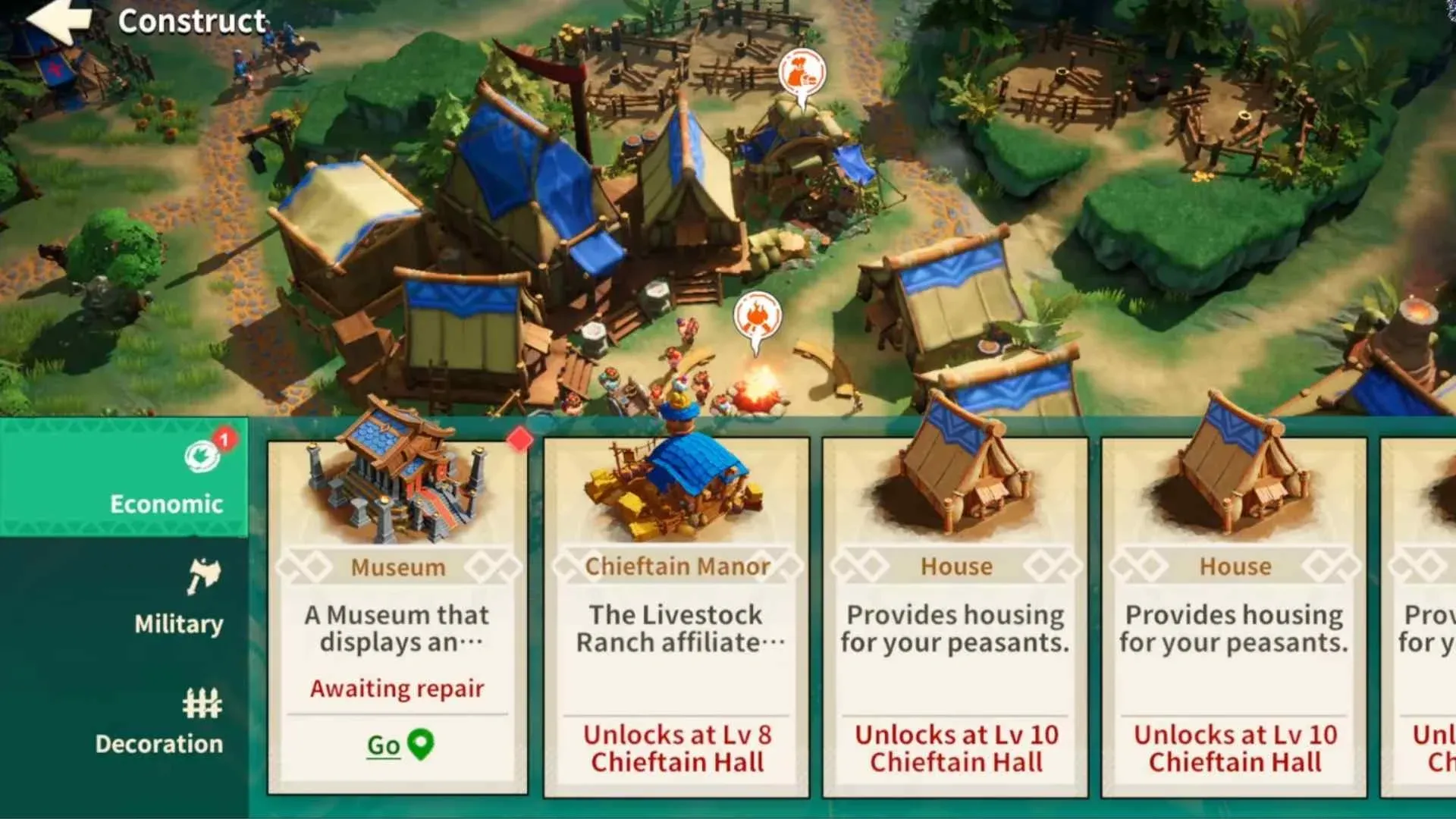
Coins are one of the most common progression bottlenecks in Fate War. Their value comes from keeping construction, research, and resource development moving without interruption. A large balance is useful only when it is available at the moment a major project becomes ready.
Chieftain Hall and economic building upgrades.
Research that lists Coins among its requirements.
Resource-node and settlement development.
Multiple construction projects scheduled close together.
Concentrated growth during events or milestone pushes.
Do not judge the economy only by the current balance. Compare available Coins with the combined cost of the next Hall, research, Bathhouse, and territory objectives. Spending every Coin immediately can create avoidable delays even when average income appears healthy.
Practical reserve: Keep one pool for Hall, research, and essential economic upgrades, plus a smaller flexible reserve for short-term objectives. This protects the main progression route from minor spending decisions.
How Fate War Tax Income Is Calculated
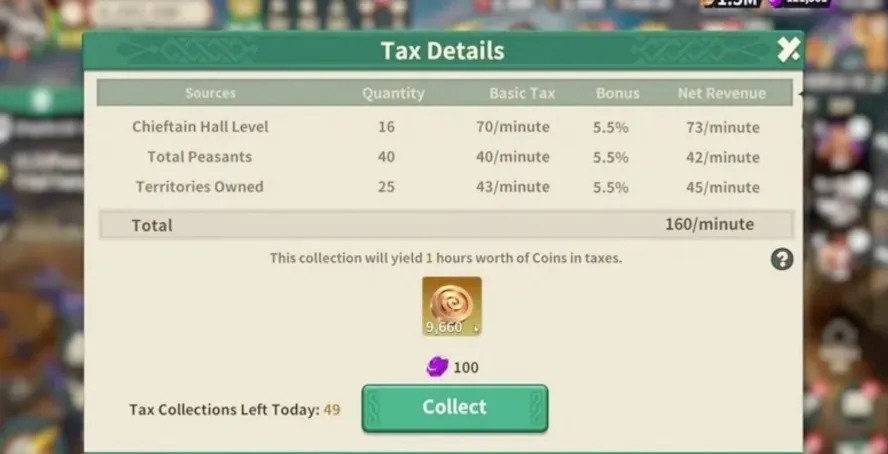
The Tax Details screen separates income into several components, including Chieftain Hall level, total Peasants, territories owned, bonuses, and net revenue per minute. This confirms that Coin income is a connected system rather than the output of one building.
- Check total net revenue per minute.
- Compare the Hall, Peasant, and territory entries.
- Identify the smallest contribution.
- Determine whether it is limited by building level, population, or exploration.
- Direct the next batch of resources toward that weakness.
This approach is more efficient than upgrading whichever building is easiest to tap. For example, adding House capacity has limited immediate value when actual population remains far below the existing limit.
The tax screen may offer Gem-assisted collection. Treat it as optional acceleration rather than the foundation of the economy. Confirm the displayed cost, return, and remaining collection count before spending Gems because interface values and limits can change.
How the Chieftain Hall Increases Coin Income

The Chieftain Hall is the foundation of long-term economic progression. Its level appears in the tax breakdown and also controls access to other buildings and settlement development.
It strengthens the Hall component of tax revenue.
It unlocks economic buildings and additional development.
It raises the settlement's overall progression ceiling.
Hall priority does not mean that every available resource must always be saved for it. If the next level is blocked by prerequisites or a long wait, use that period to improve the Bathhouse, Houses, territories, or Builder Commons.
After every Hall upgrade: Claim new progression rewards, inspect unlocked economic buildings, reopen Tax Details, and check whether House capacity, Bathhouse level, or territory objectives now need attention.
How Houses and Peasants Affect Taxes
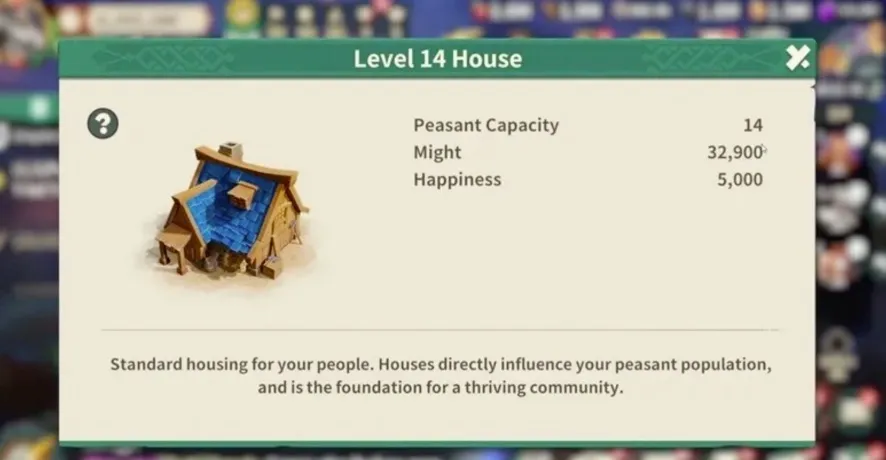
Houses influence Peasant capacity, while total Peasants appear as a separate source in the tax calculation. A strong population economy therefore requires both sufficient capacity and enough actual residents.
Population is close to capacity: upgrade or add Houses.
Capacity is high but population is low: investigate Happiness, living conditions, and territorial development.
Population is healthy but taxes remain weak: check Hall level, territories, and economic bonuses.
Empty House capacity does not provide the same value as actual population. Before upgrading, review the current Peasant count, maximum capacity, idle Peasants, Happiness, and the availability of new settlement areas.
Efficiency rule: Upgrade Houses when real population is approaching the limit. When a large gap remains, solve the population-growth problem first.
How Territories Improve Fate War Coin Income

Owned territories appear as a separate component in Tax Details. Territory expansion therefore affects both settlement space and Coin income.
Distinguish between the value of unlocking a territory and the value of upgrading every structure inside it. A newly owned territory can support the tax calculation, while secondary upgrades may serve different purposes.
Check whether the new territory will enter the tax calculation.
Confirm that expansion will not occupy an essential construction queue for too long.
Preserve the resources needed for the next Hall upgrade.
Consider additional population and resource-node benefits.
If expansion would delay an important Hall level for a long time, complete the Hall objective first. If the Hall is blocked by prerequisites, territory progression can make productive use of the waiting period.
How to Use the Bathhouse for Passive Coins

The Bathhouse is one of the clearest passive Coin sources because its upgrade preview displays Coin production per minute and the increase from the next level.
Its greatest advantage is time. Once production rises, the improvement continues during active and offline periods. An upgrade completed earlier has more time to repay its resource cost.
Compare the displayed Coin-per-minute increase with the required resources.
Protect materials required by the next Hall level.
Use available construction time before a long offline period.
Decide whether the problem is a temporary shortage or weak recurring income.
Use taxes or Trading House exchanges for a small immediate shortage. Upgrade the Bathhouse when the account repeatedly runs out of Coins over several development cycles. The Hall and Bathhouse do not need to remain at identical levels.
👇LDShop offers the best deals to top up Fate War. Visit the Fate War top up page to see more.
How to Earn Coins Through the Trading House

The Trading House lets players convert surplus resources into Coins or other useful items. Its main economic value is correcting an unbalanced inventory.
A settlement may have abundant Food but lack the Coins required for its next project. If that Food is not needed for an upcoming Hall, Bathhouse, research, or training requirement, an appropriate caravan offer can turn part of it into useful currency.
Reserve the resources required by the next Hall upgrade.
Account for planned Bathhouse, House, research, and training costs.
Prefer trading resources that are approaching storage capacity.
Judge each offer by the reward displayed in the current client.
Caravan grades, offers, and exchange values can change. Do not build a long-term farming plan around one fixed chest value, task count, or exchange rate from an older guide.
How Happiness Supports the Coin Economy

Happiness does not produce Coins in the same direct way as the Bathhouse. Its role is to improve production and transport efficiency at resource nodes.
Economic Chain
Higher Happiness → better resource efficiency → faster economic upgrades → more surplus resources → more trading opportunities → lower Coin pressure.
Low Happiness can slow several systems at once. Weaker resource production delays Hall, Bathhouse, and House upgrades while also reducing the surplus available for Trading House exchanges.
Maintain resident conditions and use available settlement activities, including Feast-related Campfire functions, when they appear in the current client. Happiness should be treated as an economic multiplier: taxes and the Bathhouse create direct income, while Happiness helps the resource economy support them.
Why Reducing Coin Costs Matters
A healthy economy is determined by both income and expenditure. Reducing the cost of construction allows the same Coin income to support more upgrades.
The Builder Commons can reduce Coins, Gems, and resources consumed by construction while improving building efficiency. It does not add direct Coin production, but its value increases as building costs rise.
Improve it before a sequence of expensive building upgrades.
Value it more when construction queues remain active most of the time.
Compare expected future savings with the immediate upgrade cost.
Use cost reduction when Hall and economic upgrades repeatedly stop because of price.
Upgrade order also affects expenditure. Prepare Food, Wood, Stone, Ore, and prerequisite buildings before committing a large Coin payment. This prevents Coins from being tied up while another requirement remains unfinished.
Best Coin Upgrade Priority by Progression Stage
Early progression: Meet Chieftain Hall requirements, build necessary Houses, keep actual population near capacity, begin Bathhouse upgrades after it becomes available, and avoid routine Gem spending on ordinary shortages.
Mid progression: Compare Hall, Peasant, and territory tax entries; improve the weakest component; increase Bathhouse production; use the Trading House to correct inventory imbalances; and begin investing in construction-cost reduction.
Long-term progression: Prepare several projects in advance, maintain a Coin reserve, complete passive-income upgrades before long offline periods, use Gem-assisted collection only for a clear objective, and review Tax Details regularly.
Do not copy a late-game upgrade order onto a young account. Early settlements need unlocks and population, while mature settlements gain more from efficiency, reserves, and cost control.
Best Daily Fate War Coin Farming Routine
- Visit the Chieftain Hall and collect available taxes.
- Claim any Hall progression rewards.
- Open Tax Details and note net revenue per minute.
- Compare Hall, Peasant, and territory contributions.
- Check actual population against House capacity.
- Review the next Bathhouse production increase.
- Visit the Trading House and exchange only surplus resources.
- Check Happiness and resource-node efficiency.
- Review whether the Builder Commons needs improvement.
- Start a long economic upgrade before going offline.
If playtime is limited, prioritize Hall taxes, the Bathhouse, and Trading House offers. Before a long offline period, start an upgrade that increases recurring production. After returning, use accumulated income on the next Hall, research, or territory objective.
Common Fate War Coin Farming Mistakes
Upgrading only the Bathhouse: Hall level, population, and territories also contribute to income. Neglecting them creates an unbalanced tax structure.
Building more Houses without more Peasants: Empty capacity does not provide the same value as actual population. Investigate Happiness and development conditions first.
Trading every resource for Coins: The Trading House should process genuine surplus. Exchanging materials needed by the next key upgrade only moves the bottleneck.
Using Gems for routine tax collection: Review economic buildings and the tax breakdown before relying on accelerated collection.
Spending Coins on minor buildings immediately: Maintain a reserve so a low-priority project does not block Hall or research progression.
Ignoring construction discounts: Income may still feel insufficient when building costs rise faster. Improve cost control and plan projects in advance.
Fate War Coin Farming FAQ
What is the fastest way to earn Coins in Fate War?
Taxes and Trading House exchanges can solve short-term shortages. Long-term income requires the Chieftain Hall, actual Peasant population, territories, and Bathhouse to grow together.
Should I upgrade the Chieftain Hall or Bathhouse first?
Prioritize the Chieftain Hall during early progression because it supports taxes and unlocks. Upgrade the Bathhouse when the Hall is blocked or when doing so will not delay the next Hall level.
Do more Houses always mean more Coins?
Houses increase capacity. The tax benefit depends on actual Peasant population, so compare population with capacity before building more Houses.
Does Happiness directly produce Coins?
No. Happiness improves production and transport efficiency at resource nodes. This indirectly supports the Coin economy by accelerating upgrades and creating more surplus resources for trading.
Are territories worth unlocking for Coins?
Territories appear in the tax breakdown. Unlocking them can support long-term revenue, provided expansion does not severely delay a more important Hall upgrade.
Should I spend Gems to collect taxes?
Reserve Gem-assisted collection for urgent objectives. Standard income should come from taxes, population, territories, the Bathhouse, and resource trading.
Why am I still short on Coins after raising production?
Construction expenses may be rising faster than income. Review Builder Commons progression, upgrade order, and the size of the Coin reserve.
Conclusion
Review Tax Details every day and identify the weakest income component. Targeted investment in the Hall, population, territory, or Bathhouse produces more reliable progress than depending on occasional large rewards.
A strong Coin economy balances both sides of the equation: recurring income must rise while unnecessary spending falls. When these systems develop together, construction and research can continue without repeated shortages.






 TOP UP WITH DISCOUNT NOW
Savannah Reed Experienced Game Editor
I'm a game guide writer with over 20 years of experience playing all types of games, especially anime-style RPGs, gacha and sports games. I love finding smart ways to beat tough levels without spending too much money. By studying game mechanics and character systems, I create easy tips to help players save time and resources. When I'm not gaming, I watch anime to get inspiration for strategies. My goal? To help you enjoy games more and stress less – even when facing "impossible" bosses! Let’s make gaming fun and affordable together!
