



Thinking about switching kingdoms in Kingshot? The Kingdom Transfer event gives you a chance to reset your environment—but only if you understand the system first.
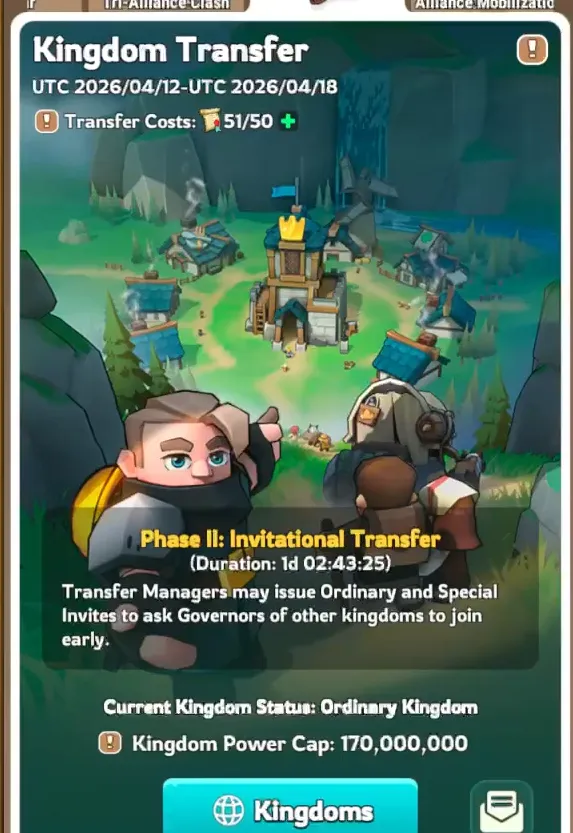
Transfer Basics
Kingdom transfers rely on Transfer Tickets, which act as the core cost for moving between servers. These can be purchased weekly through the Alliance Shop using alliance tokens, and the required amount scales with your overall power—meaning stronger accounts will need more preparation. Because this cost is dynamic rather than fixed, it’s always smart to stockpile tickets in advance, even if you’re not planning to transfer immediately. Having a reserve gives you flexibility when sudden opportunities—or problems—arise in your current kingdom.
Although the system is presented as a simple relocation mechanic, Kingdom Transfer is actually a two-way filtering system rather than a one-way choice. Players are not only selecting a new kingdom, but kingdoms are also actively screening incoming players based on power, activity, and strategic value. This becomes especially important in competitive servers, where entry is not guaranteed even if you meet basic requirements. In higher-tier kingdoms, transfers are often influenced by alliances, leadership decisions, and prior relationships between servers, making the process far more political than it initially appears.
Power Cap & Invite System
Each kingdom enforces a Power Cap that determines entry conditions. Players under the cap can transfer freely using tickets, while those above it must obtain a Special Invite. These invites are limited and controlled by kingdom leadership, making them a scarce and valuable resource. In practice, this means high-power players aren’t just transferring—they’re being selectively recruited. Because Special Invites are few per cycle and highly strategic, they’re usually reserved for players who bring meaningful value, and improper allocation can negatively impact a kingdom’s balance.
It’s also important to understand that the so-called “power cap” is not purely based on raw combat power. In practice, it reflects a broader evaluation of overall account strength, including progression efficiency, development stage, and sometimes even activity level. This means two players with similar power may not be treated equally during transfer evaluation. For high-end kingdoms, selection is less about numbers and more about how much value a player can bring to long-term kingdom performance.
Kingdom Types
Kingdoms are divided into Ordinary and Leading categories, which influence how open they are to incoming players. Ordinary kingdoms typically have more flexibility in accepting transfers, while Leading kingdoms—due to higher activity or population—operate under stricter controls. One key restriction is that Leading kingdoms often cannot issue Special Invites, a system designed to prevent excessive concentration of power and maintain competitive balance across servers.
Within this structure, the role of the Transfer Manager becomes extremely important. In many kingdoms, this position effectively acts as a gatekeeping authority for player entry, controlling who receives special invites and how limited slots are distributed. In more competitive servers, the Transfer Manager’s decisions can directly shape the kingdom’s future composition, determining whether the server develops into a balanced alliance ecosystem or a heavily concentrated power cluster. This makes transfer decisions partially administrative and even political in high-tier kingdoms.
Event Phases
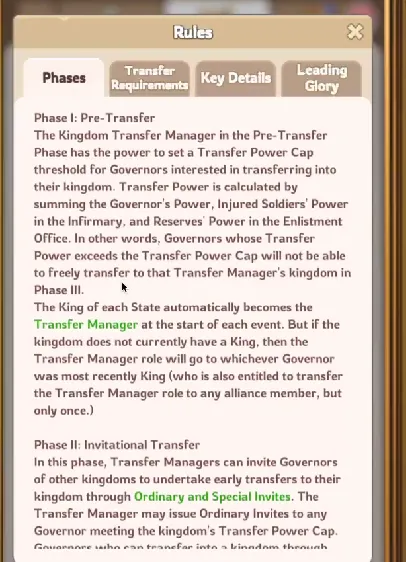
Pre-Transfer Phase
This phase serves as the preparation window where recruitment and planning take place. Transfer chats open, alliances begin scouting players, and kingdom leadership sets limits and entry strategies. It’s also one of the best times to explore options, especially during KvK periods when many players are actively considering relocation and communication between kingdoms is most active.
Invitational Phase
This is the most selective stage of the event. During this phase, kingdoms distribute Ordinary and Special Invites based on their needs and available capacity. High-power players must secure a Special Invite to enter, making competition for slots intense. For players targeting strong or well-organized kingdoms, this phase is often the deciding factor in whether the transfer succeeds.
Open Transfer Phase
This is the final transfer window where movement becomes more accessible. Players under the power cap can transfer freely using tickets without needing invites, while those above the cap still require approval. Popular kingdoms can fill quickly during this phase, so preparation and timing are critical to securing a spot.
Transfer Requirements
Before transferring, players must meet several conditions. You need to reach the required Town Center level, ensure your city is not in combat, and leave your current alliance. You also cannot hold special roles such as King or Transfer Manager, and there must be at least 25 days since your last transfer. These requirements are strictly enforced, so failing to meet any of them will block your transfer entirely.
What Actually Resets After Transfer
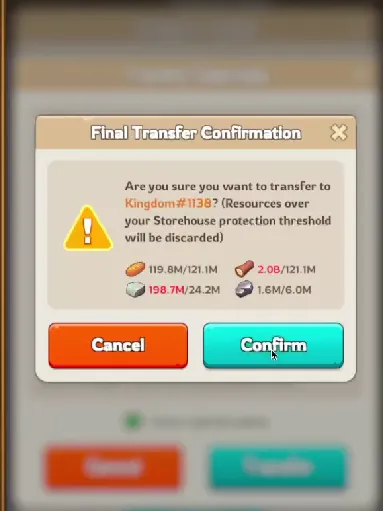
A kingdom transfer involves significant resets that can impact your progression. Systems such as Arena rankings, event progress, and certain competitive activities will reset, effectively placing you at the start of a new cycle in those areas. Your city will be randomly relocated in the new kingdom, you’ll receive a 24-hour protection shield, and you’ll be removed from previous kingdom chats. Most importantly, any resources that exceed your Storehouse protection limit will be lost during the transfer process, making it essential to use or redistribute them beforehand to avoid unnecessary losses.
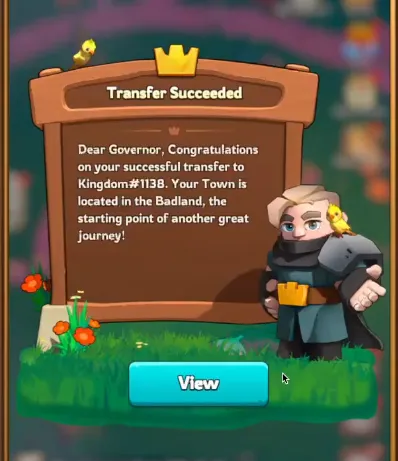
Strategic Tips
1. Transfer with a group, not alone
Moving as part of an alliance is far more effective than transferring solo. Organized groups are more attractive to destination kingdoms and provide immediate stability and coordination once you arrive, which is crucial for long-term success.
2. Be strategic with Special Invites
Special Invites are limited and highly valuable, so they are typically reserved for players who contribute significantly to a kingdom’s strength. Positioning yourself as a key player—whether through power, activity, or leadership—can increase your chances of securing one.
3. Time your transfer carefully
Transferring during active events often results in wasted progress due to system resets. Planning your move between event cycles allows you to minimize losses and transition more efficiently into your new kingdom.
Conclusion
Kingdom Transfer in Kingshot is essentially a strategic reset—done right, it puts you in a stronger environment with better rewards and coordination; done poorly, it can cost you progress and resources. Preparation and timing are everything.
If you want to recover quickly after transferring and stay competitive in your new kingdom, using a reliable option like LDShop to top up Kingshot can help you rebuild faster and keep pace with your new server.






 TOP UP WITH DISCOUNT NOW
Savannah Reed Experienced Game Editor
Savannah Reed is a senior game editor at LDShop.gg, specializing in in-depth coverage of RPG and strategy games. With a strong focus on titles like Wuthering Waves, Honkai: Star Rail and Whiteout Survival, she combines industry insight with firsthand player experience to deliver clear, informative, and actionable content. Her work is dedicated to helping gamers make smarter decisions—whether it’s understanding new updates or optimizing their in-game strategy.
![[Limited]Any 4.99 Pack | Kingshot](https://shop.ldrescdn.com/rms/ld-space/process/img/68f28687f8a94e27bfbe756c07fa84151777024585.webp?x-oss-process=image/resize,m_fill,h_116,w_116/format,webp)