


This guide isn't about basic alliance functions. This is about the alliance systems that separate the top-performing coalitions from the ones that dissolve after two weeks of mediocre event scores. We're covering the Alliance Duel phase rotation, the Elixir Scramble coordination framework, the Hunt Battle mechanics, and the hero investment decisions that make your alliance contributions actually matter.
👇LDShop offers the best deals to top up Last Asylum: Plague. Visit the Last Asylum: Plague top up page to see more.


The Alliance Duel Strategy
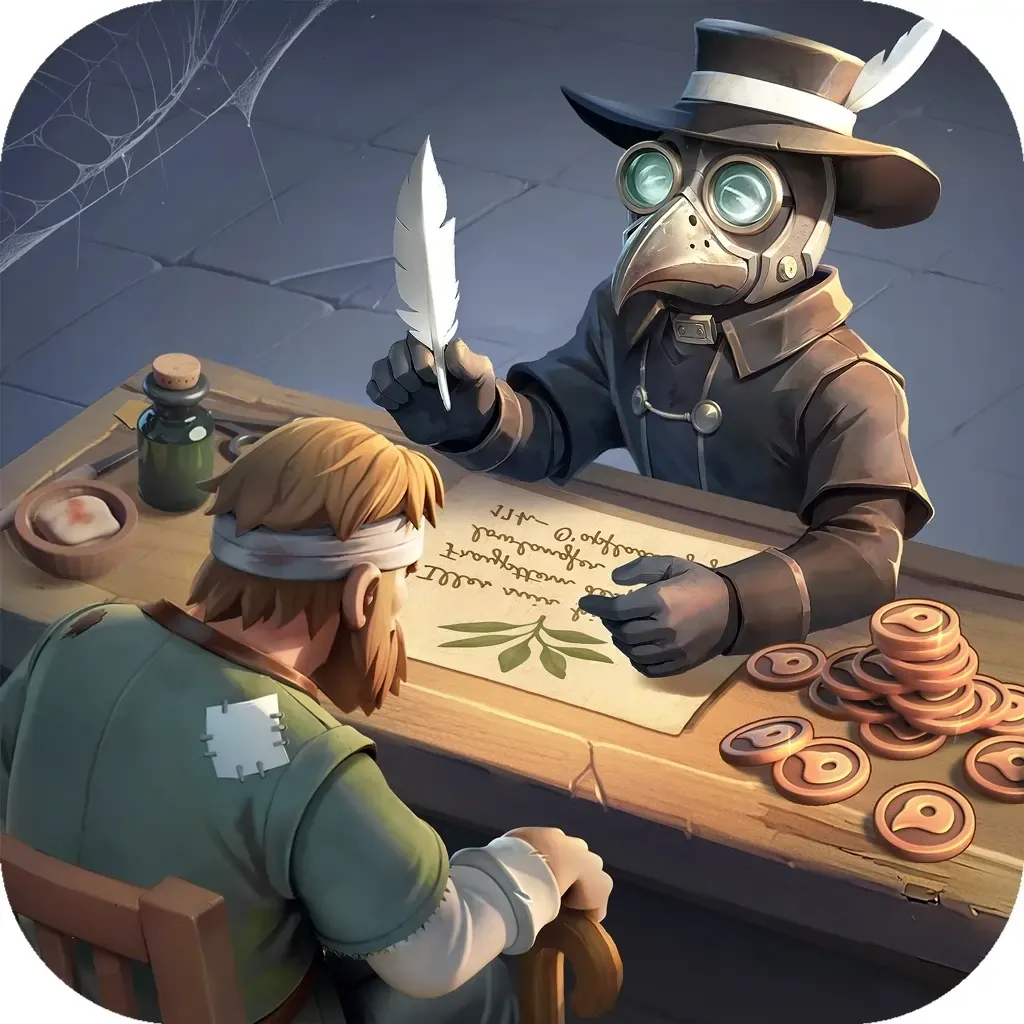
The Alliance Duel is the highest-stakes recurring event in Last Asylum: Plague—six phases, each scoring different categories of activity, spread across a fixed rotation. The event isn't a test of how many speedups you can burn in forty-eight hours. It's a test of when you burn them .
Pre-Event Foundation
Before we even discuss phase strategy, there's a hard prerequisite that alliance leaders need to audit across their roster: Research Lab Level 15. Without it, the Alliance Duel research tree doesn't unlock. Without that tree, your members are scoring below their potential, period .
Once Lab 15 is online, the research node priority matters:
- Tier 4–6 Reward Unlock first—this permanently expands event payouts for every future duel.
- Arena Expert to Level 20 next—this is a point multiplier that amplifies scoring across multiple phases.
- Tier 7–9 Reward Unlock after that—locking in the top reward bracket permanently.
- Then complete Arena Expert and clean up remaining nodes .
This order compounds. An early Tier 7–9 unlock doesn't just help one event; it raises the ceiling on every Alliance Duel your account participates in going forward.
The single biggest scoring advantage in Alliance Duel costs nothing except self-control: save your resources and deploy them during the phase that scores that category. Falcon Quests are the clearest example. Each one gives a clean 10,000 points when deployed. Players who save their Falcon Quests across the week and dump them at the start of each phase score significantly more than players who burn them as they earn them. The quests are identical. The timing makes all the difference .
Phase 1: Enhance Raven
This opening act scores Raven-related activity: Raven Essence, Raven Fruit, rallies, and squad movements.
Building speedups. Don't get antsy. The Territory Development phase is next, and that's where your construction investment actually pays off .
Phase 2: Territory Development
The Pre-Build Strategy:
If you have a building upgrade that takes more than a day, start it before Phase 2 opens—but do not tap the completion hammer. Let the build timer run out while the phase is inactive. When Phase 2 goes live, then you tap the hammer. The points register on the tap, not on the build completion. This is one of the most reliable scoring advantages in the entire game, and it costs you absolutely nothing except a little bit of self-control .
Phase 3: Tech Research
This phase is all about flexing your brainpower. Same pre-stage logic applies here: queue research that takes more than a day before the phase opens so it naturally completes during the Phase 3 scoring window.
Phase 4: Hero Growth
This is often the most satisfying phase for players who've been disciplined with their shards and EXP boxes. It scores hero investment: star upgrades, leveling, skill upgrades, and recruitment.
Phase 5: War Preparation
The name says it all. This phase scores troop training, construction, and general "getting ready to throw hands" activity.
Timing Note: If your troop training takes multiple days, start it before Phase 5 opens so it completes during the scoring window. Same pre-build logic as before .
Phase 6: Raid Enemy
The final phase. PvP. The part of the game where friendships are tested and shields are frantically activated.
If you've built your account for offense, this is your Super Bowl. Attack enemy bases, join rallies, and push territory objectives. This is where all that combat investment pays off. The hero type triangle matters immensely here—Warriors beat Rangers, Rangers beat Warlocks, and Warlocks beat Warriors. Arthur (Warrior/Tank) paired with Marlena (Warrior/Carry) forms a frontline that's nearly impossible to crack before your damage dealers finish the job .

Elixir Scramble: The 30-Minute Coordination Test
Elixir Scramble is a 30-minute alliance-vs-alliance PvP event where two alliances compete on a shared battlefield for points. Points come from capturing and holding buildings, gathering from resource camps, and killing enemy Doctors. Only R4 and R5 leadership can assign roster members, and matchmaking is based on the combined combat power of your assigned participants .
Most alliances lose Elixir Scramble before the battle starts—they send the wrong roster, split their teams poorly, and enter without building assignments. Here's the framework that separates winners from everyone else.
Building Capture Priority
The battlefield has seven capturable buildings that unlock in three phases. The order you capture them determines whether your alliance builds an early lead or spends the entire 30 minutes playing catch-up .
Phase 1: Available at Battle Start (Minute 0)
Four buildings are available immediately. Your main roster should have pre-assigned targets for each one:
- Observation Platform (Highest Priority): Capturing this building increases your alliance's point generation from all occupied buildings by 10%. The alliance that holds Observation Platform earns more points from every other building they control. Take this first .
- Immigration Portal: Reduces relocation cooldown by 50%. Holding this lets your Doctors reposition across the battlefield twice as fast, which is critical for responding to enemy pushes or reinforcing contested buildings .
- Healing Tent: Recovers 15 wounded soldiers every 10 seconds. This sustains your troops through extended fights without needing to pull back .
- Alchemy Workshop: Generates points. Lower strategic priority than the other three. Assign your fourth squad to capture this while your top three secure the priority targets.
Phase 2: Unlocks at Minute 10
Three additional buildings unlock at the 10-minute mark. This is where the fight escalates:
- Elixir Castle (Highest Value): Generates 80 alliance points per second and 30 personal points. Capturing and holding the Elixir Castle is often the difference between winning and losing. Every alliance should plan their minute-10 push around this building .
- War Relic: Increases your alliance's hero ATK, DEF, and HP by 15%. This is a direct combat stat boost that makes your Doctors stronger in every fight for the rest of the event .
- Cursed Altar: Reduces enemy hero ATK, DEF, and HP by 15%. Holding both War Relic and Cursed Altar simultaneously creates a 30% effective stat swing between your alliance and theirs .
Phase 3: Camps Appear at Minute 13
Numerous resource camps spawn across the map at the 13-minute mark. These are gathering points where you send troops to collect points over time. Camps are uncontested point generation. Assign your non-combat Doctors or lower-power members to gather from camps while your fighters hold buildings .
Real-Time Coordination Framework
Pre-Battle (During 5-Minute Preparation Stage):
- Assign specific building targets to specific members before the battle starts. "Everyone attack" is not a strategy .
- Designate a single shot-caller. One voice making real-time decisions during the fight. Not a committee. Not whoever's loudest .
- Scout the opponent during preparation. How many members do they have? Where are they positioning? Who's their strongest Doctor?
Minutes 0-5: Secure Phase 1 buildings. Your pre-assigned squads rush their targets. Observation Platform is non-negotiable .
Minutes 5-10: Hold and prepare for Phase 2. Don't overcommit to fights that don't produce points. Every Doctor fighting at a location that's already secured is a Doctor not positioned for the minute-10 unlock .
Minute 10: Phase 2 rush. Your strongest available Doctors push Elixir Castle. Secondary squads push War Relic and Cursed Altar. These two minutes determine the rest of the fight .
Minutes 13-30: Send lower-power members to gather camps. Your fighters hold buildings and contest anything the enemy tries to flip. Don't chase kills that don't produce building flips .
A solo whale can be killed by a coordinated group. An alliance where every Doctor knows their assignment before the battle starts will beat an alliance with higher total power but no plan .


Hunt Battle: The Wave-Based Alliance Event
Hunt Battle is a new alliance event in Last Asylum: Plague that introduces a completely different scoring mechanic: wave-based Blight clearing on a timer within your alliance territory. Only R5 or R4 can initiate it, and the alliance must have 20+ members to activate .
Event Structure
- Difficulty Selection: When initiating Hunt Battle, the alliance chooses one difficulty level. This choice is locked for the entire challenge—you cannot switch mid-event. The difficulty determines the strength of the Blight waves and the corresponding reward tier .
- Preparation Phase: After the event starts, the first 5 minutes are preparation time. Blight spawn points appear in your alliance territory, but no Blights spawn yet. This is your setup window to position squads and coordinate deployment .
- Combat Phase: After preparation, 15 waves of Blights spawn with increasing difficulty. Each wave is harder than the last. The more Blights your alliance kills within the time limit, the more rewards the alliance receives .
- March Mechanics: Troops attacking event Blights have a fixed march and return time of 15 seconds. This is standardized across all members regardless of territory position. Alliance members can participate even if their territory is not near the alliance territory .
Difficulty Selection Strategy
The difficulty selection is the single most consequential decision in Hunt Battle. Choose too low, and your alliance clears all 15 waves easily but leaves higher-tier rewards on the table. Choose too high, and your alliance stalls on mid-waves, fails to clear, and walks away with fewer total rewards than a lower difficulty would have produced .
Since Hunt Battle rewards scale with total Blight kills (not just completion), the optimal difficulty is the highest level where your alliance can reliably clear all 15 waves within the time limit. Clearing 15/15 waves at difficulty 3 produces more total rewards than clearing 10/15 waves at difficulty 5 .
Before the event, alliance leaders should assess:
- Active member count during the event window. Confirm attendance in advance .
- Average troop tier across participating members. If half your roster is still running T5-T6, scale down .
- Hero investment depth. Members with maxed S-tier heroes like Arthur and Marlena will contribute significantly more damage per march .
Wave-by-Wave Strategy
- Waves 1-5: Establish Tempo
- Waves 6-10: Sustained Pressure
- Waves 11-15: All-In Sprint
Alliance Leader's Cheat Sheet
If you're running an alliance, your job is coordinating a group of players who all think they know best. Here's how to keep the chaos to a minimum:
- Communicate the calendar early. Make sure everyone knows Phase 2 is for building and Phase 3 is for research. If someone spends building speedups in Phase 3, that's a leadership failure, not a player failure .
- Enforce the pre-build discipline. The single most common mistake in competitive alliances is members tapping completed builds immediately instead of saving the hammer for the right phase. Drill this into their heads .
- Coordinate Falcon Quest deployment. An alliance where everyone saves and deploys Falcon Quests at phase starts generates an absolutely monstrous collective score. Set a "save window" and stick to it .
- Check everyone's research. Identify members who haven't unlocked Lab 15 or the Tier 7–9 reward node. They are scoring below their potential. Make research progression part of your pre-event checklist .
- Set clear Phase 6 expectations. Weaker members should shield and support defense. Strong members with invested Arthur and Marlena compositions should coordinate offensive operations before the phase starts .
- Designate a single shot-caller for Elixir Scramble. One voice making real-time decisions. Not a committee .
- Survey active roster before Hunt Battle. Choose difficulty based on data, not optimism. Full clear at lower difficulty beats partial clear at higher difficulty .
Join the LDShop Discord Community and Claim Your Free Rewards!
Join the official LDShop Discord and get $10 in LD Gold, exclusive coupons, and in-game gift packs — all for free!

What you’ll get inside:
- 🎁 Exclusive coupons & free gift packs to help you progress faster in your games
- 🎉 Giveaways and lucky draws for rewards like $10 LD Gold and more
- 👥 A community of players sharing tips, deals, and game updates
Final Thoughts
The Alliance Duel in Last Asylum: Plague isn't a test of how much money you can throw at the screen in 48 hours. It's a test of patience, discipline, and strategic timing. Elixir Scramble isn't won by the alliance with the biggest whale—it's won by the alliance where every member knows their assignment before the battle starts. And Hunt Battle rewards the alliances that prepare their roster and choose their difficulty wisely, not the ones that react in real time.
Start saving your Falcon Quests. Start pre-building. Assign your shot-callers. Invest in Arthur and Marlena—they're the core duo that carries alliance objectives. And for the love of all that is holy, stop tapping the hammer early.
See you on the battlefield.






 TOP UP WITH DISCOUNT NOW
Savannah Reed Experienced Game Editor
Savannah Reed is a senior game editor at LDShop.gg, specializing in in-depth coverage of RPG and strategy games. With a strong focus on titles like Wuthering Waves, Honkai: Star Rail and Whiteout Survival, she combines industry insight with firsthand player experience to deliver clear, informative, and actionable content. Her work is dedicated to helping gamers make smarter decisions—whether it’s understanding new updates or optimizing their in-game strategy.
