


Troops in Last Asylum: Plague are one of those systems that seem simple at first, then suddenly become a huge part of your progress.
This guide explains how troops work, how to train them efficiently, which research to prioritize, when promotion is useful, and how to avoid wasting speed-ups at the wrong time.
👇LDShop offers the best deals to top up Last Asylum: Plague. Visit the Last Asylum: Plague top up page to see more.


What Are Troops in Last Asylum: Plague?
Troops are the soldiers that support your hero squads in combat. Heroes provide skills, formation value, and most of the visible strategy, while troops add the numbers and combat weight behind each squad.
The main troop systems to understand are troop tier, Training Grounds, squad load, research, promotion, and healing. If one of these is weak, your squad can underperform even when your heroes look strong.
|
Troop System |
What It Means |
Why I Care About It |
|
Troop Tier |
Soldier quality level, from early tiers toward T10 |
Higher tiers bring better combat stats |
|
Training Grounds |
Buildings used to train and promote troops |
They control training flow and tier access |
|
Squad Load |
How many troops your squad can bring |
More load makes each march stronger |
|
Troop Research |
Load, Attack, Defense, HP, and Elite Troop progress |
Research decides how troops scale |
The easy way to think about it: heroes lead the squad, troops carry the fight.
Troop Tier System
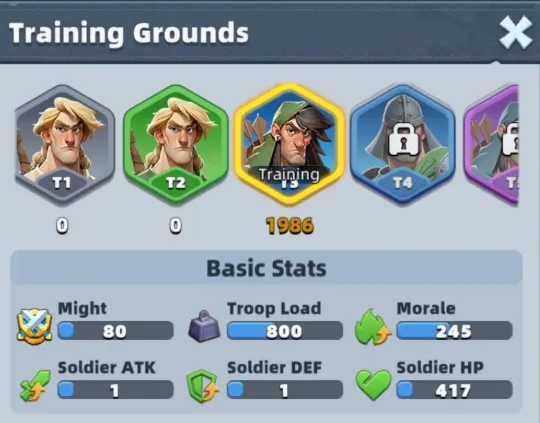
Last Asylum: Plague uses a tier-based troop system, commonly discussed from T1 up to T10. Higher-tier troops are stronger, but they also require stronger buildings, deeper research, and more resources to train efficiently.
In the early game, I recommend keeping training queues active with whatever useful tier you can produce. Sitting still because you are waiting for a better tier usually slows your Might and event progress. Once you get close to a stronger tier, I would stop burning premium speed-ups on old tiers and prepare to switch upward.
T10 should be treated as a late-game goal. It is tied to Elite Troop research and higher account development, so there is no real shortcut. Before chasing T10, build the foundation first: strong Training Grounds, stable troop research, good load, and a main squad worth supporting.
Training Grounds Strategy
Training Grounds are the core of troop growth. They decide what you can train, how fast your troop pipeline moves, and how smoothly you can prepare for events.
The setup I like most is simple: keep one Training Grounds at the highest level your Sanctuary allows, then use the other Training Grounds for lower-tier production. The max-level Training Grounds handles your strongest troops and promotions, while the others keep producing troops in the background.
|
Training Grounds Setup |
Role |
Why It Works |
|
One max-level Training Grounds |
Highest-tier training and promotion |
Handles your best troop work |
|
Other Training Grounds at lower levels |
Lower-tier mass production |
Keeps queues moving faster |
|
Fourth Training Grounds |
Long-term unlock through development progress |
Adds more parallel production |
|
All queues active |
Continuous troop growth |
Prevents dead training time |
This setup is especially useful for active players because troop growth is not just about one big queue. Multiple Training Grounds let you produce reserves, promote later, and stay ready for alliance events.
T4 Promotion Strategy
One of the most useful troop tricks is producing lower-tier troops first, then promoting them into higher tiers through your main Training Grounds. T4 is often used for this because it is fast enough to mass-produce and useful as promotion material later.
The idea is not that T4 is magically the best tier forever. The idea is that lower-level Training Grounds can keep producing troops quickly, while your main Training Grounds handles promotion into your current high tier. In some setups, promoting from T4 into a higher tier can save several hours compared with training that high tier directly from scratch.
I would treat this as an efficiency method, not a fixed rule. Your exact results depend on Training Grounds level, research, buffs, speed-ups, and current troop tier. Still, the logic is strong: keep production moving, then promote when it saves time or supports event timing.
Research Priority
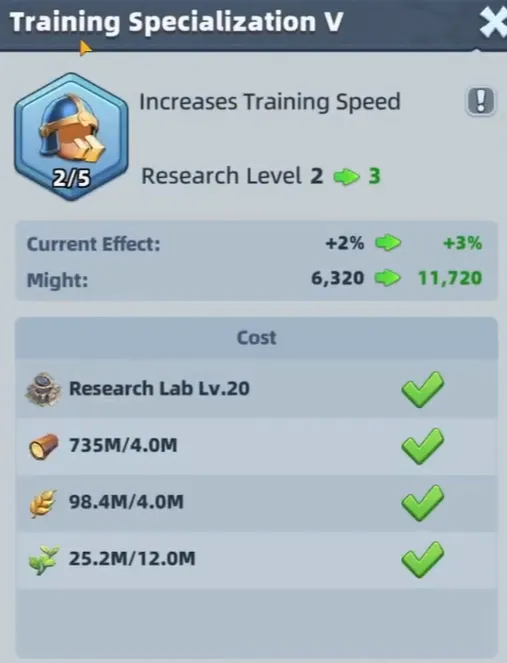
Troop research should not be random. If I am building troops seriously, I look at two things first: how fast I can train and how many troops I can send.
Training speed and training capacity help your troop pipeline. Bigger batches and faster queues mean fewer empty windows and better event preparation.
Load Training is one of the most important troop upgrades because it increases the number of troops a squad can bring into battle. More squad load makes your heroes, troop tiers, and combat research more valuable.
|
Priority |
Research Focus |
Why It Matters |
|
1 |
Training speed and capacity |
Faster and larger troop batches |
|
2 |
Load Training |
More troops per squad deployment |
|
3 |
Attack, Defense, and HP |
Better combat performance |
|
4 |
Elite Troop research |
Required for late-game troop tiers |
For squad-specific research, I would usually build around Squad 1 first. Squad 1 is your main fighting squad, so attack-focused upgrades usually give the best return there. Squads 2 and 3 can lean more toward defense and support until your main squad is stable.

Training During Alliance Events
Troop training becomes much more valuable when it lines up with event scoring. Alliance Duel and similar events may reward troop training, speed-up usage, or related activity, depending on the phase rules.
I would not spend training speed-ups randomly unless I need troops immediately. A better approach is to keep normal queues running every day, stockpile speed-ups, prepare lower-tier troops for promotion, then spend during the correct scoring window.
One important detail: promotion may not always count the same way as direct training for event points. Event rules can change by phase, so I always check the in-game event page before using speed-ups or promotion batches.
Troops and Hero Squads
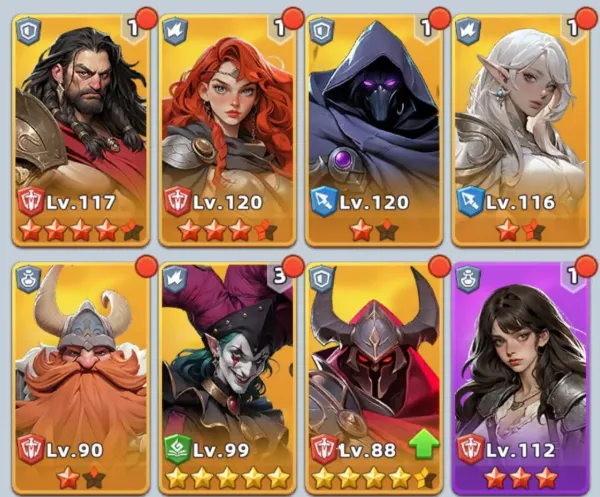
Troop investment should follow your real hero investment. If Squad 1 is your strongest team, give it your best troop tier, load research, and combat support first. Spreading resources evenly across every squad too early usually makes all of them feel weaker.
Heroes still matter a lot. Troops do not replace hero skills, hero synergy, or formation planning. The best results come when your strongest heroes and your strongest troop support are working together.
For most players, I would build one reliable main squad first, then improve secondary squads after that. A strong main squad gives better event value, better rally contribution, and better progress than four half-built squads.
Wounded Troops and Loss Management
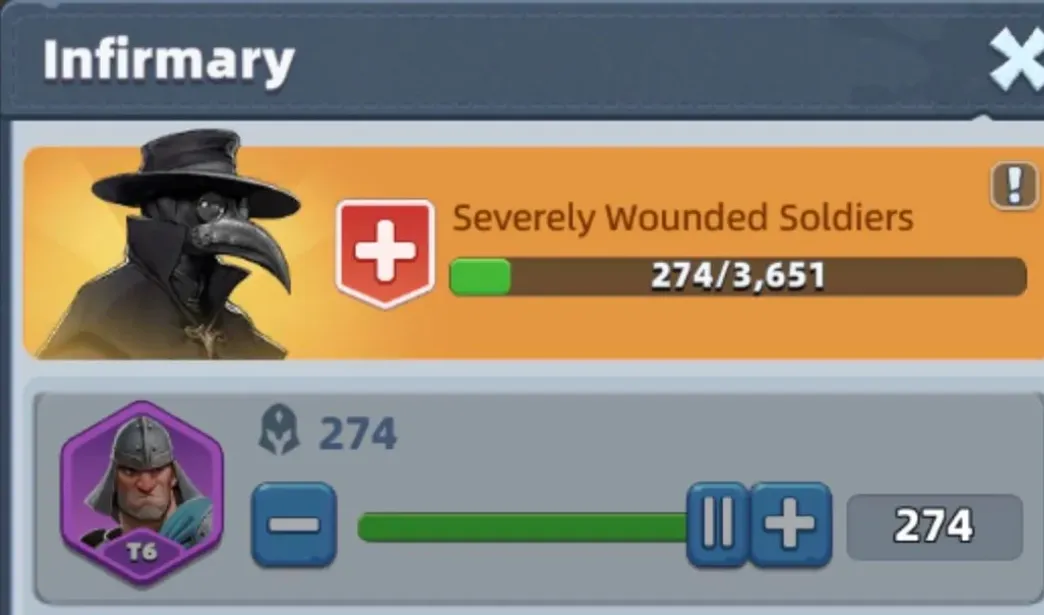
Training more troops is good, but losing them carelessly is painful. In harder fights, rallies, and PvP situations, troops can be wounded or lost depending on battle rules and your healing capacity.
Before joining risky fights, I would check healing space, available healing resources, and alliance plans. If you train aggressively but cannot heal properly, you may turn a good troop push into a resource sink.
Troop growth is not only about producing soldiers. It is also about keeping them alive long enough to matter.
FAQ
Should I always train the highest troop tier?
I train the highest useful tier when it makes sense, but I do not blindly dump every speed-up into it. If the next tier is close, I save resources. If lower-tier production plus promotion is faster for my setup, I use that instead.
Is T4 promotion worth it?
It can be worth it when your lower Training Grounds can produce T4 quickly and your main Training Grounds can promote them efficiently. I would test it with your own timers before committing all speed-ups.
How many Training Grounds should I use?
I try to keep all available Training Grounds working. One should usually stay at the highest possible level, while the others can support lower-tier production. Unlocking the fourth Training Grounds adds a lot of long-term value.
What research should I prioritize first?
I would start with training speed, training capacity, and Load Training. After that, I would work on Attack, Defense, HP, and eventually Elite Troop research for higher tiers.
When should I push T10 troops?
I would treat T10 as a late-game goal. You need the right Training Grounds level, Sanctuary progress, and Elite Troop research. Before that, focus on building a stable troop pipeline and strong main squad.
Does troop promotion count for Alliance Duel points?
It depends on the current event rules. I always check the active event page first. Some phases may value speed-up use, while promotion may not count the same way as direct training.
Should F2P players use the promotion strategy?
Yes, if the timers work well for your account. F2P players benefit a lot from efficient queues, saved speed-ups, and event timing. The goal is to make time work for you.
Should I focus Squad 1 only?
I would focus Squad 1 first because it usually handles your most important fights. Once Squad 1 is stable, then I would start improving Squad 2 and Squad 3 more seriously.
Best Place to Prepare for Troop Growth
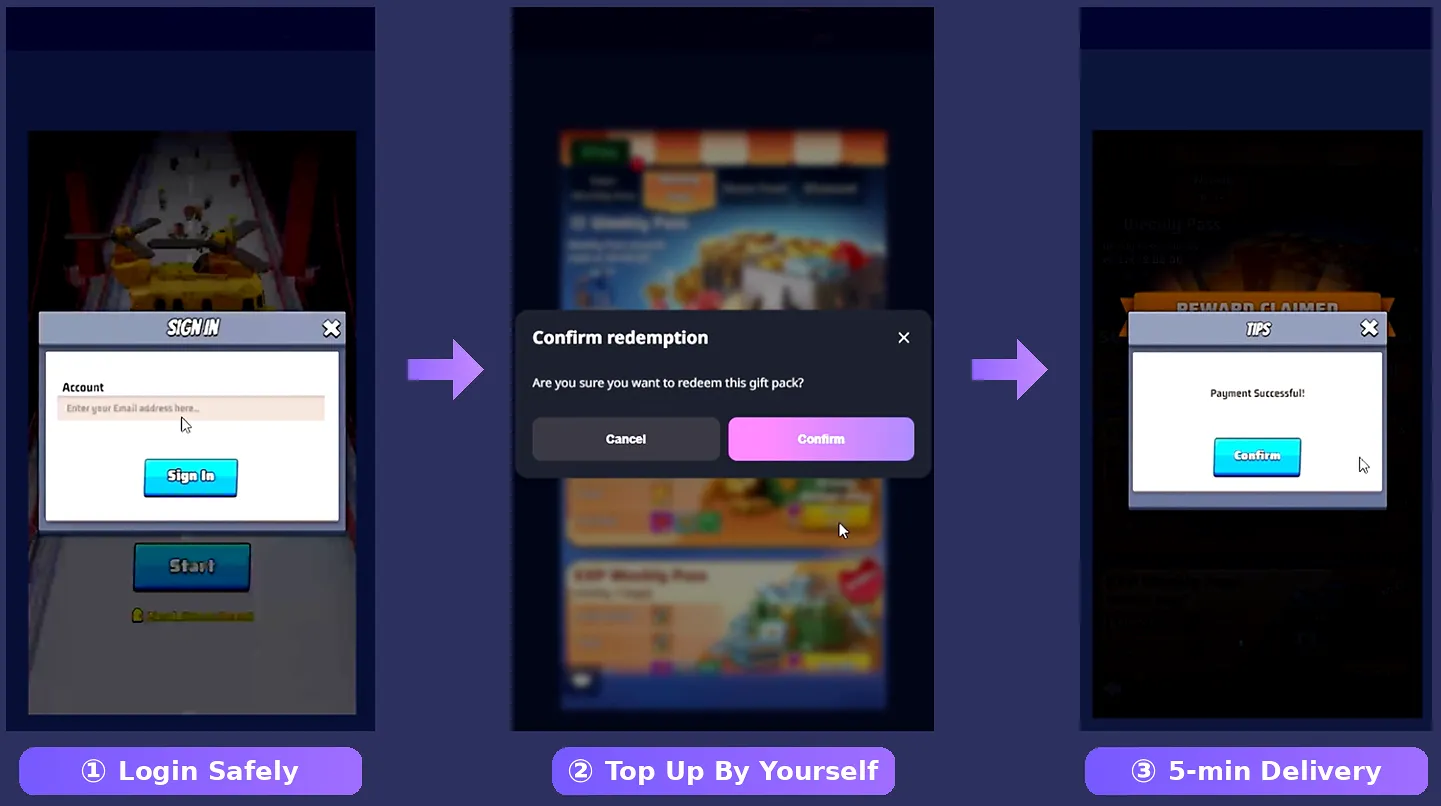
If I am preparing for troop research, Training Grounds upgrades, or a big alliance event, I want my resources ready before the scoring window starts. LDShop can help players top up Last Asylum: Plague safely and prepare for troop training, speed-up use, and long-term squad growth.
Conclusion
Troop growth in Last Asylum: Plague is about building a system, not just pressing the train button. Keep queues active, upgrade one main Training Grounds, use other grounds for lower-tier production, prioritize Load Training, promote when it saves time, and save speed-ups for event windows.
If you need extra resources for upgrades or troop pushes, LDShop can help you top up Last Asylum: Plague safely and stay ready for your next alliance event.






 TOP UP WITH DISCOUNT NOW
Savannah Reed Experienced Game Editor
I'm a game guide writer with over 20 years of experience playing all types of games, especially anime-style RPGs, gacha and sports games. I love finding smart ways to beat tough levels without spending too much money. By studying game mechanics and character systems, I create easy tips to help players save time and resources. When I'm not gaming, I watch anime to get inspiration for strategies. My goal? To help you enjoy games more and stress less – even when facing "impossible" bosses! Let’s make gaming fun and affordable together!
