


If your base keeps collapsing in Last Asylum, chances are it’s not because of enemies, but because your hospital and economy are out of sync. The real question is not whether you are upgrading fast enough, but whether you are building in the right order. Let’s break down how to develop your hospital and base the smart way.
Why Hospital Development Matters More Than You Think
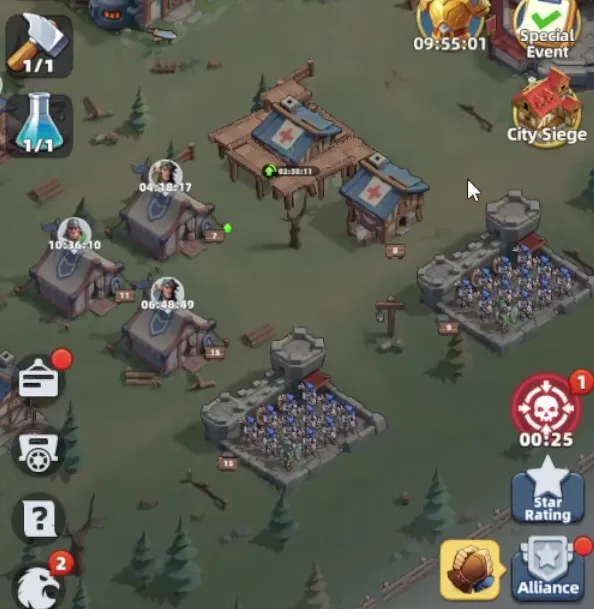
Unlike typical strategy games, Last Asylum is built around interconnected survival systems rather than simple building upgrades. Your hospital directly affects patient processing speed, medicine consumption, and the overall stability of your base. If your medicine supply fails, the entire system begins to collapse even if your base level looks strong. In other words, hospital development is not just one part of progression, but the core of long-term survival.
The Core Rule: Economy Before Expansion
One of the most important principles in Last Asylum is that your base level should always match what your production can realistically sustain. This is where many players make costly mistakes. They rush hospital upgrades, add more beds, and increase population too early, only to realize that every new survivor also increases food and medicine consumption. Once production can no longer keep up, the result is a resource deficit that quickly turns into hospital overload and eventually stalls your entire base.
Base Development: What You Should Upgrade First
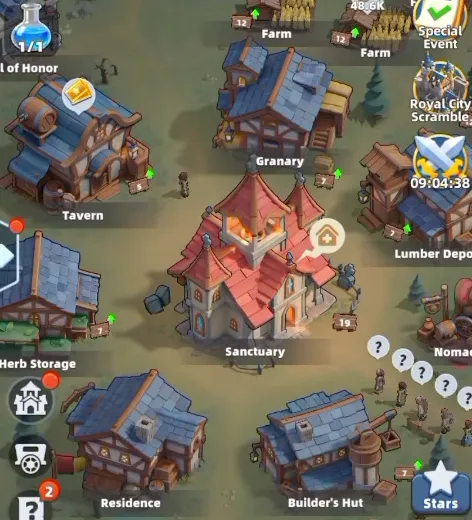
The foundation of base growth revolves around three essential buildings: the Farm for food, the Lumberyard for construction materials, and the Herb Garden for medicine production. Among these, the Herb Garden is usually the biggest bottleneck because medicine is the most difficult resource to maintain consistently over time. Rather than upgrading randomly, your priority should always begin with production buildings so that your resource income remains stable. After that, storage should be upgraded to prevent overflow and waste, followed by your Sanctuary level, hospital capacity, and finally defense or research. The key point here is that hospital upgrades should come only after your economy is already stable.
Hospital Development Strategy: The Right Way
Hospital expansion should always be controlled rather than rushed. Before upgrading, ask yourself whether your medicine production is consistently ahead of consumption, whether your herb supply remains stable over time, and whether your current economy can support additional patients in the long run. If the answer to any of these questions is no, it is better to delay expansion. A simple rule to follow is that hospital capacity should only increase when your production clearly exceeds usage. This keeps your growth sustainable and prevents the frustrating cycle of expansion followed by immediate resource shortage.
The Real Gameplay Loop: This Is the Key
The most important system to understand in Last Asylum is the progression loop itself: production comes first, then hospital development, followed by population growth, which in turn allows for even greater production. The order matters. You should build resource income first, expand the hospital carefully, increase population gradually, and then reinforce production again. This is a repeating cycle rather than a race to higher levels. Most players run into problems because they break this loop and try to expand too quickly.
Base Layout Optimization
A smart layout includes:
- Production buildings grouped together as an economic zone
- Storage placed centrally for easier tracking
- Functional zoning for faster upgrades and better management
Although layout may not directly change game mechanics, it significantly improves efficiency when monitoring resources and planning future upgrades.
One Advanced Tip Most Players Ignore
Another common mistake is trying to upgrade every building evenly. In practice, this often spreads resources too thin and slows meaningful progress. A more effective strategy is to focus upgrades on the buildings currently limiting your development, especially medicine and food production. More experienced players sometimes even use farm accounts to generate additional resources for their main base, which further shows that resource control is the real endgame of efficient progression.
Common Mistakes You Should Avoid
Many stalled accounts can be traced back to the same few issues: expanding the hospital too early, neglecting herb production, allowing storage to cap and waste resources, upgrading everything evenly, and treating base level as a measure of strength rather than capacity. Before every major upgrade, it is worth asking yourself whether your base is truly progressing or simply becoming larger without stronger foundations.
Conclusion
Building a strong hospital and base in Last Asylum is not about speed, but balance. If you stabilize your economy first, control expansion carefully, and keep your hospital aligned with resource output, progression becomes much smoother. For players who want to speed up that process, many choose to top up Last Asylum packs and resources through LDShop to push key upgrades faster and avoid resource bottlenecks. Before your next upgrade, make sure you are not just expanding, but actually progressing.






 TOP UP WITH DISCOUNT NOW
Savannah Reed Experienced Game Editor
Savannah Reed is a senior game editor at LDShop.gg, specializing in in-depth coverage of RPG and strategy games. With a strong focus on titles like Wuthering Waves, Honkai: Star Rail and Whiteout Survival, she combines industry insight with firsthand player experience to deliver clear, informative, and actionable content. Her work is dedicated to helping gamers make smarter decisions—whether it’s understanding new updates or optimizing their in-game strategy.
