


Tomb Busters, developed by NIGHT STUDIOS and published by Giant Network, launched on January 23, 2025, and quickly became one of the year's biggest mobile gaming stories. By July, it had broken 1 million concurrent players. But with its September 2025 addition of "Jinghun Escape" — a full-fledged 1v4 asymmetrical mode — the game has positioned itself as a direct competitor to Identity V.
Today, we are examining both games on their own terms: their core identities, their unique strengths, and what their paths tell us about where mobile horror is headed.

What Is Tomb Busters?
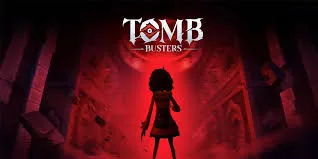
Let us start with the newcomer.Tomb Busters is a cooperative multiplayer horror adventure game developed by NIGHT STUDIOS and operated by Giant Network, officially launched in China on January 23, 2025. The game's core loop draws from the "search, fight, extract" genre — four players team up to enter ancient ruins, hunt for high-value treasures such as the Holy Grail, Snow Lotus, and Dragon Balls, while evading AI-controlled ghosts and monsters and successfully extracting.
What makes Tomb Busters distinctive is its blending of Chinese folk horror with cooperative tension. Instead of isolating players as lone survivors, the game frames them as members of a supernatural agency, venturing into locations like the Jingjue Ancient City and Kunlun Secret Realm. The art style is chibi-inspired, which creates an odd but charming juxtaposition: watching adorable, small-figured characters flee from terrifying ancient entities is an experience that balances cuteness with genuine suspense.
However, the most significant development came in September 2025, whenTomb Bustersunveiled a new game mode that changed its competitive landscape entirely.
The Arrival of the Asymmetrical Mode: "Jinghun Escape"
In September 2025,Tomb Busters launched "Jinghun Escape," a dedicated 1v4 asymmetrical mode. In this mode, five players are split into two factions: the Employee faction (equivalent to Survivors) and the Monster faction (equivalent to Hunters).
For Employees: Their objective is to locate and open five "coffins" (treasure chests) entangled in vines, collecting keys and recyclable materials along the way. Employees can interact with environmental elements such as wooden pallets and windows to evade or momentarily stun the Monster. Once all five coffins are opened, the bronze gate is unlocked, and Employees must escape before the Monster catches them.
For the Monster: The sole goal is to track, imprison, and eliminate Employees before they can complete their objectives. Players leave behind visible running trails, giving the Monster clear clues to follow.
On paper, the mechanics sound familiar — and that is precisely where the controversy begins. While the core extraction mode ofTomb Bustersshares more DNA withLethal CompanyorPhasmophobia, the addition of "Jinghun Escape" has drawn inevitable comparisons toIdentity V. The pallet mechanics, the chase dynamics, and even the general flow of a 1v4 match have prompted discussions about whether the borrowing stops at "genre convention" or crosses into something more intentional.
But before we explore that debate, let us turn to the game that has defined mobile asymmetrical horror for nearly seven years.
What Is Identity V? The Gothic Standard-Bearer
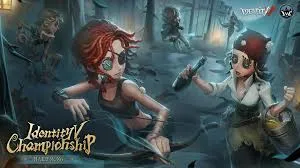
Identity V launched globally in July 2018, developed by NetEase. At its core, it is a 1v4 asymmetrical horror game where one Hunter pursues four Survivors, who must decode five Cipher Machines to power up the Exit Gates and escape. Hunters place caught Survivors on Rocket Chairs rather than meat hooks — a stylistic choice that, along with its Tim Burton-esque doll-like aesthetic, gives the game its distinct visual identity.
What truly sets Identity V apart, however, is its narrative ambition. The game follows Orpheus, a famous crime novelist turned private detective, who arrives at the mysterious Oletus Manor in pursuit of a missing girl. As he investigates, the player learns that every Survivor and Hunter is entangled in a web of tragic backstories, broken dreams, and hidden connections that span decades.
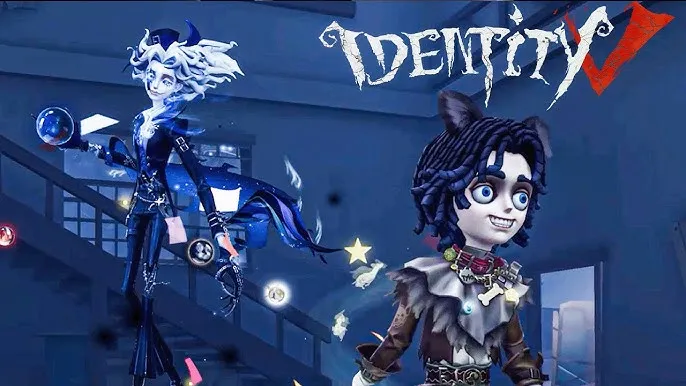
According to the game's lore, Orpheus suffered a childhood trauma when his parents were murdered on his 12th birthday, after which he was institutionalized. Later, after establishing himself as a writer, he received a mysterious invitation to the manor — and gradually discovered that his own psyche was fractured. The Hunters — "Nightmare," "Hell Ember" (Leo Beck), "Bloody Queen" (Mary), "Geisha" (Michiko), and others — represent various facets of the manor's cursed history, as well as Orpheus's own repressed darkness.
In terms of roster, as of November 2024,Identity Vfeatures 31 Hunters and over 45 Survivors, including characters like Naib Subedar (Mercenary), Emily Dyer (Doctor), Freddy Riley (Lawyer), and Fiona Gilman (Priestess). Each character has unique abilities that fundamentally alter the flow of a match: the Mechanic decodes faster but suffers increased calibration difficulty when teammates are injured; the Enchantress can stun Hunters with her pentagrams; the Wax Artist can immobilize Survivors with wax; and the Bloody Queen can place mirrors that create reflections capable of moving through walls.
Two Games, Two Souls
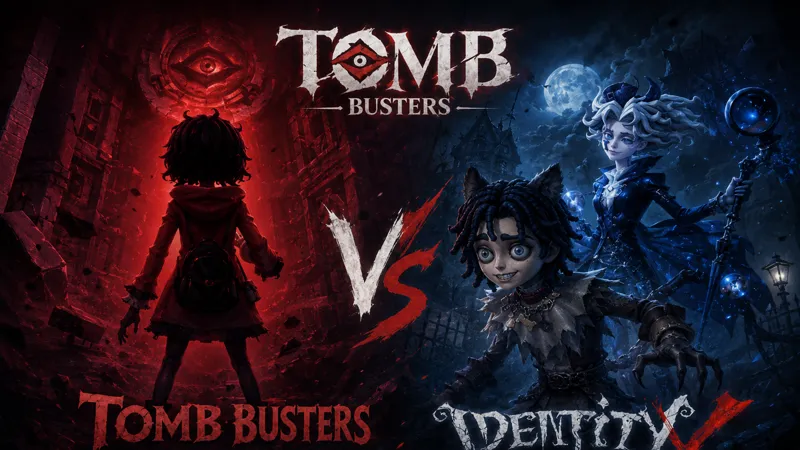
Here is where the analysis becomes nuanced. The industry has not historically treated Tomb Busters and Identity V as direct competitors, because their core gameplay loops were fundamentally different.
Identity V is a competitive asymmetrical strategy game disguised as gothic horror — its heart lies in ranked matches, mind games, and high-stakes team coordination. It is about information control, psychological pressure, and tactical execution. The game has a vibrant esports scene with organized tournaments, where professional players execute coordinated rescues and cipher rushes that make casual players look like they are still on the tutorial.
Tomb Busters, by contrast, was built as a cooperative PvE extraction game. Its primary tension comes from resource management, environmental hazards, and team communication against AI-controlled threats. As GameLook observed, the "Jinghun Escape" mode represents Tomb Busters adding "a second leg" — maintaining its core extraction experience while expanding into asymmetrical competition.
This difference matters. A player who loves Identity Vfor its deep ranking system, its lore, and the competitive thrill of outsmarting a human Hunter may find Tomb Busters's AI-driven extraction loop too passive. Conversely, a player who enjoys the tension of resource gathering and the satisfaction of extracting rare treasures may find Identity V's repetitive decode-and-run gameplay less engaging.
But with the addition of "Jinghun Escape," the boundary has blurred. Now, both games offer a 1v4 experience — and that inevitably invites comparison.
The Controversy: Where Does Inspiration End and Imitation Begin?

Since the launch of "Jinghun Escape," accusations have circulated online accusing Tomb Busters of borrowing not just gameplay mechanics but also visual designs from Identity V. Consumer complaint platforms have seen formal complaints alleging that the game's gothic architecture, certain character designs, and even some user interface elements bear striking similarities to Identity V.
Some players have gone further, labeling Tomb Busters a "patchwork copy" — claiming it draws extraction mechanics from Escape from Tarkov and Delta Force while pulling its asymmetrical design from Identity V. The intensity of these accusations has been amplified by Tomb Busters's rapid commercial success, which some view as rewarding unoriginal design.
As of the time of writing, neither NetEase (the developer of Identity V) nor NIGHT STUDIOS / Giant Network (the team behind Tomb Busters) has issued any public legal statements or formal escalation regarding these allegations. The debate remains largely confined to fandom spaces — forums, social media, and video comment sections — though it has generated considerable heat within those communities.
That said, it is worth noting that asymmetrical mechanics are not proprietary to any single game. The 1v4 chase formula has been adapted by numerous titles over the years, including Friday the 13th: The Game,Home Sweet Home: Online,Resident Evil Resistance, and even Roblox minigames. The legal and ethical boundary between "inspired by" and "copied from" is notoriously difficult to define.
However, where the line becomes contested is when specific details— pallet placements, ability cooldown patterns, character silhouettes — begin to feel unmistakably familiar. In those instances, players notice, and they talk.
For now, the controversy remains unresolved. But it has undeniably positioned Tomb Busters and Identity V in a spotlight of comparative scrutiny — one that neither game requested, but both must now navigate.
The Business of Competition: Genres Converge
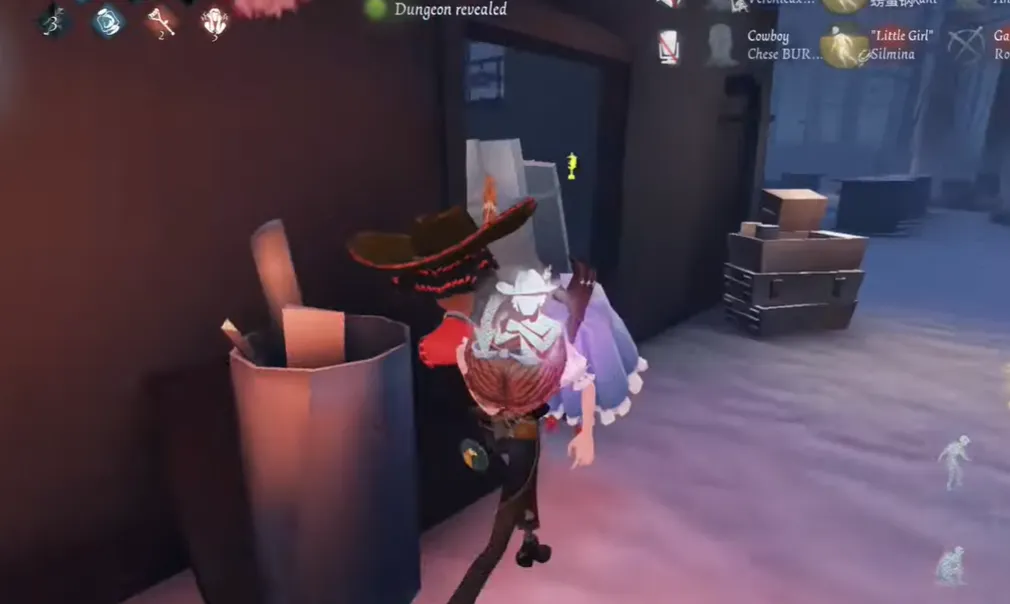
From a market perspective, the collision between these two games is fascinating.Identity Vhas demonstrated remarkable staying power. According to Sensor Tower, the game achieved record-high revenue in 2024, with an estimated 15–20% of revenue coming from overseas markets. Its frequent IP collaborations — nearly 20 over the past year — have helped sustain player engagement and attract new audiences.
Tomb Busters, despite being a newcomer, has rapidly caught up. Its July 2025 milestone of 1 million concurrent players is a testament to its appeal. The game's user base has shown significant growth in the female demographic, with 57% female users, while Identity V has seen its female user share rise to 65%. Notably, the overlap in target audiences has prompted some analysts to suggest that the two games are now competing for the same "female-friendly micro-horror" market segment.
Yet for all their surface similarities, the two games appeal to different player motivations.Identity Vplayers often cite the lore, the competitive ranked system, and the thrill of mastering complex character mechanics as their primary draws.Tomb Busters players, by contrast, frequently highlight the cooperative pressure of extraction gameplay, the satisfaction of loot collection, and the cultural resonance of Chinese folk horror themes.
As Giant Network continues to push Tomb Busters toward global expansion, it remains to be seen whether the game will carve out its own identity distinct enough to avoid being forever defined by comparison to its elder peer.
Looking Ahead
Where does this leave the two games? The truth is that direct competition betweenIdentity VandTomb Bustersmay not be inevitable — or even particularly desirable for either title. The mobile gaming market is large enough to accommodate multiple successful interpretations of asymmetrical and cooperative horror, provided that each brings something genuinely distinct to the table.
Identity Vhas already earned its place as a genre-defining classic — not by being first, but by taking a proven formula and building something artistically rich, narratively deep, and competitively rigorous around it. Its gothic aesthetic, its intricate lore centered on Orpheus and the Oletus Manor, and its well-developed esports ecosystem give it a legacy that newcomers cannot easily replicate.
Tomb Busters, on the other hand, has an opportunity to forge a different path. Its core extraction mode — the search for treasures in culturally rich Chinese folk horror settings — is distinct and promising. If the developers continue to invest in that unique identity, rather than leaning further into direct asymmetrical competition, the game could avoid the pitfalls of being dismissed as a copycat.
The controversy over "Jinghun Escape" may not be resolved quickly. But perhaps the fairest conclusion is this: the asymmetrical horror genre is still young, and its evolution has always involved borrowing, remixing, and adapting. The question is not who copied whom — but whether Tomb Busters can find its own voice before the comparisons define its legacy.






 TOP UP WITH DISCOUNT NOW
Savannah Reed Experienced Game Editor
I'm a game guide writer with over 20 years of experience playing all types of games, especially anime-style RPGs, gacha and sports games. I love finding smart ways to beat tough levels without spending too much money. By studying game mechanics and character systems, I create easy tips to help players save time and resources. When I'm not gaming, I watch anime to get inspiration for strategies. My goal? To help you enjoy games more and stress less – even when facing "impossible" bosses! Let’s make gaming fun and affordable together!
