


Breeding in *Palmon: Survival* is far from a secondary mechanic—it’s one of the most rewarding and strategic systems in the game. Whether you’re looking to expand your collection, unlock rare Palmons, or build a competitive endgame squad, mastering the Nursery is essential.
This guide will walk you through everything you need to know: from the basics of how breeding works, to trait inheritance, the blueprint breeding method, and advanced strategies for min-maxing your Palmons.

How Breeding Works in Palmon: Survival
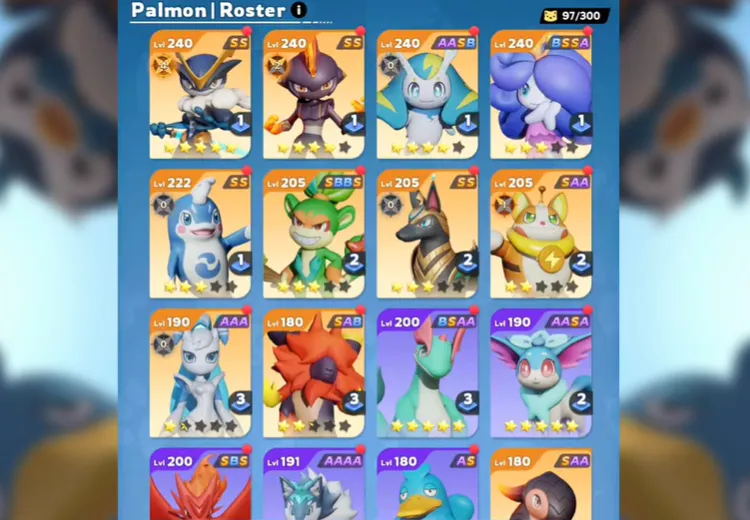
Breeding in *Palmon: Survival* involves pairing two compatible Palmons to create a new one that inherits a combination of their characteristics. This includes:
- Elemental affinities
- Passive abilities (traits)
- Base stats
- And in some cases, rare mutations
To begin breeding, you’ll need to access the Nursery, which is located in your base camp. Simply select it to open the breeding interface, choose the two Palmons you wish to combine, and spend the required item: Love Wreaths. The rarity of the Love Wreath depends on the rarity of the Palmons you’re breeding—Common for SR, Epic for SSR, and Legendary for UR.
Critical rule:
The Palmon you’ll obtain from breeding will always match the species of the Palmon placed in the left slot. This is one of the most important mechanics to remember when planning your breeding projects.
Once breeding begins, you’ll need to wait for the egg to hatch. Incubation times vary by rarity:
- UR Palmon: 24 hours
- SSR Palmon: 8 hours
- SR Palmon: 3 hours
After hatching, the baby Palmon enters the nurture phase, where it gradually levels up and develops its inherited traits and abilities.
Traits and Inheritance – The Core of Breeding
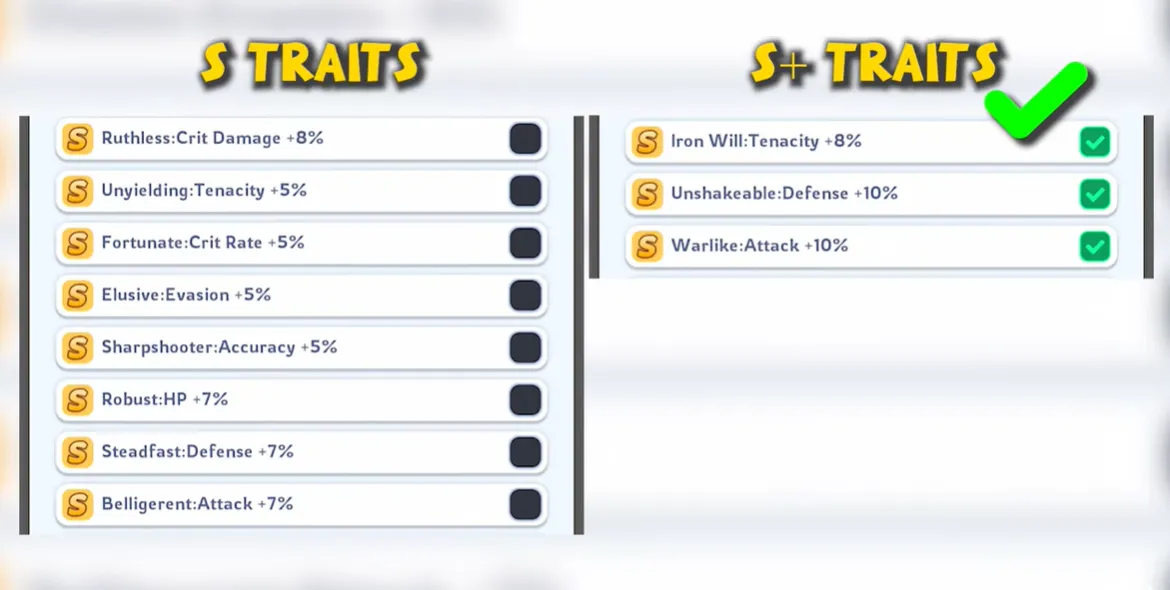
Each Palmon can have up to four traits, and these traits are what truly define a Palmon’s performance. Traits come in different grades, with S-rank being the most powerful.
When breeding, the offspring inherits 1 to 4 random traits drawn from:
- Parent A’s trait pool
- Parent B’s trait pool
- Or the general trait pool (meaning random traits can appear even if neither parent has them)
Key takeaway: You are not guaranteed to pass down your best traits. Even if both parents have strong traits, the offspring can end up with only one trait, weaker traits, or completely miss the ones you wanted. Breeding is essentially controlled RNG—you influence the odds, but you don’t control the outcome.
The Importance of S-Rank Traits
S-rank traits are the single most important variable in Palmon performance—more important than star level in many scenarios. A 4-star Palmon with the wrong traits will underperform a correctly-statted 3-star.
All four traits should be S-rank before any star advancement beyond 3-star. Investing Skill Fruits or Omni Tokens before confirming your traits is a costly mistake.
The Gold Breeding Method
The blueprint breeding method is the only reliable path to getting four correct S-rank traits on a single Palmon. Here’s how it works, step by step:
Step 1: Collect Single-S Trait Palmons
Keep every Palmon you obtain (from the Hatchery, Invites, or Intel Captures) that has a single S-rank trait. It’s critical that they only have one trait each—otherwise, the chances of breeding your ideal Palmon drop significantly.
You’ll need four blue-rarity (UR) Palmons, each carrying one of the four S-rank traits you want.
Step 2: Breed the Blueprint Palmon
Breed these four single-trait Palmons together until you produce a single blue UR Palmon that has all four of your desired S-rank traits. This becomes your blueprint Palmon.
Why UR rarity? Breeding costs and time are significantly higher with lower-rarity Palmons. Using UR breeders keeps the process efficient.
Step 3: Transfer Traits to Your Target
Now, place your target Palmon (the one you actually want to build) in the left slot of the Nursery, and your blueprint Palmon in the right slot.
After a few breeding attempts, you’ll have your target Palmon with the ideal four S-rank traits.
Alternative: The SR Intermediate Step
For players looking to reduce costs and speed up iteration, there’s a proven variation: breed your four S-rank traits onto a blue SR Palmon first (lower cost, faster breeding cycles), then use that four-S SR as the breeding parent to transfer traits to your UR target. This two-stage approach can save significant resources in the long run.

Nursery Strategy and Efficiency Tips
Keep Your Nursery Active
The more Nursery slots you unlock, the more Palmons you can nurture at once. Keeping your Nursery full ensures constant progression, even while you’re offline.
Track Your Results
Breeding is RNG-heavy, so document your combinations and results. Tracking what works and what doesn’t will save you time and resources in the long run.
Use Backup Breeders
Always keep “backup breeders”—Palmons with good traits that you’re not actively building. This way, you never lose good genetics if you make a mistake.
The Improvement Loop
A solid breeding loop looks like this:
> Breed → Keep the best offspring → Replace the weakest parent → Repeat
Over time, this iterative process will yield increasingly powerful Palmons.
Early-Game vs. Mid-Game Trait Priorities

Not all traits are created equal, and your priorities should shift as you progress.
Early Game – Base Management Traits
In the early game, focus on traits that accelerate your camp development:
- Engineering: Reduces building construction time (found on Maximito and Herculeaf)
- Prodigy: Improves research speed (found on Voltbolt)
- Coach: Increases troop training speed (found on Bruiseberry and Kilohop)
Mid-Game – Combat and Progression Traits
As you move into the mid-game, shift toward combat and progression traits:
- Healing Touch: Reduces healing time (found on Lendinir)
- Dreamium Hunter: Improves forge efficiency (unlocks at camp level 18+)
- Sweet Dreams: Increases XP gain from sleeping
Endgame – All S-Rank, All Combat
For endgame competitiveness, every trait on your core team should be S-rank and combat-focused. There’s no substitute.
Common Mistakes to Avoid
- ❌ Assuming traits are guaranteed to pass down – They’re not. Breed multiple times and compare results.
- ❌ Ignoring low trait count – Palmons with only 1–2 traits are usually not worth investing in.
- ❌ Not tracking combinations – If you don’t document what works, you’ll waste time repeating failures.
- ❌ Investing before confirming traits – Don’t spend Skill Fruits or Omni Tokens until your traits are locked in.
- ❌ Building the wrong Palmon – If your Palmon doesn’t have the right stats, don’t build and use it. But also, don’t dismiss it—always keep at least one copy for breeding.
Breeding for the Meta – Which Palmons to Target
The competitive meta in *Palmon: Survival* evolves with each season, but some Palmons consistently stand out.
SS-Tier (Season 2 with Mega Evolution)
- Shadowkaeru (Mega Ninjump) – Water DPS. The highest-return investment in the game for players who built Ninjump from Day 1.
- Mystiray (Mega Mantleray) – Electric DPS. Widely considered the strongest multi-hit damage dealer at full build.
- Predalynx (Mega Surveilynx) – Earth DPS. Precision burst damage built to eliminate priority targets.
For More, Palmon: Survival Tier List 2026: Best Palmons to Build.
Final Thoughts
Breeding in *Palmon: Survival* is ultimately controlled RNG. You don’t control the outcome directly—but you can stack the odds in your favor through smart planning, careful trait selection, and the blueprint breeding method.
Now get to the Nursery and start building your dream team. The world of Pallantis won’t conquer itself.






 TOP UP WITH DISCOUNT NOW
Savannah Reed Experienced Game Editor
I'm a game guide writer with over 20 years of experience playing all types of games, especially anime-style RPGs, gacha and sports games. I love finding smart ways to beat tough levels without spending too much money. By studying game mechanics and character systems, I create easy tips to help players save time and resources. When I'm not gaming, I watch anime to get inspiration for strategies. My goal? To help you enjoy games more and stress less – even when facing "impossible" bosses! Let’s make gaming fun and affordable together!
