


For over a decade, Rainbow Six Siege has reigned supreme as the king of tactical first-person shooters. It's a game that demands patience, precision, and pixel-perfect aim—a hardcore experience locked to PC and consoles. But on February 23, 2026, everything changes .
Rainbow Six Mobile launches globally, bringing the iconic 5v5 breach-and-clear action to smartphones . It's not a port—it's a ground-up rebuild designed for touchscreens, shorter sessions, and a broader audience . For veterans, this raises an inevitable question: is this the same game we've been playing for a decade, or something entirely different? Let's break down exactly how these two titles compare—from pacing and destruction to operators, controls, and competitive vision.
Gameplay: Same Roots, Different Rhythm
At their core, both games share the same tactical soul. Attackers drone, defenders set traps, and destruction rewrites the battlefield in real time . But the execution couldn't be more different.
Round Structure & Pacing
Siege on PC is a marathon. Matches stretch across multiple rounds, with teams attacking or defending in multi-round blocks. You might spend 30 minutes on the same side before swapping—a format that rewards deep strategy but can feel punishing when you're on the wrong end of a 3-0 streak .
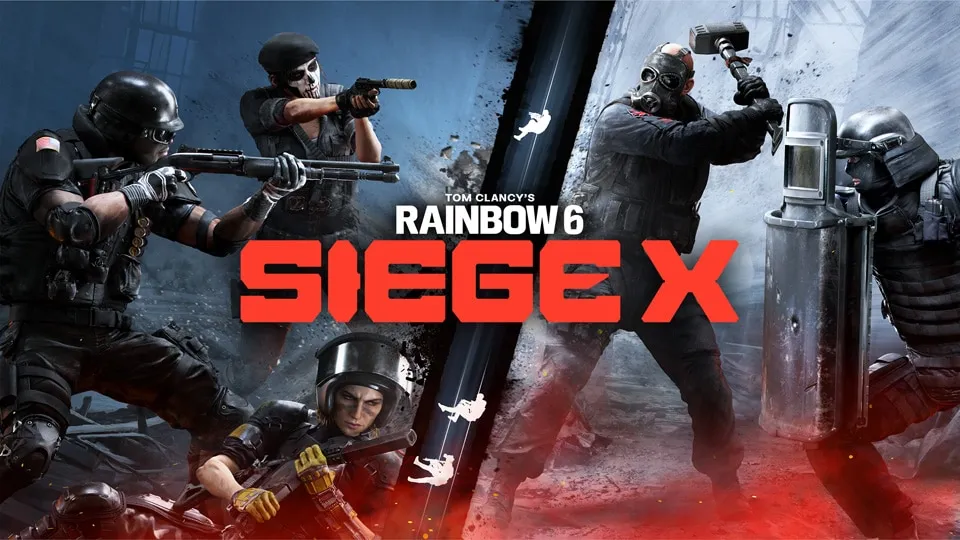
Rainbow Six Mobile flips this entirely. Teams swap sides every single round—Attack, Defend, Attack . It's faster, fairer, and perfectly suited for mobile attention spans. No more waiting half an hour to play your preferred side.
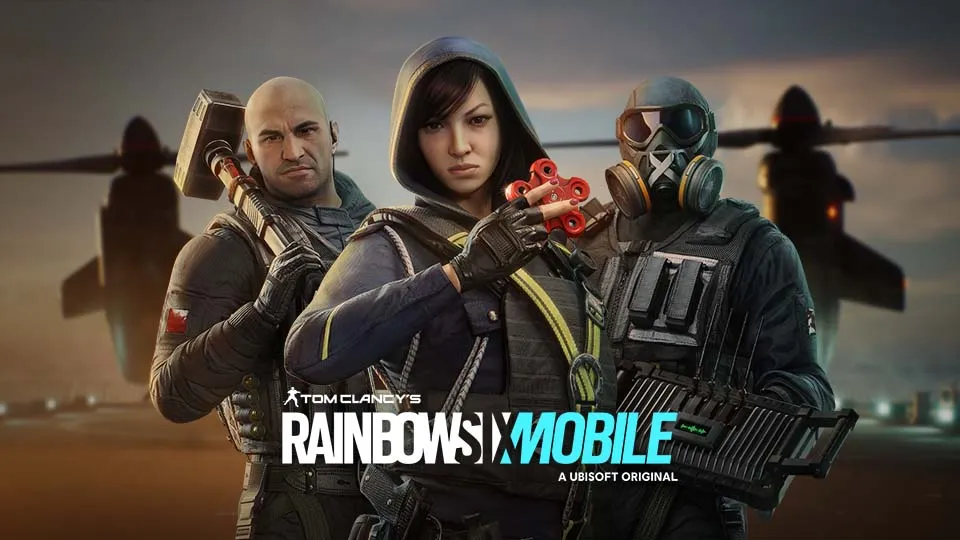
Match duration reflects this philosophy. While Siege demands a serious time investment, Mobile matches wrap up in 10 to 15 minutes . The prep phase is shorter. Reinforcements go down faster. You're in the action within seconds .


Destruction: Chunky vs. Surgical
Destruction is Siege's secret sauce—the ability to turn any surface into an angle, any wall into a window. On PC, that means pixel-perfect holes and debris that persists throughout the round .
Mobile can't replicate that level of fidelity—and frankly, it shouldn't try. Instead, Rainbow Six Mobile uses a "chunkier" destruction model. Walls break into larger pieces. Debris vanishes quickly . It's less realistic but far more practical on a small screen, ensuring stable performance and preventing random visual clutter from costing you gunfights.
Map Design: Familiar Spaces, Mobile Pace
The map roster feels like a "greatest hits" album. Bank, Border, Clubhouse, Oregon, and Villa all return—but they're not carbon copies .
Ubisoft's developers made a crucial decision: reduce outdoor spaces by roughly 40% to accelerate entry into buildings, while keeping interiors 90% faithful to the originals . That means veterans will navigate familiar hallways and stairwells, but the long approach angles and exterior spawn peeks are significantly compressed.
Better yet, Mobile introduces two exclusive maps: Restaurant (designed for onboarding and smaller modes) and Summit (built specifically for competitive play on mobile) .
The Operator Roster: Quality Over Quantity
Here's where the divergence becomes stark.
PC Siege now boasts over 70 operators . Keeping track of every gadget, counter, and synergy is practically a full-time job. For new players, the learning curve is a vertical cliff.
Rainbow Six Mobile launches with 27 operators, targeting 38 by year's end . The roster focuses on the "Golden Era" legends—Thermite, Ash, Sledge, Hibana, Valkyrie, Jäger, Smoke—the operators who defined Siege's identity before the roster exploded .
Confirmed operators include :
- Attackers: Ash, Sledge, Thermite, Hibana, Thatcher, Twitch, Dokkaebi, Ying, Buck, Capitão, Blackbeard, Montagne, Glaz, Lion
- Defenders: Caveira, Smoke, Mute, Jäger, Rook, Valkyrie, Mira, Frost, Maestro, Alibi, Bandit, Kapkan, Castle
Castle arrives with Operation Masquerade ahead of global launch, bringing his bulletproof armor panels to reshape defensive strategies .
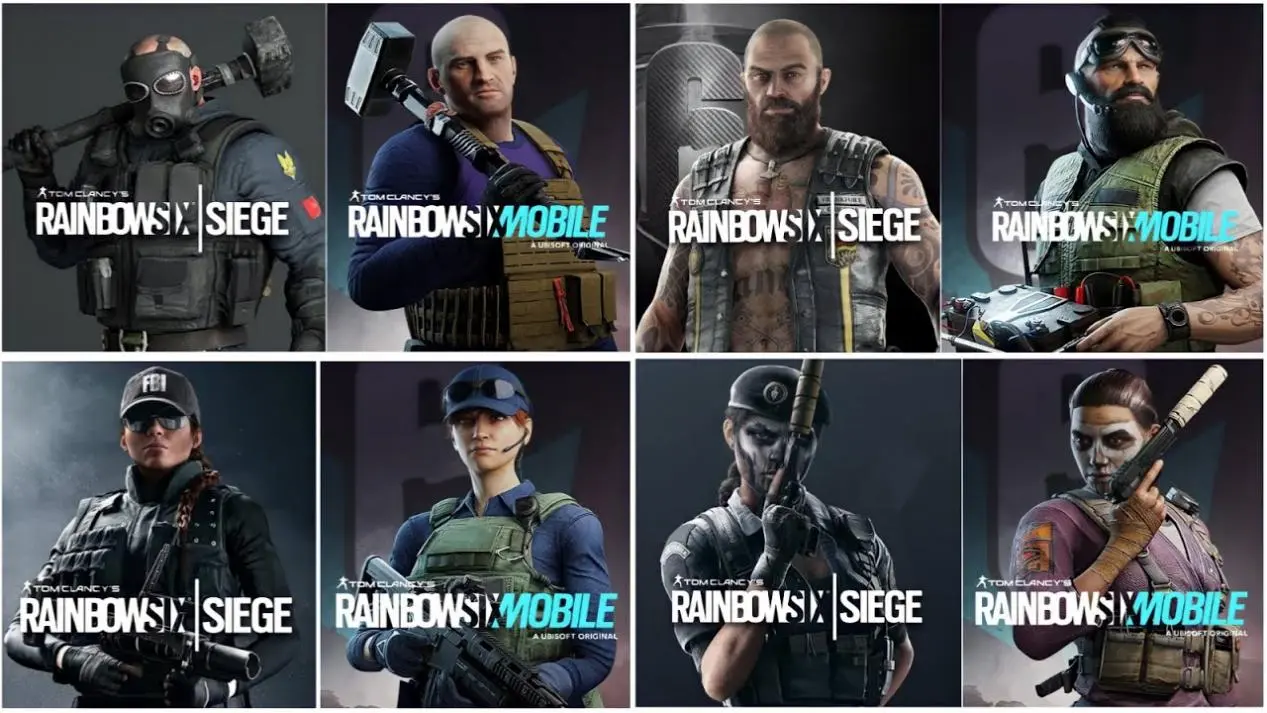
Loadouts: Simplified for Speed
Here's a controversial change for veterans: operators have fixed loadouts in Mobile . Each operator carries one unique primary weapon and their signature gadget—no weapon swapping, no optic choices beyond what's equipped.
For PC players accustomed to fine-tuning every attachment slot, this feels restrictive. But there's method to the madness. Fixed loadouts ensure balance, reduce visual complexity on small screens, and speed up operator selection . And customization isn't completely absent—weapons still feature seven attachment slots, and operators have three-piece cosmetic customization for outfits, headgear, and victory poses .
Controls & User Experience
Rainbow Six Mobile Built for Thumbs~!
This is where Mobile had to innovate—or fail.
Siege on PC demands mouse-level precision. Flick shots, pixel peeks, and micro-adjustments separate the platinum players from the copper recruits. You can't replicate that on a touchscreen, so Ubisoft didn't try.
Aim Assist & Visual Cues
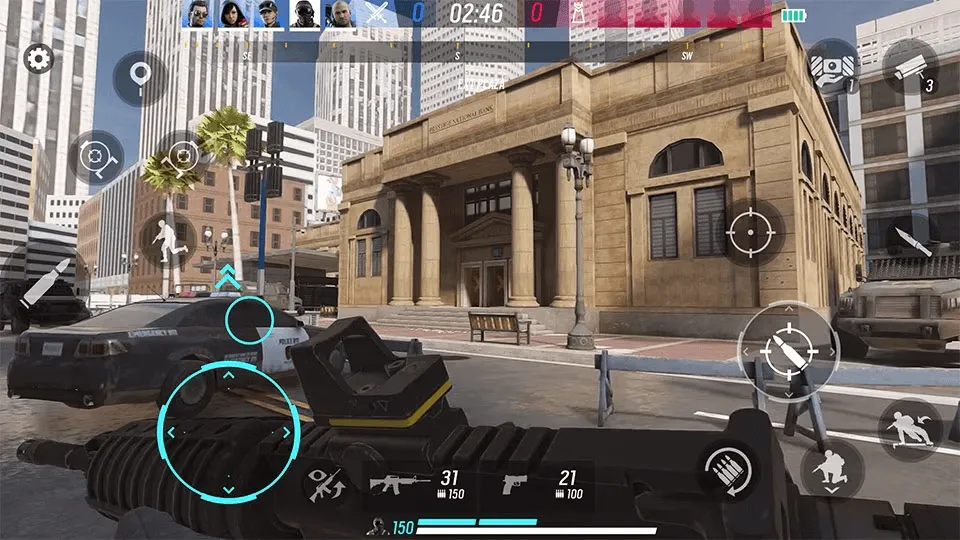
Rainbow Six Mobile includes generous aim assist that pulls your crosshair toward enemy hitboxes . It's essential for mobile play, where thumbs lack the fine motor control of a wrist. There's also an auto-shoot option—aim near an enemy and your weapon fires automatically .
For audio—critical in Siege—Mobile adds a visual sound compass. Footsteps and gunfire create on-screen ripples showing direction . It's a brilliant accessibility feature that compensates for noisy mobile environments where headphones aren't always an option.
Enemy outlines are customizable too, with color options supporting various forms of colorblindness .
Customizable Everything
The HUD is fully adjustable . Button size, opacity, position—everything moves. Left-handed? No problem. Prefer a claw grip? Adjust accordingly. For players who want the precision of physical controls, controller support includes Xbox, PlayStation, Razer Kishi, and Backbone devices .
The Vertical Speed Quirk
One oddity carries over from the alpha builds: vertical movement feels faster . Dropping through hatches or rappelling down buildings happens almost instantaneously. Whether this is a technical limitation or deliberate design choice remains unclear, but it shifts the advantage to the aggressor in vertical engagements.
Progression & Monetization: Free to Play, Fair to Stay
Siege on PC asks for an upfront purchase, then offers battle passes and a subscription membership . It's premium-priced, premium-supported.
Rainbow Six Mobile is strictly free-to-play . No barrier to entry—just download and drop in.
The early alpha tests experimented with a confusing "ticket" system for operator unlocks. Players hated it. Ubisoft listened. The system now mirrors Siege's PC economy: earn Renown through gameplay, unlock operators permanently .
Monetization comes from Platinum currency and cosmetic skins—some flashy, some grounded. Crucially, there's no pay-to-win. Every operator is earnable through play, and weapon skins don't affect performance .
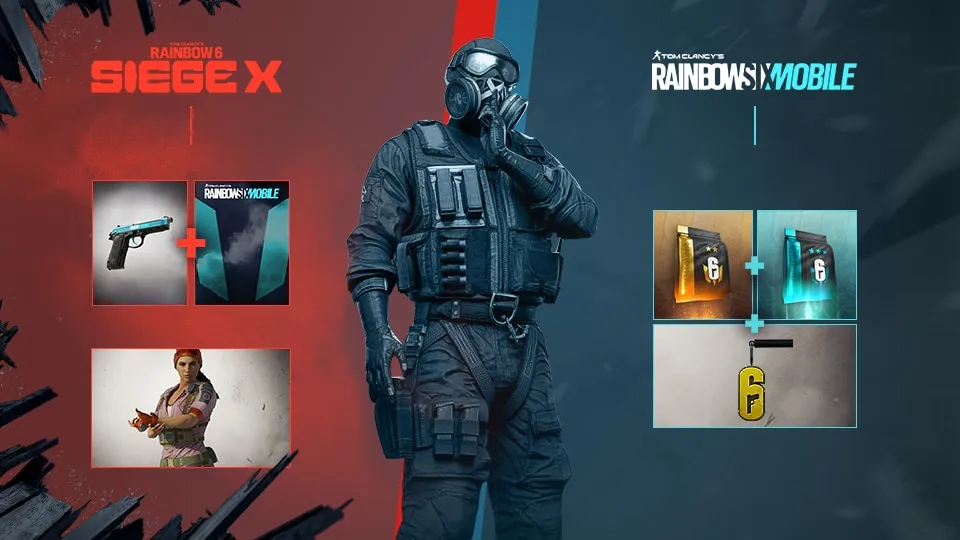
Cross-progression isn't planned, but cross-promotion rewards will link accounts between Mobile and PC versions at launch .
Competitive Vision: Built for Esports
Don't let the mobile label fool you—Ubisoft has competitive ambitions for this title.
Ranked play is a core focus from day one, with plans to evolve into tournaments, leaderboards, and eventually esports . Weekend "Best of 7" Ranked events return based on player demand, offering high-stakes competition in condensed formats .
The game supports three core modes :
- Bomb – The classic plant-and-defend objective
- Bomb Rush – Faster-paced bomb action
- Team Deathmatch – Pure elimination battles
Private matches, ranked queues, and seasonal updates complete the competitive package .
Technical Foundation: Optimized for Everyone
Mobile gaming's biggest challenge isn't design—it's device fragmentation. Hundreds of Android models with varying RAM, processors, and GPUs.
Ubisoft's solution: device grade tiering . The team optimized to ensure stable 30 FPS even in worst-case scenarios—"Apex peaks" where every operator fires simultaneously while walls explode around them . Remarkably, phones up to a decade old can run the game.
Early tests earned positive feedback for balancing tactical depth with smooth performance—feedback that shaped the final build .
Rainbow Six Mobile isn't trying to replace Siege. It's expanding the universe.
For PC veterans, Mobile offers a nostalgic trip back to Siege's golden era—fewer operators, simpler loadouts, faster rounds. It's Siege distilled to its essence, stripped of complexity but retaining its tactical heart .
For mobile-native players, it's an entry point into a franchise that previously required expensive hardware and hundreds of hours to master . The onboarding systems—including a tutorial sequence aboard a ship with Sam Fisher—guide newcomers gently into tactical shooting .
For everyone else, it's a remarkable technical achievement—a faithful adaptation of one of gaming's most complex shooters, running on the device in your pocket .
Ready to Drop In?
Rainbow Six Mobile launches globally February 23, 2026 on iOS and Android . Pre-registration is live, with milestone rewards including exclusive skins and outfits. The tactical shooter landscape is about to get a lot more crowded. See you on the maps, Operators.






 TOP UP WITH DISCOUNT NOW
Savannah Reed Experienced Game Editor
Savannah Reed is a senior game editor at LDShop.gg, specializing in in-depth coverage of RPG and strategy games. With a strong focus on titles like Wuthering Waves, Honkai: Star Rail and Whiteout Survival, she combines industry insight with firsthand player experience to deliver clear, informative, and actionable content. Her work is dedicated to helping gamers make smarter decisions—whether it’s understanding new updates or optimizing their in-game strategy.
