


Welcome to Honor of Kings: World, where you expect a “mobile MOBA spin-off” and instead get dropped into a full-scale open world ARPG with layered progression systems, boss mechanics, and enough systems to make your UI feel like a spreadsheet simulator.
This guide breaks down the core systems including progression, combat mechanics, character building, exploration, team composition, and lifestyle systems so you can stop wandering around confused and start actually progressing efficiently.
Leveling & Progression System
The progression system is built around a dual-level structure:
- Source Flow Level → primary character progression level
- World Flow Level → world progression / world tier level
Source Flow Level
Most likely translated as:
Source Flow Level or Core Flow Level (industry-consistent interpretation: “player power level system”)
It directly restricts:
- Character ascension
- Weapon upgrades
- Rune / inscription slots
- System unlocks
Source Flow EXP comes from:
- Daily Missions (highest efficiency)
- Main Story Quests
- Flow Trials (Stamina-based dungeons)
- First-time Elite Boss kills (no stamina cost)
Daily missions also provide currency for shop-based progression materials.
World Flow Level
Most accurate translation:
World Flow Level or World Tier Level
It:
- Caps Source Flow Level
- Controls rune level cap
- Unlocks world systems and reward tiers
Core EXP Breakdown
- Daily Activity: ~3000 EXP (~1.5 levels early game)
- Stamina Dungeons: 40 stamina ≈ 200 EXP (160 stamina/day regen baseline)
- Main Story (Awakening Quests): highest priority
- Resonance Quests: character-specific high EXP quests
- Exploration: one-time map EXP sources
Combat System Overview

The top bar represents the frontline character’s HP, while the bottom bar shows the HP of the backline characters. The blue circular gauge on the left indicates the Source Flow core HP. The player will only be defeated when the HP within this circular gauge is completely depleted.
Combat is built around a hybrid action + stamina + stagger + dodge counter system.

Skill Layout
Each character uses: 3 active skills (Q / E / R) + 1 Ultimate (P)
Core Mechanics
Skills require combo-based energy charging (basic attacks + skill hits), and mid-air attacks trigger variant effects depending on Resonance type. Dodge is a core mechanic; triggering it just before taking a hit grants “enhanced basic attacks” and increases overall damage output efficiency.
Controls
- Switching characters: Tab
- Left Click: Basic Attack
- Hold: Charged Attack
- Shift / Right Click: Dodge (Evade)
- Perfect Dodge → Enhanced Attack Window
Boss Mechanics
Bosses display a red telegraph before major attacks.
These can be:
- Interrupted by specific skills
- Dodged via perfect evade
- Cancelled using ultimates
Successfully breaking these moves can stun the Boss and open a second damage window.
When the Boss’s white toughness bar is depleted, it enters a “Broken State,” during which all damage is increased and a finisher mechanic may be triggered (press X).
While the Boss has a shield, it restricts the use of red-glow skills and also affects the overall combat tempo.
Combat Philosophy
“Dodge first, punish second, don’t overcommit unless boss is staggered.”
Character Growth System
The progression system is divided into five main modules:
|
Talent System (Skill Upgrades) |
Increases damage output. Unlocks skill branches. Defines build and playstyle direction. |
|
Ningwu (Weapon System) |
No gacha mechanics. |
|
Equipment System |
Consists of five gear slots. |
|
Inscription / Flow Domain System |
Provides additional stat enhancements. |
|
Phantom Spirit System |
Functions as an additional skill module. |
Open World Exploration
No mini-map system exists. Navigation uses Directional Compass Line System.
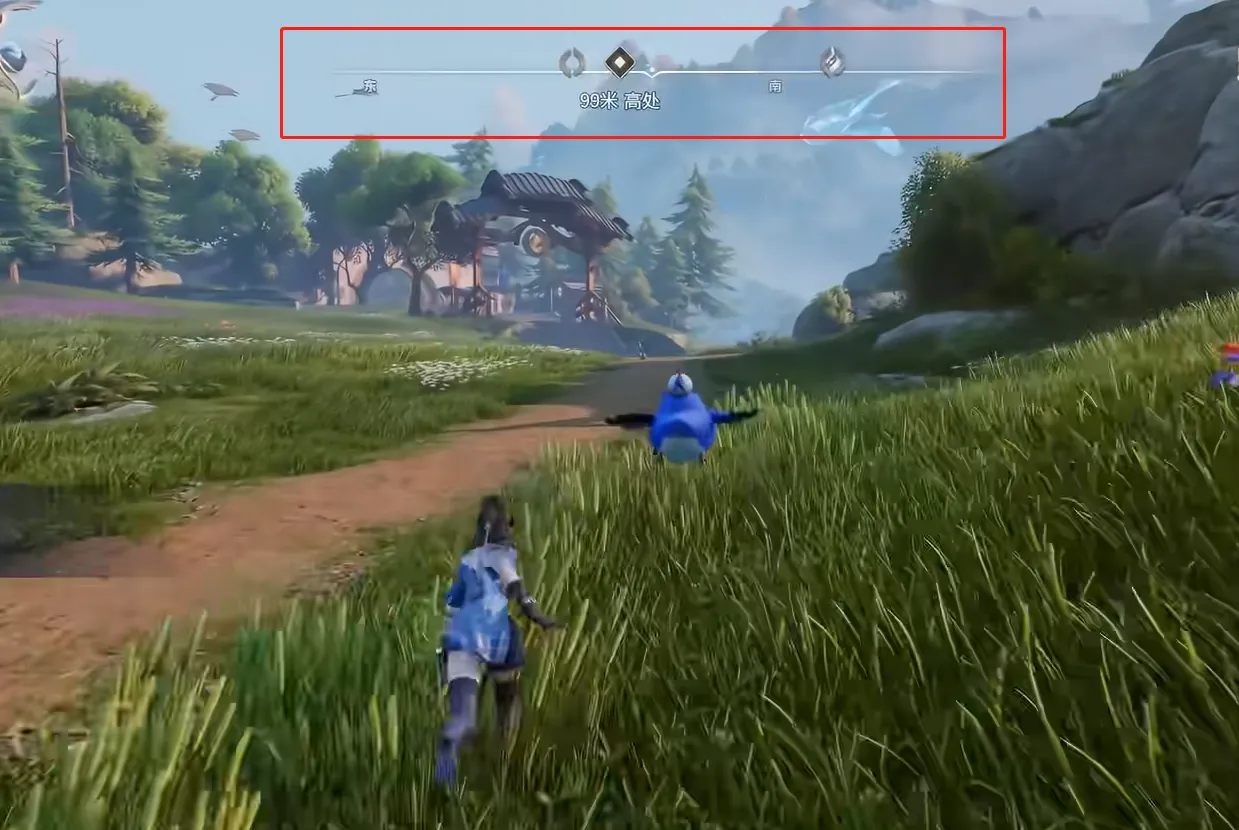
Gameplay logic: align with the guidance line at the top of the screen → move toward the target direction → complete navigation.
Movement includes a skateboard system that enables fast terrain traversal and supports quick switching. Early-game progression must prioritize main story advancement while unlocking teleport points along the way.
Key mechanics
- prioritize unlocking teleport points (to reduce travel cost)
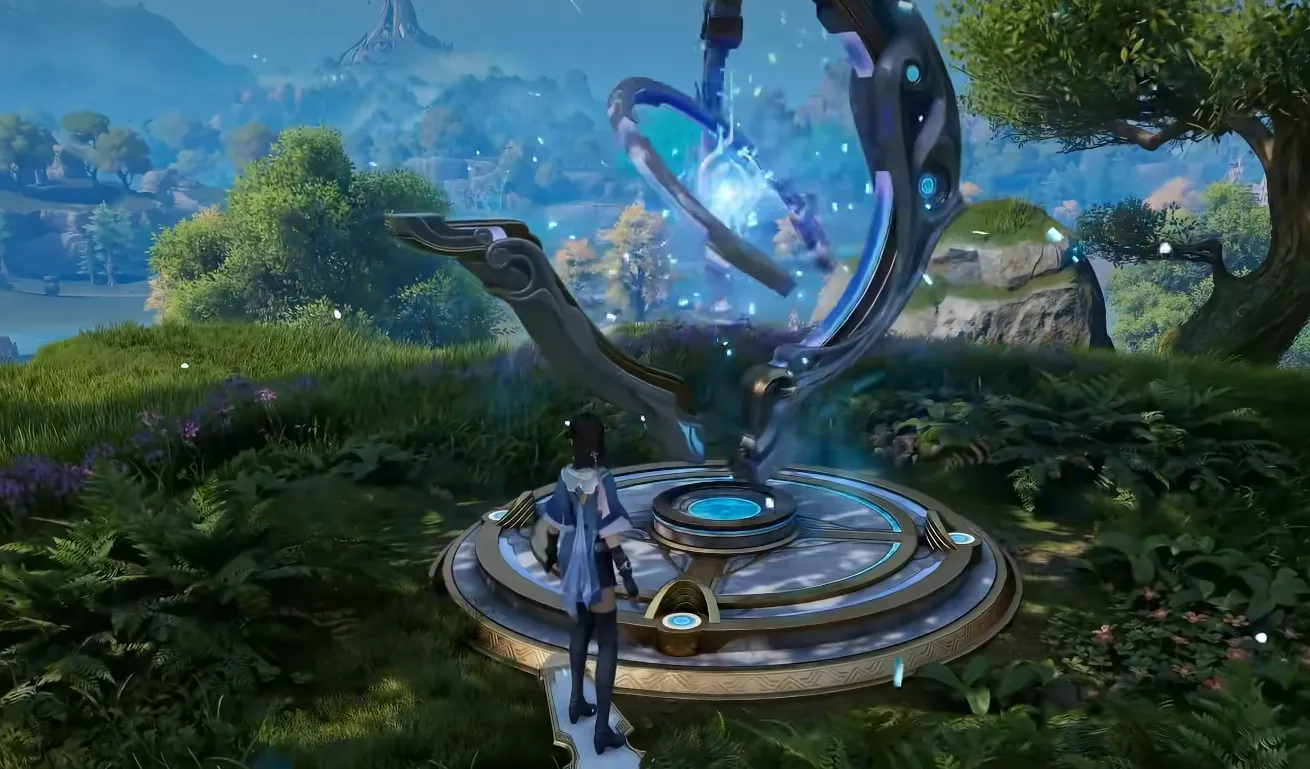
- always gather wild resources (potions/food are essential)

- first-time elite boss kills provide experience and materials
- exploration progress is calculated independently by region.
In terms of map exploration, “Wandering Journey” serves as the regional overview interface, with each area tracking exploration progress separately. “Kunyou” is an independent story instance that provides experience and Resonance rewards upon completion and should be prioritized.
Characters and Team System

Characters in the game are generally divided into three core roles: Frontline (Defender), Main DPS (Damage Dealer), and Support (Utility). Team building is based on functional synergy rather than fixed classes.
Character Role System
|
Frontline Role |
Main DPS Role |
Support Role |
|
| Function |
These characters are responsible for absorbing damage, initiating fights, or handling boss mechanics. |
These are the core damage sources of the team and determine overall DPS ceiling. |
These characters are not focused on damage but instead provide battlefield control and team enhancement. |
|
Representative Characters |
|
|
|
|
Characteristics |
|
|
|
Frontline units are not pure tanks—they are “combat-capable frontliners” who can both survive and contribute damage.
Main DPS units are the “damage engines” of the team and should receive priority investment.
Supports exist to ensure the entire combat system runs smoothly and efficiently.
Team Composition
Team building follows a triangular structure:
Frontline + Main DPS + Support (Utility layer)
Xi Shi Universal Composition (Most Stable Early Game Setup)
|
Frontline |
Main DPS |
Support |
|
Hua Mulan / Kai |
Dongfang Yao / Meng Ya |
Xi Shi |





Xi Shi provides grouping, crowd control, and overall battlefield stabilization, while the frontline absorbs damage and maintains aggro. The DPS role focuses on delivering consistent output throughout the fight.
This setup is highly versatile, suitable for most content, and offers strong forgiveness for player mistakes.
Leng Chun Composition (High Risk / High Reward)
|
Frontline |
Main DPS |
Support |
|
Leng Chun |
High-output characters (Yao / Meng Ya / Jia Luo) |
Wang Zhaojun (preferred) |



Leng Chun features self-risk mechanics with high burst potential. She requires shielding or strong crowd control to stabilize survival, while the DPS role focuses on quickly finishing fights.
This composition offers very high burst damage but has low forgiveness. It is not recommended for beginners without proper support synergy.
Ranged DPS Composition (Safe Playstyle Build)
|
Frontline |
Main DPS |
Support |
|
Kai / Hua Mulan |
Jia Luo / Meng Ya |
Wang Zhaojun / Sun Bin / Luban Master |


Ranged DPS stays at a safe distance while supports maintain control or tempo advantage. The frontline protects positioning and ensures space for consistent damage output.
This setup offers the highest stability with low execution difficulty, and strong survivability through proper spacing.
Life Skills – Hundred Schools Martial Arts System
The life system consists of five professions:
Herbalist (Baicaojia): Responsible for crafting medicines that provide healing and buffs. Relies on gathered and purchased materials.
Culinary Artisan (Yaochuanjia): Focused on cooking dishes that grant various buffs. Ingredients are obtained through gathering and fishing.
Craftsman (Gongqiaojia): Produces crafted items, throwable tools, and decorations. Depends on minerals and exploration resources.
Fisher (Chuidiaojia): Specializes in fishing to obtain food-related ingredients.
Phantom Artisan (Huanjingjia): Handles cosmetics and social systems, including outfits and item exchanges.
Enhancement Systems
Resonance progression follows a tiered growth system, where each breakthrough increases attributes or unlocks new abilities.
The Meridian system provides skill enhancements and attribute bonuses at specific level milestones.
Stamina is used for dungeon challenges and includes both recovery and storage mechanics.
The weapon system is character-bound, with upgrades and breakthroughs improving stats and unlocking stage-based effects.
The equipment system features role-based positioning and set bonuses, with enhanced gear providing additional effects.
Beginner Tips
Clear Storage Before You Even Start
This game is large by mobile and PC standards. You’ll need around 110GB on PC and 40GB on mobile, so make sure you free up space in advance to avoid installation issues or slow performance.
Check Your Device Performance Tier
For smooth gameplay:
- High-end (4K Ultra): RTX 4070 Super + 32GB RAM
- Mid-range (2K): RTX 2070 Super
- Mobile minimum: iPhone 11 (A13) or Snapdragon 865
If your hardware is below this level, expect performance drops.
Take Advantage of Cross-Platform Play
The game supports full crossplay across PC, iOS, and Android. Use one account across devices to maintain progression and switch platforms depending on convenience.
Keep an Eye on Mobile Release Timing
If you're a mobile player, note that the full release may lag behind PC slightly. Plan accordingly if you want to start at launch.
Conclusion
Overall, the optimal early-game progression path in Honor of Kings World is: daily activities + main story progression + stamina-based dungeons + Resonance quests + Kunyou content + elite boss clearing + event rewards. The game will gradually unlock co-op, PvP, and housing systems, forming a typical open-world structure that becomes increasingly grind-heavy but also more addictive over time.
For faster progression, you can use LDShop to access Honor of Kings World top up discounts, helping accelerate character growth and resource development.






 TOP UP WITH DISCOUNT NOW
Rich Experienced Game Editor
Rich is a passionate gamer and strategy explorer who loves uncovering hidden mechanics, experimenting with team comps, and sharing tips that actually help players succeed. She has a talent for breaking down complex systems into easy-to-understand guides, making even the trickiest battles feel manageable. When she's not diving into virtual worlds, you might find her debating game lore, hunting for easter eggs, or enjoying a snack while plotting her next in-game strategy. Rich's goal? Helping fellow gamers have more fun while leveling up their skills.
