


The Going, Going, Gone! event in Neverness to Everness is an auction game mode where players bid Gold Shells on boxes filled with hidden collectibles.
Winning every round can quickly drain your Gold Shells. The real objective is to estimate the value of each box, avoid overpaying, and grow your total assets over time.
This guide explains how to manage Gold Shells, use the Safety Fund, understand the bidding rules, and make more profitable decisions in Going, Going, Gone!
NTE Going, Going, Gone! Event Overview
Going, Going, Gone! is a limited-time Version 1.2 event in which four players use Gold Shells to bid on boxes containing multiple Collectibles.
How Gold Shells Work
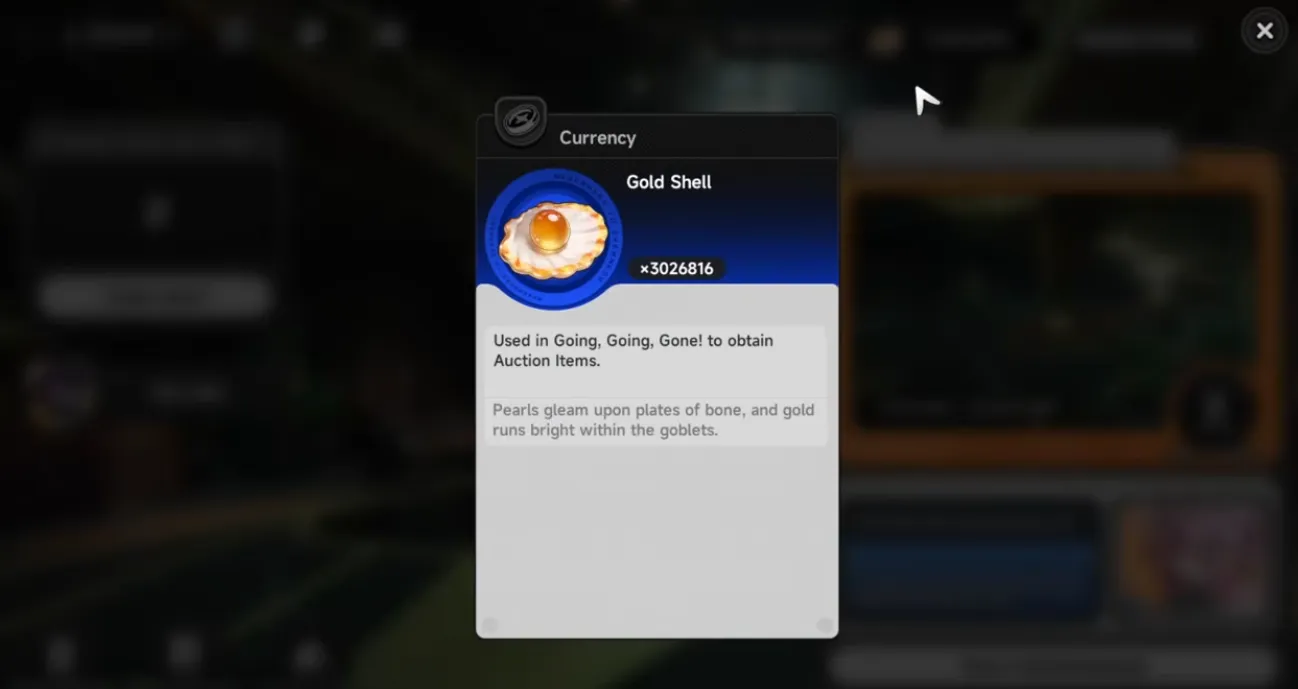
Gold Shells are the main currency used to place bids during the event. You need enough Gold Shells to enter auctions, use appraisal devices, and compete for valuable collectibles.
Collectibles won from an auction are stored in your warehouse. High-rarity collectibles can also be placed in the Display Case to generate passive income.
One important detail is that items stored in your warehouse do not count toward your current available assets. This makes the warehouse useful for both saving valuables and managing your Safety Fund eligibility.
You can also purchase Gold Shells with Fons through the event shop, but this is usually unnecessary. With careful bidding and asset management, you should be able to complete the event without repeatedly spending Fons.
How to Use the Safety Fund
The Safety Fund is one of the easiest ways to maintain your Gold Shell balance.
When your current available assets fall below the required amount, you can claim extra Gold Shells. The fund can be claimed up to five times per day.
A useful strategy is to move your available wealth into collectibles before claiming it:
1. Use your Gold Shells to obtain or keep items in the warehouse.
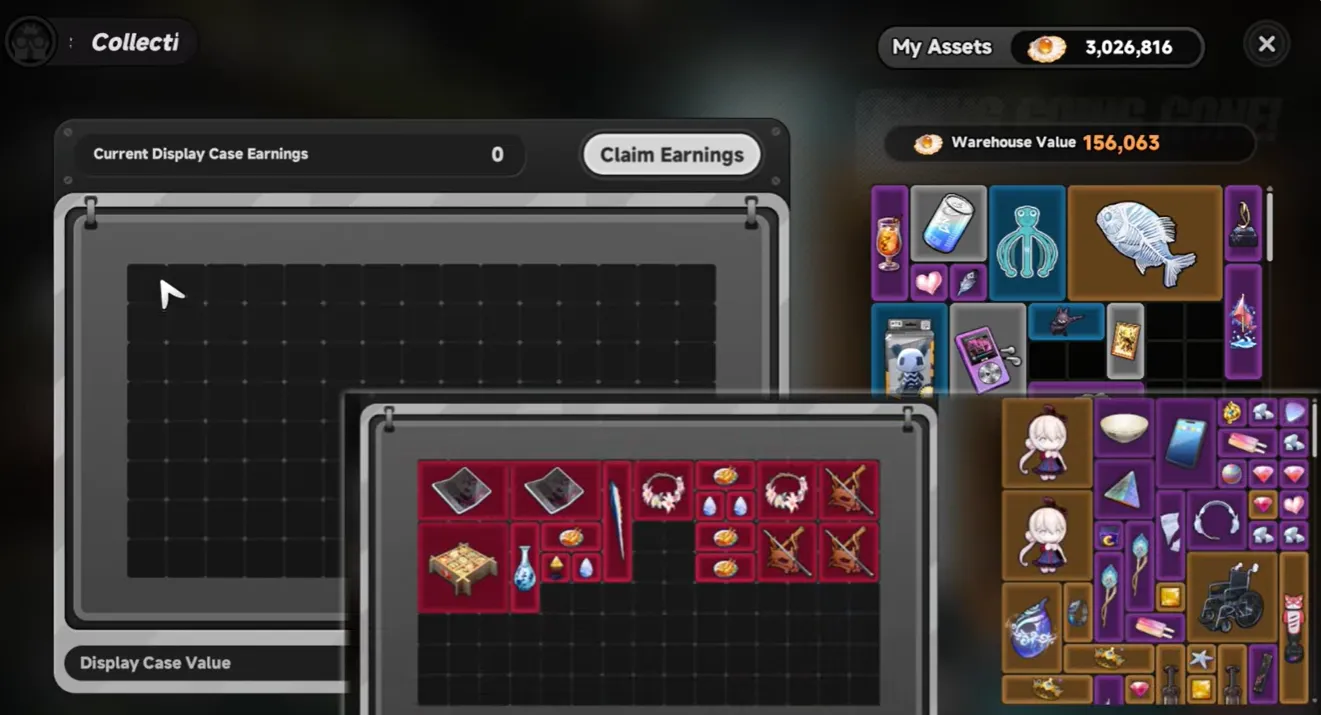
2. Lower your available balance below the Safety Fund requirement.
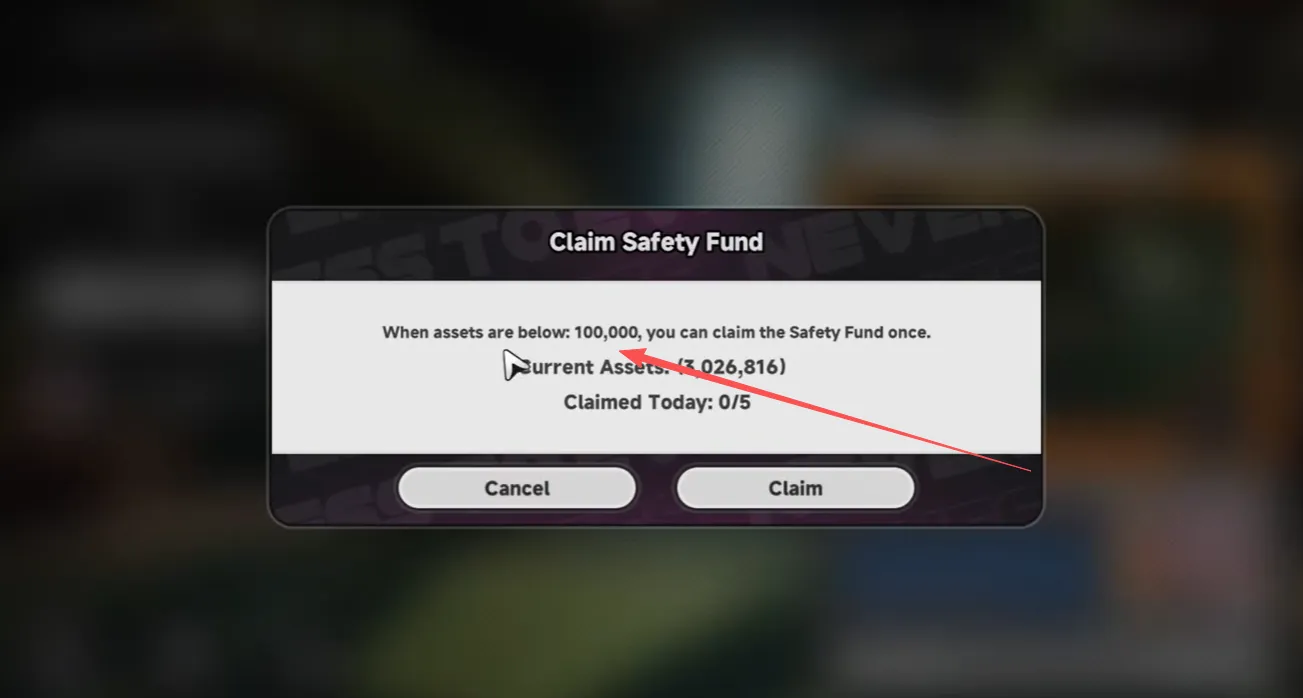
3. Claim the Safety Fund.
4. Sell warehouse items later when you need more bidding currency.
Because warehouse items are not included in your current asset total, you can preserve their value while still qualifying for the fund.
Do not sell every collectible immediately after winning an auction. Keeping some items in storage gives you more control over your available Gold Shell balance.
6480 Riftcrystal Direct Top-Up for Just ${commodityContent.skuPrice:id=16497}

Neverness to Everness 6480 Riftcrystal
Delivered in as fast as 30 seconds
Limited-time offer: ${commodityContent.skuPrice:id=16497} | ${commodityContent.officialPrice:id=16497}
LDShop offers the best price with instant delivery.
The Real Goal Is Profit, Not Winning Every Auction
Going, Going, Gone! does not reward players for blindly winning every box.
A successful bid is only good when the collectibles are worth more than the amount you paid. If you bid 800,000 Gold Shells for a box worth 400,000, you technically win the auction but still lose 400,000.
There is also a system that rewards the other players when the winner overpays. If the auction winner makes a large loss, the losing players receive part of that negative profit.
This means you can earn Gold Shells without winning the auction.
When another player places an obviously excessive bid, it is often better to stop competing and let them take the loss. Chasing an overpriced box only increases the chance that you will become the player who overpays.
How the Bidding Rules Work
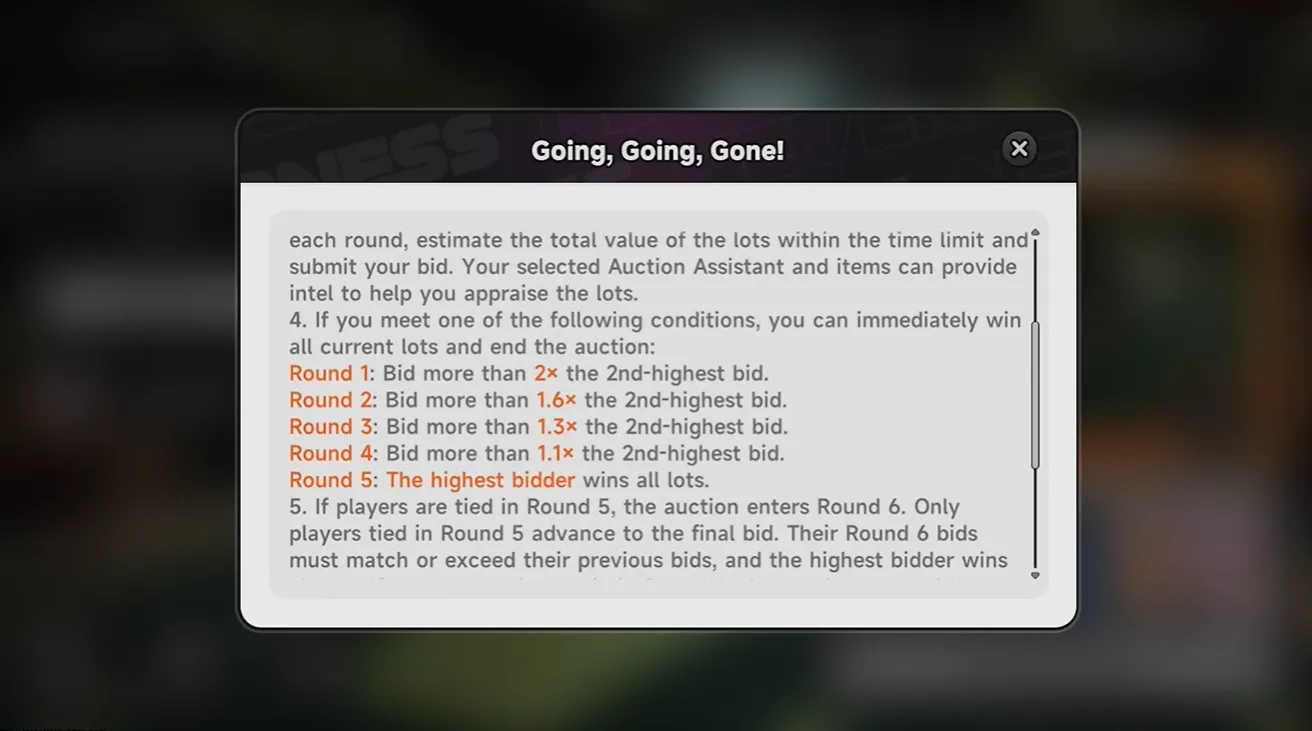
The amount required to win changes in each round.
|
Round |
Winning Condition |
|
Round 1 |
Bid at least 2 times the second-highest bid |
|
Round 2 |
Bid at least 1.6 times the second-highest bid |
|
Round 3 |
Bid at least 1.3 times the second-highest bid |
|
Round 4 |
Bid at least 1.1 times the second-highest bid |
|
Round 5 |
The highest bidder wins |
|
Round 6 |
Tie-break round between the highest bidders from Round 5 |
For example, if the second-highest bid in Round 1 is 100,000 Gold Shells, the highest bidder must offer at least 200,000 to end the auction.
By Round 4, the difference only needs to be around 10%. This makes later rounds safer when you want more information before committing to a large bid.
Waiting until later rounds gives you more clues and makes it easier to estimate the box accurately.
Do Not Overbid in Round 1
Overbidding in the first round is the most common mistake.
Unless your Auction Assistant has already revealed strong evidence of a high-value box, keep your first bid conservative.
A moderate bid allows you to stay in the auction without risking most of your balance. It also gives your assistant and appraisal devices more time to reveal useful information.
If another player places a massive Round 1 bid with no clear evidence, do not assume they know something you do not. They may simply be guessing.
Use Auction Assistants to Gather Information
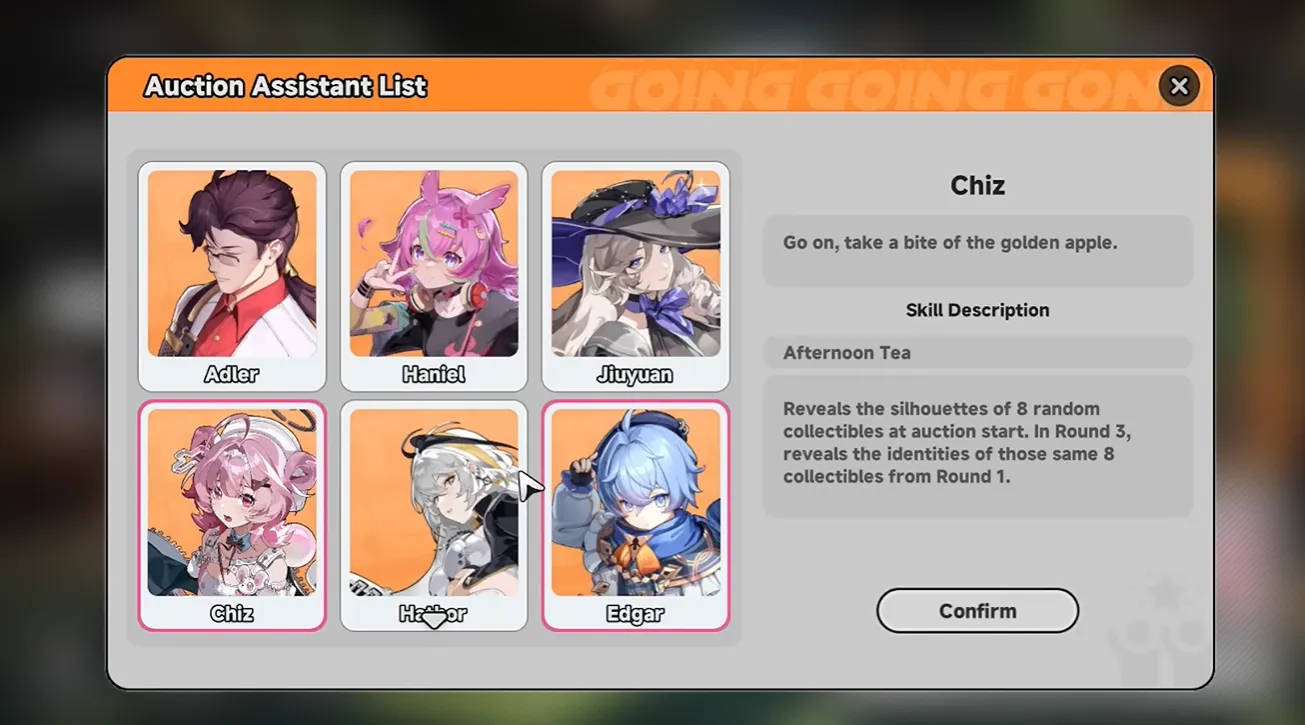
Auction Assistants reveal information about the collectibles inside each box.
Chiz is useful for players who prefer to wait for more information before making a large bid.
Chiz can reveal the silhouettes of several collectibles at the start of the auction. Her later ability provides additional information about those items, making it easier to estimate their total value.
Because part of her value comes from later rounds, try not to end the auction too early when using her.
For Jiuyuan, Daffodill, and Hotori. Their skills may reveal information such as:
- The silhouette of a high-rarity collectible
- The number of higher-rarity items
- The quality of selected collectibles
- Additional silhouettes during later rounds
The best assistant depends on how you prefer to judge an auction. Some provide stronger early information, while others become more useful after several rounds.


Use Device Sets Carefully
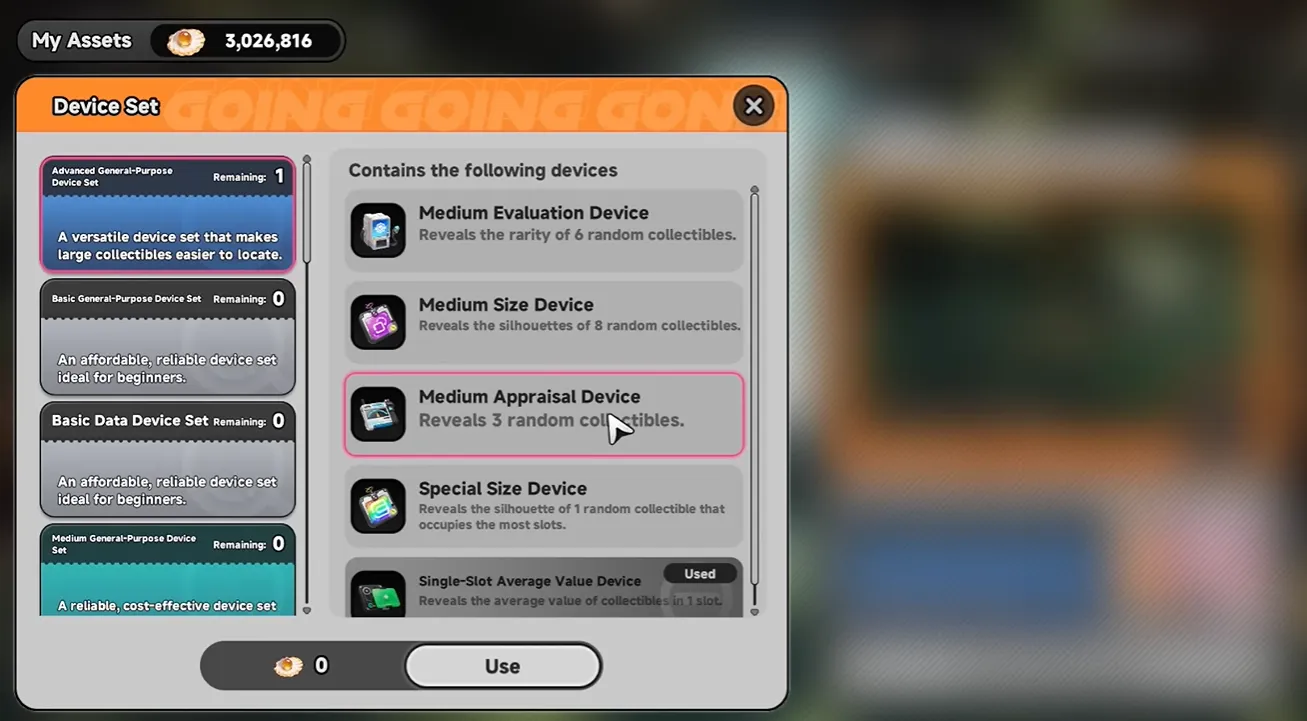
Device Sets provide extra information during the auction. They can help reveal collectible silhouettes, values, sizes, rarities, or categories.
This information can make your valuation more accurate, but each device also costs Gold Shells. That cost must be included when calculating your final profit.
Use an affordable, general-purpose Device Set for most regular auctions. A lower-cost device can provide enough information without taking a large portion of your potential earnings.
Premium appraisal devices are more useful in higher-level auction venues, where the collectibles are valuable enough to justify the expense.
Avoid spending 200,000 Gold Shells on appraisal devices when the entire box may only be worth 300,000. Even if you win the auction at a reasonable price, the device cost could turn the round into a loss.
How to Estimate a Box’s Value
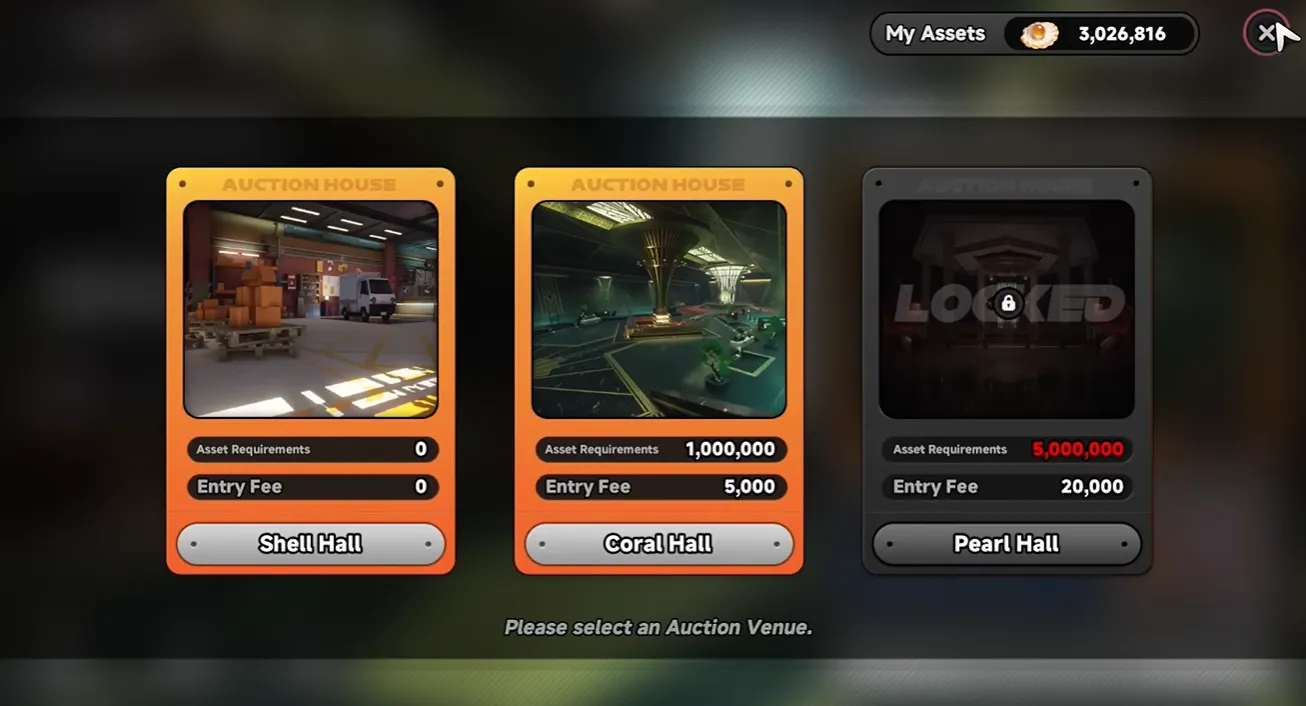
Before raising your bid, combine all the information currently available:
- Revealed collectible values
- Silhouettes and possible item matches
- Number of high-rarity collectibles
- Public Intel
- Auction Assistant skills
- Device Set results
- Other players’ bidding behaviour
You can select a silhouette to view collectibles with a similar shape. This gives you a rough idea of the possible minimum and maximum value.
You do not need to identify every single item perfectly. Your goal is to create a reasonable value range.
For example, if the revealed items are already worth around 570,000 Gold Shells, bidding close to 600,000 may be acceptable because the remaining hidden items could cover the difference.
If the current estimate is only 160,000, a 500,000 bid is difficult to justify unless you have strong evidence of several hidden premium items.
Always leave room for uncertainty. A box may be worth more than the current estimate, but it can also be worth much less than an optimistic guess.
Watch What Other Players Are Doing
The actions of other bidders can provide useful clues.
You can check which Auction Assistant each opponent is using. This helps you estimate what information they may already have.
Their Device Set usage is also important. A player who uses an expensive appraisal device and then lowers their bid may have discovered that the box is not valuable.
A sudden increase may indicate that they revealed a rare collectible. However, it can also be a bluff or a poor guess.
Do not copy another player’s bid without understanding why they made it. Use their actions as one source of information, not as proof that the box is valuable.
Know When to Stop Bidding
One of the most important skills in Going, Going, Gone! is knowing when to leave an auction.
Stop increasing your bid when:
- The price is already close to the estimated box value
- Device costs would remove your remaining profit
- Another player is clearly overpaying
- You do not have enough information to justify the next bid
- Winning would leave you without enough Gold Shells for later auctions
It is better to miss one valuable collectible than to lose most of your assets on an uncertain box.
There will always be more auction rounds. Protecting your Gold Shell balance gives you more chances to find a genuinely profitable box later.
Best Going, Going, Gone! Strategy
The most reliable strategy is to stay patient and treat each auction as an investment.
Start with a controlled bid, gather information through your assistant and devices, and slowly adjust your estimate as more collectibles are revealed.
Do not chase every high bid. If another player overpays, let them win and collect your share of their loss.
Keep valuable collectibles in the warehouse when you want to qualify for the Safety Fund, and place strong items in the Display Case for passive income.
The goal is not to leave every auction with a box. The goal is to finish the event with more total assets than you started with.
FAQ
Conclusion
Going, Going, Gone! becomes much easier once you stop treating every auction as something you must win.
Use your Auction Assistant and Device Sets to estimate the box, avoid aggressive Round 1 bids, and let other players take the loss when they overpay. With careful warehouse and Safety Fund management, you can keep participating without wasting large amounts of Gold Shells.
Need more resources for upcoming NTE characters? Visit LDShop for affordable Neverness to Everness top-ups, then check out our latest NTE event guides and character tips.

Pyro Chronicler Experienced game editor
A seasoned content strategist and game analyst at LDShop.gg, specializing in anime-style RPGs and gacha games. Known for breaking down complex mechanics into smart, resource-efficient strategies, she helps players tackle high-difficulty content without overspending. By combining in-depth system analysis with practical, step-by-step tips, Pyro makes even the most daunting challenges feel approachable. With a sharp focus on games like Wuthering Waves, Zenless Zone Zero, and Honkai: Star Rail, Pyro helps players push past plateaus and master the grind—one frame-perfect dodge at a time.
![[New User Discount] Monthly Card | NTE (Global)](https://shop.ldrescdn.com/rms/ld-space/process/img/e3a84a3e3ab848a4bc34855b633136191780364013.webp?x-oss-process=image/resize,m_fill,h_160,w_160)